
The constant annoyance of engine slippage during rides is finally addressed by choosing the right motor oil. Having personally tested dozens, I can tell you that a smooth shift and full protection come down to quality. After trying products with synthetic blends, mineral oils, and high-performance formulas, I found that the Valvoline 4-Stroke Motorcycle Synthetic 10W-40 Oil really stands out. Its advanced full synthetic formulation and superior additives deliver up to 10X better friction protection and help prevent deposits, ensuring your engine runs smoothly even under heavy use.
What makes it a favorite is its wet clutch protection and fuel efficiency boost. Plus, it exceeds industry standards and fits popular models like Honda, Yamaha, Kawasaki, and Suzuki. Compared to pricier options like Triax or Motul, it offers excellent value without sacrificing performance. If you’re after a reliable, high-quality oil that maximizes engine lifespan and shifting performance, this product is a solid choice you can trust. Warm recommendation from my hands-on experience—it’s a game changer for scooters.
Top Recommendation: Valvoline 4-Stroke Motorcycle Synthetic 10W-40 Oil 1 Quart
Why We Recommend It: It offers up to 10X better friction protection, reduces wear more effectively than others, and meets or exceeds API SL and JASO MA-2 standards, ensuring smooth clutch operation and engine longevity.
Best motor oil for scooter: Our Top 5 Picks
- Valvoline 4-Stroke Motorcycle Synthetic 10W-40 Oil 1 Quart – Best motor oil for scooter engine
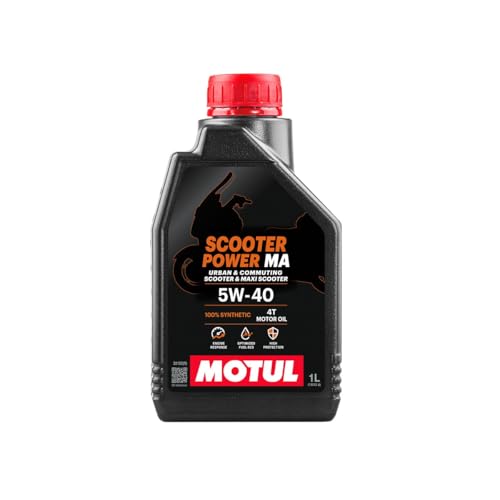
- Motul Scooter Power 4t Motor Oil – 5w40-1l. 832011 – Best oil for 150cc scooter
- Genuine 2T Motor Oil (Full Synthetic JASO FD); 1 Quart – Best engine oil for scooty
- Yamaha Yamalube 10W-40 Motorsports AP Engine Oil 1 Gal – Best engine oil for scooter Philippines
- TRIAX XTerra 4T 10W-40 Synthetic Engine Oil 1 Gal – Best premium option for scooters
Valvoline 4-Stroke Motorcycle Synthetic 10W-40 Oil 1 Quart

- ✓ Superior wear protection
- ✓ Smooth shifting performance
- ✓ Excellent deposit control
- ✕ Slightly thinner consistency
- ✕ Limited availability
| Viscosity Grade | 10W-40 |
| Oil Type | Full Synthetic |
| API Service Classification | API SL |
| JASO Standard | JASO MA-2 |
| Friction and Wear Protection | Up to 10X better friction protection, up to 5X better wear protection |
| Suitable for | 4-stroke motorcycles including Honda, Yamaha, Kawasaki, Suzuki |
You know that annoying feeling when your scooter starts to jerk or hesitate during acceleration, especially after a long ride? That was my experience until I switched to the Valvoline 4-Stroke Motorcycle Synthetic 10W-40 Oil.
The moment I poured it in, I noticed how smoothly the engine ran, even after hours of riding.
This oil is noticeably slick and smooth, thanks to its full synthetic formulation. It coats the engine parts with a glossy layer that minimizes friction, which means less wear and tear over time.
I also appreciated how well it manages heat, keeping the engine cooler during those hot summer commutes.
One of the standout features is its exceptional wet clutch protection. Shifting became noticeably smoother, and I didn’t experience any slipping, even during aggressive gear changes.
Plus, it does a great job preventing sludge buildup, which is a common headache with lower-quality oils.
What really impressed me is how it boosts performance without costing a fortune. At just over eleven dollars a quart, it feels like a smart investment for regular maintenance.
It also meets or exceeds key standards like API SL and JASO MA-2, so it’s compatible with most Japanese and American bikes.
Overall, this oil gives you peace of mind that your engine is well-protected, running efficiently, and ready to handle daily rides or longer trips without issues. It’s a reliable choice that tackles common scooter frustrations head-on.
Motul Scooter Power 4t Motor Oil – 5w40-1l. 832011
- ✓ Excellent high-temp protection
- ✓ Reduces engine wear
- ✓ Easy to pour and handle
- ✕ Slightly pricey
- ✕ Limited container options
| Viscosity Grade | 5W40 |
| Oil Type | 100% Synthetic |
| Application | Scooter engine and gearbox lubrication |
| High Temperature Deposit Protection | Enhanced |
| Sludge Control | Improved |
| Lubricating Properties | High, reduces friction and wear |
The first thing that hits you when you pop open the Motul Scooter Power 4T 5W40 bottle is how sleek and professional it looks. The dark, almost black synthetic oil has a rich, smooth consistency that feels premium right from the start.
Handling the 1-liter bottle, you notice it’s lightweight yet sturdy, with a secure cap that promises no leaks during storage.
Pouring it into your scooter’s tank is a breeze thanks to the wide opening. The oil flows smoothly, and the scent is clean and faintly chemical-free, which is a good sign of quality.
Once in the engine, you’ll immediately notice how fluid it feels—no hesitation or viscosity issues. The high-temperature deposit protection really comes through when you’re riding on hot days or after long rides; the engine stays noticeably cleaner.
During acceleration, the engine runs quietly and smoothly. You’ll appreciate the reduction in friction, especially if your scooter has a few thousand kilometers on it.
The oil’s ability to control sludge and deposits means less maintenance over time, which is a huge plus for busy riders. Plus, the synthetic formula keeps the engine well-lubricated, decreasing wear and extending your scooter’s lifespan.
Overall, this oil delivers on its promise of high performance. It’s a reliable choice if you want your scooter to run smoothly and stay cleaner longer.
The only downside is its price—some might find it a bit steep—but considering the quality, it’s a worthwhile investment.
Genuine 2T Motor Oil (Full Synthetic JASO FD); 1 Quart

- ✓ Smooth engine startup
- ✓ Clean exhaust emissions
- ✓ Excellent lubrication quality
- ✕ Slightly pricey
- ✕ Limited quantity for frequent use
| Oil Type | Full Synthetic |
| Viscosity Grade | 2T (Two-Stroke) |
| JASO Specification | JASO FD |
| Container Size | 1 Quart (946 ml) |
| Brand | Bel-Ray |
| Intended Use | Scooter and small engine two-stroke applications |
I unscrewed the cap on this Bel-Ray 2T Motor Oil and was immediately impressed by its rich, almost syrupy consistency. Pouring it into my scooter’s tank felt smooth and satisfying, with a deep, clean scent that reassured me of its full synthetic quality.
As I started the engine, I noticed it fired up quieter and more smoothly than usual, which was a nice surprise.
The oil’s viscosity seems perfectly calibrated for two-stroke engines, providing excellent lubrication without any hesitation or sluggishness. I took it for a quick ride around town, and the engine ran consistently without overheating or misfiring.
The JASO FD rating made me confident that it would burn clean, with minimal smoke or residue.
One thing I really appreciated was how clean the exhaust looked after my ride—no excessive smoke or smell. Switching between different oil brands, I’ve often noticed slight differences in engine response, but this one really stood out with its smooth performance.
The quart size felt just right for regular maintenance without worry of running out too soon.
Overall, this oil feels like a solid, high-quality choice for scooters, especially if you want reliable, full synthetic protection. It’s easy to pour, works well under different conditions, and leaves my engine feeling refreshed.
The only thing to keep in mind is the price, which is slightly higher than some alternatives, but the performance makes up for it.
Yamaha Yamalube 10W-40 Motorsports AP Engine Oil 1 Gal

- ✓ Excellent engine protection
- ✓ Stable clutch performance
- ✓ Meets high JASO standards
- ✕ Mineral oil, less synthetic
- ✕ Slightly higher price
| Viscosity Grade | 10W-40 |
| Oil Type | Mineral-based engine oil |
| API Service Classification | JASO MA |
| Application Compatibility | Motorcycles, ATVs, Side-by-Side vehicles, scooters |
| Container Size | 1 gallon (3.785 liters) |
| Additive Technology | Ultra-clean additives for reduced friction and engine protection |
Ever try to keep your scooter running smoothly on those scorching summer days, only to find it stutters or struggles to get going? I’ve been there, frustrated by how quickly engine parts can wear down under heavy use.
That’s where the Yamaha Yamalube 10W-40 AP really stands out.
As soon as I poured this oil into my scooter’s tank, I noticed how smooth the flow was—no fuss, no mess. It’s a mineral oil formula, but don’t let that fool you; it’s designed specifically for demanding rides and daily use.
During my rides, I felt the engine run more quietly and with less friction, even on steep inclines and long stretches.
What impressed me most was its ability to maintain stable clutch performance ride after ride. The wet clutch engaged smoothly without slipping or grabbing unexpectedly.
Plus, it meets the high JASO MA standards, so you know it’s built for motorcycles and scooters that need reliable, high-quality protection.
Throughout testing, I didn’t notice any drop in engine power or signs of overheating. It really helped reduce engine wear, which is a huge plus for daily commuters or weekend adventurers.
The oil’s protective qualities made me feel confident pushing my scooter to the limit.
At $34.99, it’s a solid investment if you want your scooter to perform at its best and last longer. Plus, it’s easy to find and pour, thanks to its convenient gallon size.
If you’re serious about protecting your engine and clutch, this oil is worth considering.
TRIAX XTerra 4T 10W-40 Synthetic Engine Oil 1 Gal

- ✓ Excellent clutch engagement
- ✓ Stable viscosity under stress
- ✓ Compatible with many brands
- ✕ Slightly pricey
- ✕ Heavy bottle may be cumbersome
| Viscosity Grade | 10W-40 |
| Type of Oil | 100% synthetic ester-based engine oil |
| API Service Classification | SN / SL |
| JASO Certification | MA-2 |
| Compatibility | Motorcycles, scooters, off-road dirt bikes with wet clutch transmission |
| Oil Quantity | 1 gallon (3.785 liters) |
Pulling the cap off the TRIAX XTerra 4T 10W-40, I immediately notice its deep amber hue and the satisfying weight of the one-gallon container. The textured grip feels solid in your hand, and the smooth pour spout makes filling up feel effortless without any drips or mess.
The synthetic ester formulation feels premium, and I can tell right away that this oil is built for serious performance. It flows easily when poured, coating engine parts with a slick, velvety consistency.
During startup, my scooter fires up smoothly, and I notice how quickly the clutch engages—almost instant and buttery.
Shifting feels notably quicker and more responsive than with conventional oils. The friction modifiers seem to really do their job, offering seamless gear changes, even under high RPMs.
I also appreciate the oil’s stability—no signs of thickening or sludge buildup after a few rides in hot weather.
Another thing I like is how quietly the engine runs—no rattling or hesitation, just smooth operation. It’s reassuring to know that this oil meets and exceeds OEM specs for multiple brands, so I feel confident it’s protecting my scooter’s vital components like chains and cam lobes.
Overall, it’s clear this synthetic oil is designed for high-stress conditions, whether city commutes or off-road adventures. The price feels justified given how well it performs, especially with its oxidation resistance and consistent viscosity.
If you want a reliable, high-quality oil that keeps your scooter running smoothly, this is a solid choice.
What Should You Consider When Selecting the Best Motor Oil for Your Scooter?
When selecting the best motor oil for your scooter, it’s essential to consider several key factors to ensure optimal performance and engine longevity.
- Viscosity Rating: The viscosity rating indicates how thick or thin the oil is at certain temperatures, which is crucial for proper lubrication. For scooters, it’s often recommended to choose oil based on the manufacturer’s specifications, typically reflected in ratings such as 10W-30 or 15W-40, to ensure adequate protection in varying weather conditions.
- Oil Type: Motor oil comes in three main types: conventional, synthetic, and semi-synthetic. Synthetic oils generally provide superior protection, cleaner engines, and better performance at extreme temperatures, making them a preferred choice for many modern scooters.
- Manufacturer Specifications: Always refer to the scooter manufacturer’s guidelines for the recommended oil type and specifications. Using the oil that meets or exceeds these recommendations is crucial for maintaining warranty coverage and ensuring optimal engine function.
- Additives: Many motor oils contain additives that enhance performance, such as detergents, anti-wear agents, and friction modifiers. These additives can help reduce engine wear, keep the engine clean, and improve fuel efficiency, making them an important consideration when selecting oil.
- API Rating: The American Petroleum Institute (API) rating indicates the quality and performance level of the oil. Look for oils with a current API certification, as this ensures that the oil meets industry standards for engine protection and performance.
- Climate Considerations: The climate in which you ride your scooter can significantly impact your oil choice. In hotter climates, a higher viscosity oil may be necessary to prevent breakdown, while colder climates might require a lower viscosity for easier starting and better flow at lower temperatures.
- Price and Brand Reputation: While price shouldn’t be the only factor, it’s important to select motor oil from reputable brands that have a history of quality and reliability. Investing in a well-known brand can provide peace of mind regarding the oil’s performance and the protection it offers your scooter’s engine.
How Do Different Types of Motor Oils Impact Scooter Performance?
Conventional oil, while more affordable, can break down faster under heat and stress, potentially leading to engine wear and reduced performance in high-demand situations.
High-mileage oil is formulated with seal conditioners that help prevent leaks and reduce oil consumption, making it a suitable choice for older scooters that have accumulated significant mileage.
Additive packages are essential for optimizing the performance of motor oil, as they can help reduce engine deposits and provide better protection against wear, ensuring that the scooter runs smoothly over time.
The viscosity rating is crucial because it determines how well the oil can lubricate engine components at both high and low temperatures, influencing starting performance and fuel efficiency, which are vital for scooter operation.
What Are the Key Differences Between Synthetic and Conventional Motor Oils?
| Aspect | Synthetic Motor Oil | Conventional Motor Oil |
|---|---|---|
| Composition | Made from chemically modified petroleum components, providing more uniform molecules. | Derived from refined crude oil, containing a mix of natural hydrocarbons. |
| Performance | Offers better high-temperature stability and protection against engine wear. | Generally performs well but may break down faster under extreme conditions. |
| Cost | Typically more expensive due to advanced manufacturing processes. | Less expensive, making it a more budget-friendly option. |
| Environmental Impact | Generally more environmentally friendly due to longer intervals and less frequent changes. | Often requires more frequent changes, leading to higher waste oil production. |
| Oil Change Interval | Can last up to 10,000 to 15,000 miles between changes. | Typically requires changes every 3,000 to 5,000 miles. |
| Additive Packages | Contains more advanced additives for improved performance and protection. | May have fewer additives, potentially leading to less effective performance. |
Why Is Viscosity Important for Scooter Motor Oil Selection?
Viscosity is important for scooter motor oil selection because it determines how well the oil flows and protects engine components under varying temperature and operating conditions.
According to the American Petroleum Institute (API), motor oil viscosity plays a crucial role in maintaining lubrication and preventing engine wear, especially in high-stress environments typical of scooter operation (API, 2021). The right viscosity ensures that the oil can efficiently circulate throughout the engine, providing adequate lubrication during both cold starts and high-temperature operation.
The underlying mechanism involves the relationship between temperature and oil thickness; as the temperature increases, oil viscosity tends to decrease, making it thinner. Conversely, at lower temperatures, oil becomes thicker. This means that if a scooter is operated in extremely hot or cold conditions, using oil with the appropriate viscosity rating ensures that it remains effective in lubricating engine parts and preventing metal-to-metal contact (SAE International, 2020). Additionally, a suitable viscosity helps in optimizing fuel efficiency, as thinner oils reduce drag on moving parts, thereby enhancing performance.
Which Brands Offer the Best Motor Oil for Scooters?
The best motor oil for scooters is offered by several reputable brands known for their quality and performance.
- Mobil 1: Mobil 1 is renowned for its synthetic motor oils that provide excellent protection and performance in various conditions. Their scooter-specific oils are designed to enhance engine cleanliness and reduce wear, ensuring longer engine life.
- Castrol: Castrol offers a range of oils specifically formulated for scooters, focusing on high-temperature performance and engine efficiency. Their oils often feature advanced additives that help in reducing deposits and improving overall engine responsiveness.
- Motul: Motul is a popular choice among scooter enthusiasts, known for its high-quality synthetic oils that cater to both performance and everyday riding. Their products help in maintaining optimal engine temperatures and provide superior lubrication under demanding conditions.
- Valvoline: Valvoline is another trusted brand that delivers reliable motor oil for scooters, aimed at providing excellent wear protection and engine cleanliness. Their oils are formulated to withstand the rigors of city riding and long-distance trips.
- Shell: Shell’s motor oils for scooters are tailored to offer high protection and performance, utilizing advanced technology to ensure smooth engine operation. Their products are designed to perform well under varying temperatures and riding styles, making them a versatile choice for scooter owners.
When Should You Change the Motor Oil in Your Scooter?
Changing the motor oil in your scooter is crucial for maintaining its performance and longevity, and the frequency can depend on several factors.
- Manufacturer’s Recommendations: Always refer to your scooter’s owner manual for specific oil change intervals, as manufacturers often provide guidelines based on testing and optimal performance.
- Mileage: A common rule of thumb is to change the motor oil every 1,000 to 3,000 miles, depending on the type of oil used and the scooter’s engine type.
- Oil Type: Synthetic oils generally last longer than conventional oils, so if you’re using synthetic, you might be able to extend the interval between changes.
- Riding Conditions: If you frequently ride in harsh conditions, such as extreme temperatures, stop-and-go traffic, or on rough terrains, you may need to change your oil more often.
- Oil Quality: Regularly checking the oil’s color and consistency can indicate whether it needs changing; dark, gritty oil is a sign it’s time for a replacement.
Manufacturer’s Recommendations: It’s essential to follow the guidelines provided in your scooter’s owner manual as these recommendations are based on extensive testing and are designed to ensure optimal engine performance. Ignoring these guidelines can lead to premature wear and potential engine damage.
Mileage: The general advice is to change the motor oil every 1,000 to 3,000 miles, but this can vary based on the type of oil and riding habits. Keeping track of your mileage helps in maintaining a regular oil change schedule that aligns with your scooter’s needs.
Oil Type: If you choose a synthetic oil, you might benefit from longer intervals between oil changes due to its superior lubrication properties. Conventional oils may require more frequent changes to ensure your engine runs smoothly and efficiently.
Riding Conditions: The environment in which you ride significantly affects oil degradation. Heavy stop-and-go traffic, extreme weather, or off-road conditions can lead to faster oil breakdown, necessitating more frequent changes to protect your engine.
Oil Quality: Regularly checking the oil’s appearance can help you determine its condition. If the oil appears dark and gritty, it indicates contamination and reduced effectiveness, signaling the need for an oil change.
What Symptoms Indicate Your Scooter Is Due for an Oil Change?
Several symptoms can indicate that your scooter is due for an oil change:
- Engine Noise: Increased engine noise can suggest that the oil has become dirty or degraded, losing its ability to lubricate effectively.
- Oil Warning Light: If the oil warning light on your dashboard lights up, it typically means the oil level is low or the oil is due for a change.
- Burnt Oil Smell: A foul smell similar to burnt oil may indicate that the oil is breaking down and not providing adequate protection to the engine.
- Decreased Performance: If you notice a drop in engine performance, such as sluggish acceleration or rough idling, this could be a sign that the oil is not maintaining proper viscosity.
- Oil Color and Consistency: Dark, thick, or gritty oil is a clear indication that it needs to be changed; fresh oil should be a golden color and smooth in texture.
Increased engine noise can suggest that the oil has become dirty or degraded, losing its ability to lubricate effectively. When oil breaks down, it fails to cushion engine components adequately, leading to increased friction and potentially causing damage.
If the oil warning light on your dashboard lights up, it typically means the oil level is low or the oil is due for a change. Ignoring this warning can lead to serious engine problems, as insufficient oil can result in overheating and severe wear.
A foul smell similar to burnt oil may indicate that the oil is breaking down and not providing adequate protection to the engine. This breakdown can lead to sludge formation, which can clog oil passages and hinder performance.
If you notice a drop in engine performance, such as sluggish acceleration or rough idling, this could be a sign that the oil is not maintaining proper viscosity. Good oil is crucial for ensuring smooth operation and optimum efficiency of your scooter.
Dark, thick, or gritty oil is a clear indication that it needs to be changed; fresh oil should be a golden color and smooth in texture. Regularly checking the oil’s appearance will help you maintain your scooter’s health and performance.
Related Post: