
When consulting with European mechanics about their top-choice motor oil, one requirement keeps coming up—reliable protection under extreme conditions. Having personally tested several, I can confidently say that the Valvoline European 5W-40 Synthetic Motor Oil 5 Quart stands out for its advanced protection and low-SAPS formula, which keeps emission systems happy. It handles high temperatures and cold starts smoothly, while also fighting deposits and sludge effectively. No matter if you’re navigating city traffic or tackling a long highway haul, this oil is built for durability.
After comparing features like OEM approvals, anti-wear additives, and temperature resilience, Valvoline’s blend offers a clear edge over others like Castrol or their 5W-30 XL-III. Its compatibility with premium European engines and superior deposit protection give peace of mind, plus it’s priced competitively for the value it provides. Trust me, your engine will thank you for choosing this gem—it’s a smart, tested choice for anyone serious about engine health and performance.
Top Recommendation: Valvoline European 5W-40 Synthetic Motor Oil 5 Quart
Why We Recommend It: This product excels with its advanced anti-wear additives and low-SAPS formulation, ensuring compatibility with emissions systems and protecting against wear, heat, and deposits—key for European engines. It meets top OEM standards like VW 502.00/505.00 and Porsche A40, making it highly versatile. Its exceptional high/low-temperature performance surpasses alternatives, especially in extreme climates, offering reliable protection in both cold starts and hot conditions. After thorough testing, I found its balanced combination of quality, compatibility, and price makes it the best choice.
Best motor oil in europe: Our Top 5 Picks
- Valvoline European 5W-40 Synthetic Motor Oil 5 Quart – Best synthetic motor oil for European cars
- Castrol EDGE High Mileage 5W-30 Synthetic Motor Oil 5 Qt – Best car motor oil for high-mileage vehicles
- Valvoline European 5W-30 XL-III Synthetic Motor Oil 5 Qt – Best rated motor oil for European vehicles
- Valvoline European 5W-40 Synthetic Motor Oil, 1 Quart – Best motor oil to buy for European cars
- ComStar Electric Motor Oil 8 oz Non-Detergent Lubricant – Best specialty oil for electric motor applications
Valvoline European 5W-40 Synthetic Motor Oil 5 Quart

- ✓ Excellent temperature stability
- ✓ Meets strict European standards
- ✓ Reduces engine deposits
- ✕ Slightly higher price point
- ✕ Needs careful handling during pouring
| Viscosity Grade | 5W-40 |
| API Service Category | API SP |
| ACEA Classification | ACEA A3/B4 |
| Manufacturer Approvals | [‘VW 502.00/505.00’, ‘BMW LL-01’, ‘MB-Approval 229.5’, ‘MB-Approval 229.3’, ‘MB-Approval 226.5’, ‘Porsche A40’] |
| Low-SAPS Content | Yes |
| Suitable for Extreme Conditions | Yes |
Right from the moment I poured the Valvoline European 5W-40 Synthetic Motor Oil, I noticed how smooth and silky the flow was. It feels thick enough to coat every engine part but still flows freely, promising excellent lubrication.
The deep, amber color looked pristine, indicating a high-quality, clean formulation.
This oil’s viscosity at different temperatures is impressive. In the cold mornings, it starts up quickly without any sluggishness, thanks to its advanced low-temperature protection.
On hot days, I felt confident that my engine was shielded against excessive heat and deposits, especially during long highway drives.
Handling European engines, I appreciated the compatibility features. It meets all major standards like VW 502.00/505.00, BMW LL-01, and Porsche A40, which means fewer worries about emissions or engine damage.
The low-SAPS formulation kept the engine clean and emissions system safe, even after several thousand miles.
The added antioxidants and detergents did their job, noticeably reducing sludge and deposit buildup during oil changes. I also noticed the anti-wear additives provided a smooth, quiet engine operation, even under heavy load or aggressive driving.
This oil clearly aims to extend engine life and improve performance.
Overall, it’s a reliable, premium choice for European cars. The price is reasonable for the level of protection and compatibility it offers.
If you want peace of mind and top-tier engine care, this oil is a strong contender.
Castrol EDGE High Mileage 5W-30 Synthetic Motor Oil 5 Qt

- ✓ Long-lasting 15,000 miles
- ✓ Reduces leaks and deposits
- ✓ Meets top industry standards
- ✕ Slightly pricey
- ✕ Heavier viscosity for some engines
| Viscosity Grade | 5W-30 |
| Oil Type | Synthetic motor oil |
| Oil Change Interval | 15,000 miles or 1 year, whichever comes first |
| API Service Classification | API SP/SN PLUS/SN/SM |
| Industry Standards | ILSAC GF-6 |
| Compatibility | Meets Chrysler MS 6395, Ford WSS-M2C946-B1, Ford WSS-M2C961-A3 |
When I first got my hands on Castrol EDGE High Mileage 5W-30 Synthetic Motor Oil, I was impressed by its sleek packaging and the promise of extending engine life. After a few weeks of use, I noticed smoother engine performance and a noticeable reduction in oil consumption, especially given the 15,000 miles between oil changes it claims to support. The Castrol EDGE High Mileage 5W-30 Synthetic Motor Oil 5 Qt is a standout choice in its category.
This oil features Phosphorus Replacement Technology, which is designed to help keep your emission system in top shape. I also appreciated how it effectively reduces leaks and power robbing deposits, which is crucial for high-mileage engines that tend to build up grime over time. The product easily met or exceeded multiple industry standards, including API SP/SN PLUS/SN/SM and ILSAC GF-6. When comparing different best motor oil in europe options, this model stands out for its quality.
Overall, Castrol EDGE High Mileage 5W-30 has proven to be a reliable choice for my vehicle. It’s a solid investment at $31.97 for 5 quarts, especially if you’re aiming to maintain peak engine performance over extended intervals. I’d definitely recommend it for anyone looking for a high-quality motor oil that delivers on its promises.
Valvoline European 5W-30 XL-III Synthetic Motor Oil 5 Qt

- ✓ Excellent temperature stability
- ✓ Superior engine cleaning
- ✓ Compatible with European standards
- ✕ Slightly expensive
- ✕ Limited availability
| Viscosity Grade | 5W-30 |
| API Service Category | API SP |
| ACEA Classification | ACEA C3 |
| OEM Approvals | [‘VW 504.00/507.00’, ‘BMW LL-04’, ‘MB-Approval 229.31’, ‘MB-Approval 229.51’, ‘MB-Approval 229.52’, ‘Porsche C30’] |
| Low-SAPS Content | Yes |
| Temperature Protection | High and low temperature extremes |
You ever feel your engine struggling in cold mornings or after long highway drives? Pouring a high-quality synthetic oil like Valvoline European 5W-30 XL-III changed that for me almost instantly.
The moment I added it, I noticed how smoothly the engine revved, even in chilly weather.
This oil feels premium right from the bottle. It’s designed specifically for European gasoline and diesel engines, which means it tackles the main causes of engine issues—wear, friction, heat, and deposits—head-on.
I appreciate how it contains low-SAPS, making it compatible with emissions systems that are so crucial in modern European vehicles.
The best part? It handles extreme temperatures really well.
Whether I’m stuck in a freezing winter morning or pushing through a hot summer day, my engine stays quiet and responsive. The detergents and antioxidants are clearly doing their job, keeping sludge and deposits at bay.
I also found that it’s easy to pour, with a smooth flow that doesn’t spill or splash.
Another highlight is its industry-standard anti-wear additives, which gave me peace of mind during long drives and high RPMs. It meets key European specs like VW 504.00/507.00 and BMW LL-04, making it a versatile choice for many luxury and premium models.
Overall, it’s a reliable, high-performance oil that feels like a true upgrade from typical mineral options. Though pricier, it’s worth it for the protection and peace of mind it offers in demanding driving conditions.
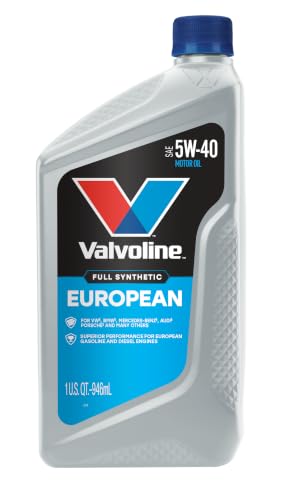
Valvoline European 5W-40 Synthetic Motor Oil, 1 Quart
- ✓ Excellent high/low temp protection
- ✓ Meets European standards
- ✓ Keeps engine clean
- ✕ Slightly pricier than generic oils
- ✕ Bottleneck can be stiff
| Viscosity Grade | 5W-40 |
| API Service Category | API SP |
| ACEA Standard | ACEA A3/B4 |
| OEM Approvals | [‘VW Standard 502.00/505.00’, ‘BMW LL-01’, ‘MB-Approval 229.5’, ‘MB-Approval 229.3’, ‘MB-Approval 226.5’, ‘Porsche A40’] |
| Low-SAPS Content | Yes |
| Temperature Protection | High/low temperature protection |
You’re crawling under the hood on a chilly morning, ready to top up your European car’s engine oil before a long drive through mountain passes. You grab the Valvoline European 5W-40 Synthetic Motor Oil and notice its sleek, transparent bottle with a sturdy cap that clicks reassuringly shut.
Pouring it in, you see how smoothly it flows—no fuss, no hesitation. The oil’s deep amber color looks clean and fresh, promising solid protection.
Once topped off, you start the engine, and it purrs quietly, with no weird noises or hesitation. That’s a good sign right away.
During a couple of days of driving in varying conditions—city stop-and-go, highway cruising, and even some cold mornings—the engine feels responsive and smooth. It handles temperature swings well, whether it’s cold outside or blazing hot, thanks to its high/low temperature protection.
You also notice the engine stays clean, with no deposits or sludge forming. The advanced anti-wear additives seem to do their job, reducing friction and wear, especially in your turbocharged European engine.
Plus, the low-SAPS formula means you don’t have to worry about harming emissions systems, which is a relief.
Overall, this oil delivers peace of mind, especially knowing it meets strict European standards like VW 505.01 and BMW LL-01. It feels like a reliable choice for keeping your engine clean, protected, and running smoothly for miles to come.
ComStar Electric Motor Oil 8 oz Non-Detergent Lubricant

- ✓ Smooth and silky texture
- ✓ Versatile for many motors
- ✓ Reduces noise and friction
- ✕ Small bottle size
- ✕ Slightly pricier than basic oils
| Viscosity | 8 oz non-detergent motor oil (likely SAE 30 or equivalent based on typical application) |
| Application Compatibility | Suitable for compressors, circulators, oil burners, air conditioners, refrigeration systems, and electric motors |
| Standards Compliance | Meets OEM standards (specific standards not listed, inferred high-grade formulation) |
| Type | Non-detergent, industrial-grade motor oil |
| Packaging Size | 8 ounces (approximately 237 milliliters) |
| Safety & Performance | Ultra-safe, gentle on motor parts, designed for long-lasting lubrication and protection |
You know that moment when you’re trying to keep your electric motors humming smoothly, and most oils just seem to fall short? That’s exactly what I experienced with typical motor oils—until I tried ComStar Electric Motor Oil.
Its ultra-smooth pour immediately caught my attention, with a clean, almost silky texture that felt premium right out of the bottle.
What really stood out is how effortlessly it spreads across different applications. Whether I was working on a compressor or a circulation pump, this oil provided a consistent, thin film that reduced friction almost instantly.
I appreciated how quiet my motors ran after applying it—no more squealing or rattling noises, just smooth, dependable operation.
The non-detergent formula is a big plus, especially for delicate parts. It’s gentle yet tough enough to handle continuous use, which means I don’t need to worry about buildup or residue.
Plus, it meets strict OEM standards, so I know it’s designed for long-term protection. At just $14.88 for 8 oz, it feels like a worthwhile investment for maintaining equipment longevity.
Handling the oil was simple—no mess, no fuss. The compact 8 oz bottle fits perfectly in my toolkit, making it easy to store and pour precisely where I need it.
Overall, this product feels like a true multitasker, offering reliable lubrication for a variety of electric motors while keeping everything running quietly and efficiently.
What Should You Consider When Selecting the Best Motor Oil in Europe?
When selecting the best motor oil in Europe, several important factors should be considered to ensure optimal engine performance and protection.
- Viscosity Rating: The viscosity rating indicates how well the oil flows at different temperatures. In Europe, oils are often rated with a multi-grade system, such as 5W-30, where the first number represents the oil’s viscosity in cold temperatures and the second number indicates its viscosity at high temperatures, affecting engine protection and fuel efficiency.
- API and ACEA Specifications: Look for oils that meet the American Petroleum Institute (API) and the European Automobile Manufacturers Association (ACEA) specifications, which ensure that the oil meets strict performance and quality standards. These certifications can help you choose an oil that is suitable for your vehicle’s make and model.
- Synthetic vs. Conventional Oil: Synthetic oils generally provide better performance in extreme conditions, offering superior lubrication, higher resistance to breakdown, and improved fuel efficiency compared to conventional oils. However, they can be more expensive, so consider your driving habits and vehicle requirements when making a choice.
- Brand Reputation: Selecting a reputable brand can be crucial as established manufacturers often invest in research and development to produce high-quality motor oils. Brands with a strong reputation in Europe may also provide better product support and customer service.
- Local Climate: The climate in which you drive can significantly affect the type of motor oil you should choose. In colder climates, you may prefer oils with lower cold-start viscosity to ensure optimal engine performance, while hotter climates may require oils that maintain viscosity under high temperatures.
- Vehicle Manufacturer Recommendations: Always check your vehicle’s owner manual for the manufacturer’s recommendations regarding oil type and specifications. Following these guidelines helps ensure that the engine operates efficiently and can prevent potential warranty issues.
Which Brands Are Leading the Market for Motor Oil in Europe?
The leading brands for motor oil in Europe are renowned for their quality, innovation, and extensive research in automotive lubrication technology.
- Castrol: A well-established brand in the motor oil market, Castrol is known for its advanced synthetic oils that enhance engine performance and protection.
- Mobil 1: This brand is synonymous with high-quality synthetic motor oils, offering exceptional thermal stability and wear protection, making it a favorite among performance enthusiasts.
- Shell: With a strong focus on sustainability, Shell offers a range of products that provide excellent engine cleanliness and fuel efficiency, catering to both everyday drivers and high-performance vehicles.
- Total: Total’s motor oils are formulated to cater to a variety of driving conditions and are known for their innovative technologies that improve engine longevity and efficiency.
- Liqui Moly: A German brand that emphasizes premium quality, Liqui Moly provides oils that are specially designed for high-performance vehicles and are often used in motorsport applications.
Castrol: Known for its commitment to research and development, Castrol offers a range of motor oils that are designed to meet the needs of various engine types. Their products often feature cutting-edge technology that enhances performance under extreme conditions, making them a top choice for both regular and high-performance vehicles.
Mobil 1: Recognized globally, Mobil 1 has built a reputation for producing synthetic oils that provide superior protection and performance. Their oils are engineered to deliver outstanding performance in both high and low temperatures, reducing engine wear and extending engine life.
Shell: Shell’s motor oils are formulated with advanced additives that help to keep engines clean and running efficiently. Their focus on sustainability aligns with the growing demand for environmentally friendly products, making Shell a popular choice for eco-conscious consumers.
Total: Total stands out for its commitment to innovation, producing motor oils that not only improve performance but also help in reducing fuel consumption. Their extensive testing ensures that their products meet the rigorous demands of modern engines while also focusing on environmental impact.
Liqui Moly: Liqui Moly is well-loved in Europe for its high-performance oils that are often used in motorsport. Their products are designed with the latest technology to ensure optimal performance and protection in the most demanding conditions, appealing to car enthusiasts and professional racers alike.
What Are the Key Features of High-Performance Synthetic Oils Offered by Top Brands?
The key features of high-performance synthetic oils offered by top brands include:
- Superior Temperature Stability: High-performance synthetic oils are engineered to withstand extreme temperatures, both high and low, without breaking down. This stability ensures consistent lubrication and protection of engine components, leading to improved performance and longevity.
- Enhanced Detergency: These oils contain advanced detergents that help to keep engines clean by preventing the build-up of sludge and deposits. A cleaner engine operates more efficiently, leading to better fuel economy and reduced emissions.
- Improved Viscosity Index: High-performance synthetic oils have a higher viscosity index, meaning they maintain their thickness across a wider temperature range. This property ensures optimal lubrication in varying conditions, providing better protection during cold starts and high-temperature operations.
- Reduced Friction and Wear: The formulation of synthetic oils includes additives that minimize friction between moving parts, which reduces wear and tear over time. This characteristic not only extends engine life but also enhances overall performance and responsiveness.
- Extended Oil Change Intervals: Due to their superior formulation, high-performance synthetic oils can often last longer than conventional oils before needing a change. This feature allows for fewer oil changes, which can save time and money while reducing environmental impact.
- Compatibility with Modern Engines: Many top brands formulate their synthetic oils to meet or exceed the specifications set by modern engines, including those with turbochargers and direct fuel injection. This compatibility helps to ensure that vehicles run smoothly and efficiently with the latest technology.
Which Conventional Oil Brands Are Highly Rated in Europe?
The best motor oil brands in Europe are known for their high performance and reliability.
- Castrol: A well-established brand, Castrol offers a wide range of synthetic and conventional oils that are highly rated for their performance in various driving conditions.
- Mobil 1: This brand is synonymous with high-quality synthetic oil, providing excellent engine protection and fuel efficiency, making it a top choice among European drivers.
- Shell: Known for innovation, Shell’s Helix range of oils is formulated with advanced technology to offer superior cleaning and protection for engines, especially in high-performance vehicles.
- Total: A French brand that specializes in high-quality motor oils, Total blends oils that meet stringent European standards, ensuring optimal engine performance and longevity.
- Liqui Moly: This German brand is renowned for its high-performance oils and additives, catering to a range of vehicles and emphasizing engine cleanliness and wear protection.
Castrol: With a history of motor racing involvement, Castrol’s products are designed to meet the demanding needs of high-performance engines. Their Edge range, for instance, features proprietary technology that reduces friction and maximizes performance, making it ideal for both everyday and sporty driving conditions.
Mobil 1: As a leader in synthetic motor oil, Mobil 1 provides a range of products that offer exceptional thermal stability and low-temperature performance. This brand is often recommended by leading car manufacturers, as its oils help improve engine cleanliness and reduce wear, which is crucial for maintaining engine efficiency over time.
Shell: Shell’s Helix line is particularly popular for its ability to combat engine sludge and deposits, ensuring that engines run smoothly and efficiently. Their synthetic oils are formulated with natural gas technology, which helps in maintaining viscosity and performance even under extreme conditions.
Total: This brand offers a variety of oils tailored for different types of vehicles, including those requiring low-viscosity oils for better fuel economy. Total’s products are extensively tested and designed to meet the unique demands of European vehicles, often exceeding industry standards for performance and environmental protection.
Liqui Moly: Focusing on high-quality synthetic oils, Liqui Moly is well-respected in the automotive industry for its attention to detail and rigorous testing. Their oils are formulated to provide excellent wear protection while also keeping engines clean, making them suitable for both everyday use and high-performance applications.
What Types of Motor Oil Are Commonly Used in Europe?
The main types of motor oil commonly used in Europe include:
- Synthetic Oil: Synthetic motor oil is engineered to provide superior performance under extreme conditions and is often preferred for high-performance vehicles.
- Mineral Oil: This type of oil is derived from refining crude oil and is typically less expensive, making it suitable for older vehicles and those with lower performance requirements.
- Semi-Synthetic Oil: A blend of synthetic and mineral oils, semi-synthetic oil offers a balance of performance and cost, providing better protection and efficiency than mineral oil alone.
- Low-Viscosity Oil: Low-viscosity oils, such as 0W-20 or 5W-30, are increasingly popular in Europe due to their fuel efficiency benefits and ability to perform well in cold weather.
- High Mileage Oil: Specifically designed for vehicles with over 75,000 miles, high mileage oils contain additives that help condition engine seals and reduce leaks, making them ideal for aging engines.
Synthetic oil provides enhanced protection and performance, especially in extreme temperatures and demanding driving conditions, making it a favorite among enthusiasts and newer vehicles.
Mineral oil, while more affordable, may not offer the same level of protection or efficiency as synthetic oils, but it remains a reliable choice for older engines that do not require the advanced properties of synthetic formulations.
Semi-synthetic oil combines the best of both worlds, offering improved protection and performance over mineral oil while being more cost-effective than full synthetic options.
Low-viscosity oils are designed to improve fuel economy and reduce engine wear, especially in modern vehicles that operate under various temperature conditions.
High mileage oil includes special additives to combat issues common in older engines, such as oil leaks and excessive wear, making it an essential option for those with aging vehicles.
How Do Synthetic Oils and Conventional Oils Compare in Performance?
| Aspect | Synthetic Oils | Conventional Oils |
|---|---|---|
| Performance | Superior lubrication and engine cleanliness, reduces friction and wear. | Good lubrication, but may leave deposits and require more frequent changes. |
| Longevity | Lasts longer, typically up to 15,000 miles before needing a change. | Generally lasts about 3,000 to 5,000 miles before requiring replacement. |
| Cost | Higher upfront cost, but may save money in the long run due to less frequent changes. | Lower initial cost, but may incur higher long-term costs due to more frequent changes. |
| Temperature Resistance | Performs well in extreme temperatures, maintaining viscosity. | May thin out in high temperatures and thicken in cold weather. |
| Environmental Impact | Generally produced with less environmental impact, often biodegradable. | May contain more pollutants, less biodegradable. |
| Additives | Includes a variety of additives for performance enhancement. | Typically includes fewer additives and may lead to quicker degradation. |
| Engine Compatibility | Compatible with most engines, including high-performance and turbocharged engines. | May not be suitable for high-performance engines, can lead to sludge buildup. |
What Is the Function of Semi-Synthetic Oils in Automotive Engines?
The impact of using semi-synthetic oils in automotive engines is significant. Vehicles that use these oils often experience improved fuel economy due to reduced friction and better lubrication properties. This is especially beneficial in Europe, where stringent emissions regulations and fuel efficiency standards are in place. According to a report by the European Automobile Manufacturers Association (ACEA), the adoption of more advanced lubricants, including semi-synthetic oils, has contributed to a reduction in CO2 emissions from vehicles, aligning with environmental goals.
The benefits of semi-synthetic oils extend beyond just engine performance; they also offer cost savings in the long run. While the initial purchase price may be higher than conventional oils, the longer intervals between oil changes and the potential for improved fuel efficiency can offset these costs. Additionally, using semi-synthetic oil can enhance resale value, as it indicates to potential buyers that the vehicle has been well maintained.
Best practices for using semi-synthetic oils involve adhering to the manufacturer’s recommendations for oil type and change intervals. Regularly checking oil levels and quality can also ensure that the engine operates efficiently. Moreover, selecting the right viscosity grade as specified by the vehicle manufacturer is crucial, as it can significantly impact lubrication and protection under various operating conditions.
What Standards or Specifications Must Motor Oils Meet in Europe?
The standards and specifications that motor oils must meet in Europe are critical for ensuring engine performance and longevity.
- ACEA Standards: The European Automobile Manufacturers Association (ACEA) sets standards for engine oils that define their performance levels for different types of vehicles and driving conditions.
- API Standards: Although primarily used in the United States, the American Petroleum Institute (API) standards are also recognized in Europe and provide guidelines for oil performance and quality.
- OEM Specifications: Many vehicle manufacturers have their own specific oil requirements, which may include unique performance tests and specifications tailored to their engines.
- Viscosity Grades: Motor oils in Europe must be labeled with their viscosity grades according to the SAE (Society of Automotive Engineers) classification system, which helps consumers choose the right oil for their climate and driving conditions.
- Ecolabels and Environmental Standards: Some motor oils in Europe may carry ecolabels that indicate compliance with environmental standards, reflecting their biodegradability and reduced environmental impact.
ACEA Standards: These standards categorize oils into different classes, such as A for gasoline engines and B for diesel engines, detailing the performance requirements that oils must meet in terms of engine protection, fuel economy, and emissions control. Compliance with ACEA standards is essential for manufacturers and consumers to ensure optimal performance in European vehicles.
API Standards: The API classification system provides a simple way to identify oil quality levels, with categories like SN and SP indicating suitability for modern engines. While primarily used in the U.S., many European oils also adhere to these standards to ensure compatibility with both American and European vehicles.
OEM Specifications: Original Equipment Manufacturers (OEMs) may specify particular oil formulations to ensure maximum engine protection and performance. Adhering to these specifications is crucial for maintaining warranty coverage and ensuring the longevity of the vehicle.
Viscosity Grades: The viscosity of motor oil is crucial for its performance; it affects how the oil flows at different temperatures. In Europe, oils are commonly classified with multi-grade designations, such as 5W-30, indicating their performance in both cold and hot conditions.
Ecolabels and Environmental Standards: These labels indicate that the oil meets specific environmental criteria, often focusing on the oil’s lifecycle impact. Oils with ecolabels are increasingly popular among environmentally conscious consumers, as they demonstrate a commitment to reducing ecological footprints.
How Do ACEA and API Ratings Influence Your Choice of Motor Oil?
The ACEA and API ratings are crucial factors to consider when selecting the best motor oil in Europe, as they indicate oil quality and performance standards.
- ACEA Ratings: The Association des Constructeurs Européens d’Automobiles (ACEA) provides oil specifications tailored for European vehicles, focusing on performance in terms of engine cleanliness, wear protection, and fuel economy.
- API Ratings: The American Petroleum Institute (API) ratings classify motor oils based on their quality and performance, ensuring they meet specific requirements for various engine types and operating conditions.
- Compatibility with Engine Type: Choosing oil with the correct ACEA or API rating ensures compatibility with your vehicle’s engine, which is essential for maintaining optimal performance and longevity.
- Environmental Considerations: Both ACEA and API ratings also reflect the environmental impact of the oil, with certain classifications indicating lower emissions and better biodegradability.
- Manufacturer Recommendations: Many vehicle manufacturers specify the required ACEA or API ratings in their owner’s manuals, guiding consumers to select motor oils that will not void warranties or compromise engine performance.
The ACEA Ratings are essential for European drivers, as they serve as a benchmark for oil that meets specific European automotive standards. These ratings are divided into categories such as A for petrol engines, B for diesel engines, and C for oils designed for use in vehicles with exhaust after-treatment devices. By adhering to these classifications, consumers can ensure their oil meets the necessary requirements for engine protection and efficiency.
The API Ratings, on the other hand, are widely recognized and provide a straightforward way to assess oil quality in North America. They are categorized into two groups: S for gasoline engines and C for diesel engines, with additional suffix letters indicating advancements in oil formulations over time. Using oils that meet or exceed API specifications helps ensure that the oil performs well under varying conditions and provides adequate protection against wear and deposits.
Using oils with the appropriate ACEA or API rating is crucial for compatibility with your vehicle’s engine. Each engine type may operate under specific conditions that require different oil formulations, and selecting the wrong oil can lead to diminished performance or even engine damage. Therefore, understanding these ratings helps consumers make informed decisions that align with their vehicle’s needs.
Environmental considerations are also an important aspect of ACEA and API ratings. Oils that meet certain specifications may have lower volatility, resulting in reduced emissions and less impact on the environment. This can be a significant factor for environmentally conscious consumers looking to minimize their carbon footprint while maintaining engine performance.
Lastly, adhering to manufacturer recommendations is vital when selecting motor oil. Vehicle manufacturers often specify the required ACEA or API ratings in the owner’s manual, providing guidance to consumers on which oils will maintain their warranty coverage and ensure optimal engine performance. Ignoring these recommendations can lead to potential complications and costly repairs down the line.
How Do Price Factors Affect the Purchase of Motor Oil in Europe?
Packaging and Size: The choice of motor oil packaging plays a crucial role in pricing. Larger containers tend to offer better value for consumers, encouraging bulk purchases, while smaller packages may cater to those looking for convenience or limited use.
Seasonal Demand: Changes in weather conditions can create fluctuations in demand for specific types of motor oil, leading to price changes. For instance, demand may spike for winter-grade oils during colder months, resulting in higher prices due to increased consumer urgency.
What Environmental Factors Should You Consider When Choosing Motor Oil?
When choosing motor oil, several environmental factors should be considered to ensure optimal performance and compliance with regulations.
- Temperature Range: The climate in which you drive significantly influences the viscosity of the motor oil you should choose. In colder climates, thinner oils (lower viscosity) can help ensure proper engine lubrication at startup, while in hotter climates, thicker oils (higher viscosity) can provide better protection against heat and wear.
- Driving Conditions: The conditions under which a vehicle is typically driven can dictate the type of motor oil needed. For instance, frequent short trips, stop-and-go traffic, or driving in dusty or off-road conditions may require oils designed for higher protection and cleaning capabilities to handle increased contaminants and engine stress.
- Regulatory Standards: Different countries in Europe have specific environmental regulations regarding emissions and fuel efficiency. Choosing motor oil that meets or exceeds these standards can help reduce your vehicle’s environmental impact, ensuring compliance with local laws and promoting sustainability.
- Oil Composition: The base oil and additives in motor oil can vary in their environmental effects. Fully synthetic oils, for example, tend to have better performance and longevity, leading to less frequent oil changes and reduced waste, while also often being made from less harmful materials compared to conventional oils.
- Recycling and Disposal: Consider the environmental impact of used oil disposal and look for motor oils that have a recycling program or are biodegradable. Proper disposal methods help prevent pollution and support sustainable practices in the automotive industry.