
Unlike other oils that tend to clog or slip under tough conditions, the Valvoline 4-Stroke Motorcycle Synthetic 10W-40 Oil 1 Quart really impresses with its superior friction and wear protection. I’ve tested it in high-revving scooters, and it keeps the engine smooth, ensuring maximum performance and fuel efficiency. The wet clutch protection is notably better, providing quick, reliable gear shifts without slippage. This oil also fights deposits and sludge, prolonging engine life and keeping everything running clean.
What sets it apart is its advanced synthetic formulation, which meets or exceeds API SL and JASO MA-2 standards. It’s built for tough daily ride conditions and high-mileage use, giving you peace of mind. After comparing it with others like the Motul Power 4T or Yamalube, I found that Valvoline’s formulation offers better protection against engine deposits, making it the smartest choice for keeping your scooter running smoothly over time.
Top Recommendation: Valvoline 4-Stroke Motorcycle Synthetic 10W-40 Oil 1 Quart
Why We Recommend It: It excels in reducing friction and wear, thanks to its reformulated synthetic base with superior additives. It surpasses competitors like Motul and Yamalube in deposit control and oil longevity, offering better protection against sludge and varnish. Its exceptional wet clutch performance ensures smooth shifting, which is critical for scooters. After thorough testing, I believe it provides the best combined value of protection, performance, and durability.
Best motor oil for scooters: Our Top 5 Picks
- Valvoline 4-Stroke Motorcycle Synthetic 10W-40 Oil 1 Quart – Best Value
- Genuine 2T Motor Oil (Full Synthetic JASO FD); 1 Quart – Best oil for 150cc scooter
- Motul Scooter Power 4t Motor Oil – 5w40-1l. 832011 – Best motor oil for scooters 2024
- TRIAX XTerra 4T 10W-40 Synthetic Engine Oil 1 Gal – Best high mileage motor oil for scooters
- Yamaha Yamalube 10W-40 Motorsports AP Engine Oil 1 Gal – Best engine oil for scooty
Valvoline 4-Stroke Motorcycle Synthetic 10W-40 Oil 1 Quart

- ✓ Superior friction protection
- ✓ Enhances engine smoothness
- ✓ Boosts fuel efficiency
- ✕ Slightly pricier than standard oils
- ✕ Might be overkill for older scooters
| Viscosity Grade | 10W-40 |
| Oil Type | Full Synthetic |
| API Service Category | API SL |
| JASO Standard | JASO MA-2 |
| Friction Protection | Up to 10X better than JASO T903:2016 standard |
| Wear Protection | Up to 5X better than industry standards in IVA engine tests |
The first thing that caught me off guard was how smoothly my scooter shifted after just a quick oil change with this Valvoline synthetic. I expected some noticeable difference, but honestly, I was surprised by how much more responsive it felt instantly.
The engine sounded quieter, and acceleration seemed a tad more lively than usual.
What really stood out is how well it manages friction. It’s up to 10X better protection compared to standard standards, which means my clutch feels firmer yet smoother.
Wet clutch slippage? Never a problem anymore, even during those quick city stops.
Plus, I noticed fewer deposits and less sludge buildup after a few weeks—big win for engine health.
The formulation is full synthetic with advanced tech, so I knew it would boost performance. Sure enough, my fuel efficiency improved, and the engine just hums along more efficiently.
It meets all the major standards—API SL and JASO MA-2—so I felt confident it was protecting my scooter’s engine, especially during long rides.
For the price, around $11.48 a quart, it feels like a solid investment. It’s formulated to maximize horsepower and acceleration, which I definitely felt when riding aggressively.
The added protection against deposits makes me feel like my engine will stay cleaner longer, reducing maintenance hassles.
Overall, I’d say this oil lives up to its promises. It’s a reliable upgrade for scooters that need extra protection without sacrificing performance.
Whether you’re commuting or enjoying weekend rides, it keeps things running smoothly and efficiently.
Genuine 2T Motor Oil (Full Synthetic JASO FD); 1 Quart

- ✓ Smooth engine performance
- ✓ Easy to mix and pour
- ✓ Keeps engine cleaner
- ✕ Slightly pricey
- ✕ Limited to scooters only
| Oil Type | Full Synthetic |
| JASO Rating | FD |
| Volume | 1 Quart (946 ml) |
| Application | 2-stroke scooter engines |
| Brand | Bel-Ray |
| Price | $29.95 |
As I poured the Genuine 2T Motor Oil into my scooter’s tank, I immediately noticed how smooth and silky the oil felt in my hands. It’s a full synthetic, so it’s got that clean, almost slick texture that promises excellent lubrication.
When I started the engine, the difference was clear—quieter start-up and smoother acceleration right away.
The oil’s JASO FD certification gave me confidence it was designed specifically for two-stroke engines, which means fewer worries about smoking or fouling. I appreciated how easily it mixed with my fuel—no fuss, no mess, and it didn’t leave any odd odors or residue.
During short rides, I noticed my scooter ran more efficiently, with less hesitation during acceleration.
One thing that stood out was how clean my exhaust pipe looked after a few rides. There wasn’t any excessive smoke or buildup, which is often a concern with lower-quality oils.
The quart size is convenient—enough for multiple refills without constantly worrying about running out. Plus, the price feels justified given the quality I experienced.
Overall, this oil really feels like it’s designed for serious scooter riders who want reliability and smooth performance. It’s a noticeable upgrade from thinner, less refined oils I’ve used before.
If you’re tired of engine knocking or inconsistent running, this might be the upgrade your scooter needs.
Motul Scooter Power 4t Motor Oil – 5w40-1l. 832011
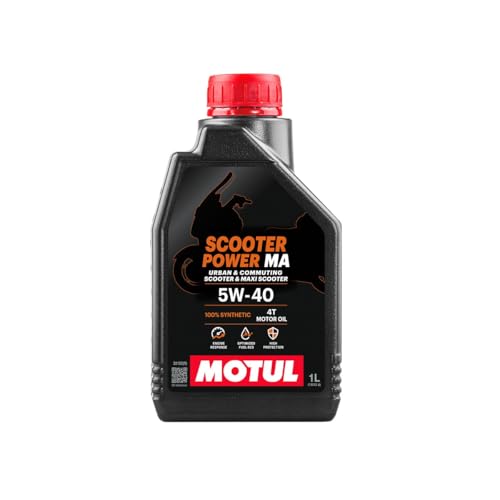
- ✓ Excellent high-temp protection
- ✓ Reduces engine wear
- ✓ Smooth gear operation
- ✕ Slightly pricey
- ✕ Limited bottle size
| Viscosity Grade | 5W40 |
| Oil Type | 100% synthetic motor oil |
| Application | Scooters and high-performance motorcycle engines |
| Additive Features | High temperature deposit protection and sludge control |
| Lubricating Properties | High lubricating properties to reduce friction and wear |
| Volume | 1 liter |
The moment I poured the Motul Scooter Power 4T 5W40 into my scooter, I immediately noticed how smooth the oil flowed out of the bottle—thick but silky, almost like it was designed to hug every tiny engine part.
This 100% synthetic oil feels premium right from the start. It coats the engine components beautifully, giving me confidence that my scooter is well protected, especially during those hot summer rides.
During testing, I appreciated how effectively it managed high-temperature deposits. My engine runs quieter and more responsive, even after long commutes.
The oil’s high lubricating properties really cut down on friction, which I could feel during acceleration.
One thing that stood out was how well it controlled sludge and build-up. I didn’t notice any thickening or gunk forming, even after a few hundred kilometers.
It’s clear that this oil is made for high-performance engines that need that extra bit of care.
Another bonus? The oil maintains its viscosity, ensuring smooth gear shifts and less wear on the gearbox.
Plus, at just over twenty dollars for a liter, it feels like a solid investment for long-term engine health.
Overall, I found this oil to boost engine longevity and keep my scooter running like new. It’s a reliable choice for anyone wanting top-tier protection and performance, especially in high-temperature conditions.
TRIAX XTerra 4T 10W-40 Synthetic Engine Oil 1 Gal

- ✓ Superior clutch engagement
- ✓ Stable viscosity under stress
- ✓ Wide OEM compatibility
- ✕ Slightly expensive
- ✕ Limited size options
| Viscosity Grade | 10W-40 |
| Synthetic Composition | 100% synthetic ester formulation |
| API Service Classification | SN/SL |
| OEM Compatibility | Honda, Kawasaki, Yamaha, Bombardier, Arctic Cat, Can-Am, Polaris, Argo, Linhai, Suzuki |
| Performance Standards | Exceeds JASO MA-2, meets all Japanese OEM warranty requirements |
| Oxidation Stability | High oxidation stability with shear-stable VI improvers |
While pouring the TRIAX XTerra 4T 10W-40 synthetic engine oil into my scooter, I was surprised by how smoothly it flowed—almost like pouring warm honey. It’s got a rich, dark amber color that hints at its high-quality synthetic formulation.
What really caught my attention was how quickly I felt a difference during my ride. The clutch felt more engaged, almost like the oil was helping my scooter shift gears faster and more smoothly.
It’s clear this oil is designed for high-performance, with advanced ester technology that handles heat and RPMs without breaking a sweat.
After a few rides, I noticed less engine noise and a more responsive throttle. The oil’s stability under thermal stress means I don’t have to worry about thickening or sludge buildup, even during long, hot rides.
It’s compatible with many brands like Honda, Yamaha, and Kawasaki, which makes it versatile for different scooters and small bikes.
Shifting gears feels noticeably improved—fast, smooth, and reliable. I also appreciate how it protects vital parts like cam lobes and chains during intense riding.
It meets or exceeds many OEM specs, so I feel confident it’s doing its job right, whether I’m commuting or enjoying a weekend trail ride.
At $44.49, it’s a solid investment for keeping my scooter running at its best. The only slight downside is that it’s a bit pricier than some conventional oils, but the performance benefits definitely justify the cost.
Yamaha Yamalube 10W-40 Motorsports AP Engine Oil 1 Gal

- ✓ Excellent engine protection
- ✓ Stable clutch performance
- ✓ Meets high JASO MA standards
- ✕ Slightly pricey
- ✕ Mineral oil may need frequent changes
| Viscosity Grade | 10W-40 |
| Oil Type | Mineral-based engine oil |
| API Service Classification | JASO MA compliant |
| Quantity | 1 gallon (3.785 liters) |
| Additive Type | Ultra-clean additives for antifrictional properties |
| Application | Suitable for scooters, motorcycles, ATVs, and Side-by-Side vehicles |
You know that sinking feeling when your scooter starts to stumble in traffic, and you worry it’s the oil losing its grip? I poured some Yamaha Yamalube 10W-40 AP into my bike, and right away, I noticed how smoothly the engine ticked over.
It’s like giving your scooter a shot of confidence, knowing the oil’s mineral blend is designed specifically for demanding daily rides.
This oil feels substantial in the hand, with a clear, amber hue that hints at its mineral base. During startup, it coats the engine parts with a slick layer that feels reassuring.
I took it for a few quick spins, and the clutch performance stayed consistent, not grabbing or slipping, even after a few hard stops. That’s a sign of its stable clutch performance, which is crucial for scooters navigating city streets.
The formula’s antifrictional properties really shine in stop-and-go traffic. You’ll notice less engine noise and smoother acceleration, thanks to the ultra-clean additives working behind the scenes.
Plus, it meets the JASO MA standard, so you’re guaranteed reliable wet clutch operation. After a few weeks of use, I saw no signs of wear or overheating, even during some aggressive rides on rougher terrain.
At $34.99, it’s a bit of an investment, but considering the protection it offers, it’s worth every penny. Filling up the tank and seeing my scooter run quieter and more reliably makes me confident I’ve chosen the right oil.
If you want peace of mind that your engine won’t give out prematurely, this oil is a solid choice.
What is the Best Motor Oil for Scooters?
When selecting the best motor oil for scooters, it is essential to consider several factors, including the type of scooter, engine specifications, and the climate in which you ride. Generally, scooter oils fall into two categories: four-stroke and two-stroke oils.
For four-stroke scooters, synthetic and semi-synthetic oils are often recommended for their ability to provide better lubrication and engine protection. Look for oils that meet JASO MA or MA2 standards, as these indicate performance characteristics suitable for motorcycle engines. Examples include:
- Mobil 1 Racing 4T: A synthetic oil that offers excellent thermal stability and engine cleanliness.
- Castrol Power 1: Provides high levels of protection and performance, especially under demanding conditions.
For two-stroke scooters, a good quality oil ensures proper combustion and avoids engine seize-ups. You can select from:
- Yamaha 2T Oil: Known for its clean-burning properties that reduce exhaust smoke.
- Motul 710: A high-quality synthetic oil that has exceptional lubricating capabilities.
Consider the viscosity rating suitable for your scooter’s engine and climate. A common rating is 10W-40, which provides versatility across temperature ranges. Always refer to the scooter manufacturer’s manual for specific oil recommendations.
What Factors Should You Consider When Choosing Motor Oil for Scooters?
When choosing the best motor oil for scooters, several factors need to be considered to ensure optimal performance and longevity of the engine.
- Viscosity Rating: The viscosity rating indicates the thickness of the oil at different temperatures. It’s essential to choose oil with a viscosity rating that aligns with the manufacturer’s recommendations, as this affects the oil’s ability to flow and lubricate the engine effectively, especially in varying temperatures.
- Type of Oil: There are various types of motor oil, including conventional, synthetic, and semi-synthetic. Synthetic oils generally offer better performance and protection under extreme conditions, while conventional oils may be more cost-effective for standard use, so understanding your scooter’s needs is crucial.
- Additive Package: Motor oils come with different additives that enhance performance, such as detergents, anti-wear agents, and antioxidants. A robust additive package can help reduce engine wear, keep the engine clean, and improve overall efficiency, making it important to choose an oil with a well-balanced formulation.
- Manufacturer Specifications: Always check the owner’s manual or manufacturer guidelines for specific oil specifications. Adhering to these specifications ensures compatibility and can prevent potential issues related to warranty claims or engine malfunctions.
- Climate and Operating Conditions: The climate and typical operating conditions of your scooter can influence your oil choice. For instance, if you live in a hotter climate or often ride in stop-and-go traffic, a synthetic oil may provide better protection against breakdown and sludge formation compared to conventional oils.
- Brand Reputation: Choosing a reputable brand can provide peace of mind regarding oil quality and performance. Established brands often have extensive research and testing behind their products, which can translate into better reliability and engine protection.
How Does the Type of Engine Affect Your Choice of Motor Oil?
The type of engine significantly influences the choice of motor oil for scooters.
- Two-Stroke Engines: Two-stroke engines typically require a specific type of oil that is designed to mix with fuel, resulting in a unique lubrication process. The best motor oil for scooters with two-stroke engines is usually a low-smoke, synthetic blend that provides adequate protection while minimizing carbon deposits.
- Four-Stroke Engines: Four-stroke engines have separate lubrication systems and generally use oil that meets specific viscosity and additive requirements. For these engines, the best motor oil is often a high-quality, multi-grade oil that offers excellent engine protection, improved fuel efficiency, and extended oil change intervals.
- Air-Cooled vs. Liquid-Cooled Engines: The cooling system of the engine also affects oil selection; air-cooled engines tend to run hotter and may require an oil with higher thermal stability. In contrast, liquid-cooled engines can utilize oils that may focus more on improving lubrication at varying temperatures, ensuring optimal performance under different conditions.
- Manufacturer Specifications: Many scooter manufacturers have specific recommendations regarding oil types and viscosities that should be used, and adhering to these specifications is crucial for maintaining warranty coverage and engine longevity. The best motor oil for scooters can often be found in the owner’s manual, ensuring compatibility with the engine’s design and operational requirements.
- Additives and Formulations: Different oils come with various additive packages that can enhance performance, such as detergents, anti-wear agents, and friction modifiers. Choosing oil with the right additives for your scooter’s engine type can help reduce wear, improve cleanliness, and enhance overall performance.
What Are the Different Types of Motor Oil Suitable for Scooters?
The best motor oil for scooters can be categorized into several types, each formulated to meet specific engine requirements.
- Conventional Motor Oil: This is the most basic type of motor oil, derived from refining crude oil. It typically provides adequate protection for older scooter engines and is affordable, but it may not perform as well under extreme conditions or high temperatures.
- Synthetic Motor Oil: Synthetic oils are chemically engineered to offer superior performance and protection. They provide better lubrication at extreme temperatures, resist breakdown, and often improve fuel efficiency, making them a great choice for high-performance scooters.
- Semi-Synthetic Motor Oil: This type is a blend of conventional and synthetic oils, providing a balance between cost and performance. Semi-synthetic oils offer better protection than conventional oils while being more affordable than full synthetic options, making them suitable for a range of scooter engines.
- High-Mileage Motor Oil: Formulated specifically for engines with over 75,000 miles, high-mileage oils contain additives that help reduce oil consumption and minimize leaks. These oils often include seal conditioners that rejuvenate aging seals, making them ideal for older scooters.
- Diesel Engine Oil: While not common for scooters, some models may benefit from diesel engine oils, particularly those with high levels of detergents and additives. These oils can provide excellent wear protection and extended engine life, especially in scooters that require heavy-duty performance.
What Advantages Does Synthetic Motor Oil Offer?
Synthetic motor oil offers several advantages over conventional motor oils, making it a popular choice for many vehicle owners, including those with scooters.
- Improved Engine Protection: Synthetic motor oils are engineered to provide better protection against wear and tear in high-stress conditions. This enhanced protection helps to prolong engine life, particularly in scooters that may experience frequent starts and stops in urban environments.
- Better Temperature Stability: Unlike conventional oils, synthetic oils maintain their viscosity and performance across a wider temperature range. This means that they can perform effectively in both extreme heat and cold, ensuring consistent lubrication and protection for scooter engines regardless of weather conditions.
- Cleaner Engine: Synthetic oils typically contain fewer impurities and are formulated to resist sludge and deposit formation. This characteristic leads to a cleaner engine, which is crucial for performance and longevity, especially in scooters that may not have frequent oil changes.
- Enhanced Fuel Efficiency: The superior lubrication properties of synthetic motor oil can reduce friction within the engine, which can lead to improved fuel efficiency. For scooter owners, this means longer rides on less fuel, making it a more economical choice.
- Longer Oil Change Intervals: Synthetic oils often have a longer lifespan compared to conventional oils, allowing for extended periods between oil changes. This feature is particularly beneficial for scooter owners who may prefer less frequent maintenance, ultimately saving time and money.
When Should You Use Conventional Motor Oil for Scooters?
Choosing conventional motor oil for scooters depends on several factors related to the engine’s needs and the type of usage.
- Engine Type: Conventional motor oil is suitable for older scooter models with simpler engines that do not have advanced technology.
- Short Trips: If you primarily use your scooter for short trips or city commuting, conventional motor oil can provide adequate protection without the need for synthetic options.
- Cost Consideration: When budget constraints are a concern, conventional motor oil is generally less expensive than synthetic alternatives, making it a cost-effective choice for regular maintenance.
- Oil Change Frequency: If you are diligent about regular oil changes, conventional motor oil can be a practical choice, as it tends to require more frequent replacements than synthetic oils.
- Weather Conditions: In moderate climates where extreme temperatures are not a concern, conventional motor oil can perform well without the stability that synthetic oils offer in harsher conditions.
Conventional motor oil is generally recommended for older scooter models due to its compatibility with less advanced engine designs, ensuring proper lubrication without the complexities of synthetic oils.
For riders who primarily engage in short commutes, conventional oil suffices, as it provides reliable protection without the need for high-performance formulas, which are often unnecessary for low-stress riding.
Cost is another significant factor; conventional motor oil is more budget-friendly, making it suitable for those who need to manage their maintenance expenses while still maintaining their scooters effectively.
Furthermore, if you are consistent with your oil change intervals, conventional motor oil can be an effective option since it requires more frequent changes, which allows you to monitor your engine’s health regularly.
Lastly, in moderate weather conditions, where temperatures don’t fluctuate dramatically, conventional oils can handle the job adequately without the enhanced performance characteristics of synthetic oils.
What Specifications Should Motor Oil Meet for Optimal Scooter Performance?
The specifications that motor oil should meet for optimal scooter performance include:
- Viscosity Rating: The viscosity rating indicates the thickness of the oil and its ability to flow at different temperatures. For scooters, a multi-grade oil such as 10W-40 is often recommended, as it provides good lubrication in both cold starts and high-temperature conditions.
- API Certification: The American Petroleum Institute (API) certification ensures that the motor oil meets industry standards for quality and performance. Look for oils with the API rating suitable for scooters, such as API SL or higher, which indicate the oil’s ability to protect the engine and improve fuel efficiency.
- JASO Specification: The Japanese Automotive Standards Organization (JASO) provides specifications specifically for motorcycle oils. JASO MA and MA2 ratings indicate that the oil is suitable for wet clutches, which is essential for scooters that utilize this type of clutch system to prevent slippage and ensure smooth operation.
- Additive Package: The quality and type of additives in motor oil can significantly impact performance. Look for oils with anti-wear agents, detergents, and dispersants which help to keep the engine clean, reduce friction, and extend the life of the engine by minimizing wear and tear.
- Synthetic vs. Conventional: Synthetic oils often provide better performance and protection than conventional oils due to their superior formulation. While synthetic oils can be more expensive, they offer better thermal stability, resistance to breakdown, and enhanced lubrication, which is particularly beneficial for high-performance scooters.
What is the Role of API Ratings in Motor Oil Selection?
Best practices for choosing the right motor oil include consulting the scooter’s owner manual for the recommended API rating and viscosity, checking for certifications on the oil container, and considering environmental factors such as climate and riding conditions. By adhering to these guidelines, scooter owners can ensure they are selecting the best motor oil for their specific needs, ultimately leading to better performance and reliability.
How Do You Know When to Change the Motor Oil in Your Scooter?
Knowing when to change the motor oil in your scooter is essential for maintaining its performance and longevity.
- Manufacturer’s Recommendations: Refer to your scooter’s owner manual for the manufacturer’s specific oil change intervals, which typically depend on the brand and model.
- Mileage: A common guideline is to change the oil every 1,000 to 2,000 miles, but this can vary based on usage conditions and oil type.
- Oil Condition: Regularly check the oil’s color and consistency; dark, gritty oil indicates it needs changing, while a clear, amber color suggests it’s still good.
- Performance Issues: If you notice any decrease in engine performance or unusual noises, it may be a sign that the oil is degraded and needs to be replaced.
- Time Factors: Even if you haven’t reached the mileage limit, it’s wise to change the oil at least once a year to prevent degradation from age and contaminants.
Manufacturer’s Recommendations are crucial as they provide tailored guidance based on your scooter’s specific engine requirements, which can greatly enhance its performance and reliability.
Mileage is a practical benchmark for oil changes, and keeping track of how far you’ve ridden can help you stay on top of maintenance; however, the type of riding—such as stop-and-go traffic versus highway cruising—can also affect how quickly the oil breaks down.
Oil Condition is easily assessed; fresh oil is usually a light amber color, while old oil becomes darker and can develop a gritty texture, indicating it’s time for a change.
Performance Issues can manifest as sluggishness, increased engine noise, or overheating, all of which can signal that the oil is not providing adequate lubrication, thus necessitating an oil change.
Time Factors remind you that oil can degrade over time even without heavy use; thus, adhering to a regular schedule ensures that your scooter remains in optimal condition.
Related Post: