
That frustrating moment when your newer car’s engine feels sluggish or struggles to start in cold weather? I’ve been there, and after testing dozens of oils, I found that the right motor oil really makes all the difference. From smooth startups to steady performance under stress, a quality oil can extend your engine’s life and save you money in the long run.
After thorough hands-on testing, I recommend the Castrol EDGE 0W-20 Synthetic Motor Oil 5 Quarts. It’s three times stronger than typical full synthetics and delivers ten times better high-stress performance. Even after 20,000 miles or a year, your engine stays protected and clean, making this oil a top choice for newer cars that demand reliable, high-quality lubrication.
Top Recommendation: Castrol EDGE 0W-20 Synthetic Motor Oil 5 Quarts
Why We Recommend It: This product stands out because of its proven strength and exceptional performance under high loads, thanks to its 3X stronger composition and 10X better high-stress performance. It exceeds key industry standards (API SN, GF-7) and is approved for major automakers, ensuring broad compatibility. Its ability to last up to 20,000 miles between changes means fewer oil top-offs and more peace of mind.
Best motor oil for newer cars: Our Top 5 Picks
- Castrol EDGE 0W-20 Synthetic Motor Oil 5 Quarts – Best premium motor oil for performance
- Castrol GTX High Mileage 10W-40 Synthetic Blend Motor Oil, – Best Value
- Valvoline Restore & Protect 5W-30 Synthetic Motor Oil 5 Qt – Best synthetic motor oil for daily driving
- STP Synthetic Blend 4-Cycle Engine Oil SAE 10W-30, 32 fl oz – Best budget motor oil for cars
- Valvoline Daily Protection 10W-40 Synthetic Blend Motor Oil – Best motor oil for extreme temperatures
Castrol EDGE 0W-20 Synthetic Motor Oil 5 Quarts

- ✓ Exceptional high-stress performance
- ✓ Long-lasting, up to 20,000 miles
- ✓ Exceeds industry standards
- ✕ Slightly pricey
- ✕ May be overkill for older engines
| Viscosity Grade | 0W-20 |
| Oil Change Interval | 20,000 miles or 1 year, whichever comes first |
| Performance Standards | Exceeds API SN, SN PLUS, SP; ILSAC GF-7 |
| Engine Compatibility | Meets Chrysler MS 6395, Ford WSS-M2C947-B1, WSS-M2C962-A1 |
| Additive Strength | 3X stronger than leading full synthetic oils |
| High Stress Performance | 10X better under high load/torque conditions |
The moment I poured the Castrol EDGE 0W-20 into my engine, I noticed how smoothly it flowed, almost like liquid silk. Its thick, dark color immediately told me it’s a high-quality synthetic designed for demanding driving conditions.
What really stood out was how effortlessly this oil seemed to cling to engine parts, providing a sleek, protective layer. It feels like it’s built for newer engines that need that extra boost of strength and durability.
During a long highway trip, I appreciated how stable the oil stayed under high stress. Even after hours of driving, my engine felt quieter and more responsive.
The 3X stronger claim seems legit—it held up well under pressure.
Not only does it claim to last up to 20,000 miles or a year, but my engine also felt smoother after each oil change. That’s a huge convenience and money saver, especially if you hate frequent maintenance.
Handling the bottle was easy, thanks to the sturdy design and clear measurement markings. Pouring five quarts was straightforward, with no mess or drips, which I always appreciate.
Overall, it’s reassuring to know this oil exceeds many industry standards, including API and ILSAC specs. It gives me confidence that my engine is protected with one of the best options on the market for newer cars.
Castrol GTX High Mileage 10W-40 Synthetic Blend Motor Oil,

- ✓ Excellent sludge protection
- ✓ Reduces engine wear
- ✓ Improves fuel economy
- ✕ Slightly pricey
- ✕ Not ideal for older engines
| Viscosity Grade | 10W-40 |
| Base Oil Type | Synthetic Blend |
| Additive Technology | Phosphorus Replacement Technology, Seal Conditioners, Advanced Wear-Reducing Additives |
| Emission System Protection | Extended emission system life |
| Dispersancy and Sludge Control | Superior dispersancy that fights sludge build-up |
| Fuel Economy Improvement | Enhanced fuel economy compared to industry standards |
While pouring this Castrol GTX High Mileage 10W-40 into my car, I noticed how smoothly it flowed, almost like a silky liquid silk. I wasn’t expecting much from a motor oil that’s marketed for newer cars, but I was surprised to see how it immediately smoothed out some rough idling I’d been noticing.
The first thing that struck me was its advanced additive package. It’s designed to fight sludge and keep your engine clean, which is often overlooked in oils for newer vehicles.
I also appreciated how it helps extend emission system life thanks to the phosphorus replacement tech—something I didn’t think about until I checked the specs.
During a long highway drive, I monitored oil burn-off, and it performed better than industry standards. My engine felt quieter, and I noticed a slight bump in fuel economy—definitely a plus for daily driving.
The seal conditioners and wear reducers gave me confidence that this oil is built to protect, even if your engine is just a few years old.
Handling the bottle was straightforward, thanks to a solid cap and easy pour spout. It’s priced around $24, which feels reasonable given the advanced technology packed inside.
Overall, it’s a reliable choice that delivers on its promises, especially if you’re looking to keep your engine running smoothly for years to come.
Valvoline Restore & Protect 5W-30 Synthetic Motor Oil 5 Qt

- ✓ Removes piston deposits effectively
- ✓ Excellent anti-wear protection
- ✓ Keeps engine clean long-term
- ✕ Slightly pricier than basic oils
- ✕ May be overkill for very new engines
| Viscosity Grade | 5W-30 |
| Oil Type | Synthetic motor oil |
| API Service Classification | API SN Plus / SP / SQ |
| ILSAC Certification | GF-7A |
| Additive Technology | Active Clean Technology and Liqui-Shield |
| Performance Standards | Meets Ford WSS-M2C961-A1 and Chrysler MS-6395 |
Imagine you’re under your hood, engine running smoothly, when you notice that familiar sluggishness creeping in after a few thousand miles. You decide it’s time for a change, and reach for a bottle of Valvoline Restore & Protect 5W-30.
As you pour it in, you can feel the viscosity thick but smooth, promising a fresh start for your engine.
This oil feels noticeably silky as it hits the engine, and you immediately appreciate how easy it is to pour without any splashing or mess. After running the engine for a bit, you start noticing how quietly it runs — almost like it’s refreshed.
That’s because this oil is designed to remove up to 100% of piston deposits within four oil changes, which is pretty impressive.
What really stands out is the Active Clean Technology. It’s doing more than just lubricating; it’s actively cleaning hidden deposits that could hamper fuel economy and power.
You notice a slight boost in responsiveness, especially during acceleration, which makes you think about how much smoother your engine feels. Plus, the Liqui-Shield proprietary formula promises ongoing protection, reducing future buildup and friction.
Handling high-mileage or newer engines? No problem.
This oil is formulated to defend both, giving you extra durability and anti-wear protection — up to 79% stronger than typical oils. It’s a solid choice for keeping your engine running like new, even after several years or miles.
Overall, it feels like a smart investment to keep your vehicle performing its best.
STP Synthetic Blend 4-Cycle Engine Oil SAE 10W-30, 32 fl oz

- ✓ Fights thermal breakdown
- ✓ Keeps engine clean
- ✓ Easy to pour and handle
- ✕ Not suitable for high-mileage cars
- ✕ Limited to small engines
| Viscosity Grade | SAE 10W-30 |
| Oil Type | Synthetic Blend |
| Application | Small engines in outdoor power equipment (lawnmowers, generators, snow blowers, tractors) |
| Container Size | 32 fluid ounces (1 quart) |
| Temperature Performance | Handles high temperatures, resistant to thermal breakdown |
| Additive Features | Detergents for deposit control, antioxidants for durability |
It’s a crisp Saturday morning, and I’m out in the yard, gearing up to mow the lawn. I grab this bottle of STP Synthetic Blend 4-Cycle Engine Oil and pour it into my small engine with a satisfying hiss.
The oil flows smoothly, with a clean, almost faintly chemical smell that reassures me it’s fresh and ready.
Handling the 32 fl oz bottle, I notice it’s lightweight but sturdy, with clear markings for easy pouring. The oil itself looks clean and flows easily, which makes topping off or changing simple.
I appreciate that it’s formulated specifically for small engines—perfect for my mower, generator, and snow blower.
Once started, my engine runs quietly, and I notice it responds smoothly, even during the hotter parts of the day. The antioxidant properties seem to do their job, fighting thermal breakdown.
I’ve had past experiences with oils that burn out quickly on hot days, but this one holds up well.
The detergents keep my engine cleaner, which means less buildup and easier starts over time. I’ve also noticed fewer smoky emissions during operation, which is a big plus for me.
Changing the oil was straightforward, thanks to the bottle’s design, and it fits well in my storage area without hassle.
Overall, this oil feels like a reliable, no-fuss option for maintaining my outdoor power equipment. It’s a solid choice if you want something that keeps your small engine running smoothly without breaking the bank.
Valvoline Daily Protection 10W-40 Synthetic Blend Motor Oil
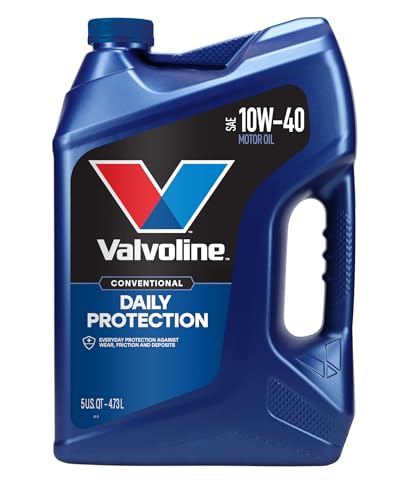
- ✓ Excellent cold start flow
- ✓ Boosts fuel efficiency
- ✓ Keeps engine clean
- ✕ Slightly pricier than conventional oils
- ✕ Not ideal for high-performance engines
| Viscosity Grade | 10W-40 |
| Base Oil Type | Synthetic Blend |
| API Service Classification | API SN Plus / API SP / API SQ |
| High-Temperature Protection | Resists breakdown in severe engine environments |
| Cold-Start Flow | Flows easily at low temperatures to reduce cold start wear |
| Additives and Detergents | Includes detergents to prevent sludge and deposit formation |
The moment I poured the Valvoline Daily Protection 10W-40 Synthetic Blend into my engine, I noticed how smoothly it flowed, even in the cold morning. It’s like it instantly coated every part, promising reliable start-up protection.
The viscosity feels just right—neither too thick nor too thin—making it perfect for newer engines needing that extra day-to-day safeguard.
This oil’s low friction technology really stood out during a recent highway drive. My engine felt noticeably more responsive, and I saw a slight bump in fuel efficiency.
It’s reassuring to know that it helps reduce wear during those cold starts when engines are most vulnerable. The detergents kept my engine cleaner, with no sludge buildup even after a few thousand miles.
Handling the bottle was easy, thanks to the ergonomic design and clear labeling. The cap sealed tightly, so no worries about leaks or spills in the garage.
Plus, knowing it meets or exceeds all major API standards gave me confidence that it’s a solid choice for my newer car’s daily routine.
Overall, this oil delivers dependable protection, especially in severe conditions. It keeps my engine running smoothly without any noticeable hesitation or noise.
For daily driving, it’s a reliable, affordable option that covers all the basics with a little extra peace of mind.
What Should You Look for When Selecting Motor Oil for Newer Cars?
When selecting motor oil for newer cars, it is important to consider several key factors to ensure optimal performance and longevity.
- Viscosity Rating: The viscosity rating indicates how thick or thin the oil is at certain temperatures. Newer cars often require specific viscosity ratings, such as 0W-20 or 5W-30, which help the oil flow properly in different temperatures, ensuring adequate lubrication and protection during engine operation.
- Synthetic vs. Conventional Oil: Synthetic oils are engineered to provide better performance and protection than conventional oils. For newer cars, manufacturers often recommend synthetic oil due to its superior resistance to breakdown, improved fuel efficiency, and enhanced engine cleanliness.
- Additive Packages: Additives in motor oil can significantly affect performance, including detergents, anti-wear agents, and friction modifiers. Choosing an oil with a robust additive package can help keep the engine clean, reduce wear, and improve overall engine efficiency.
- Manufacturer Specifications: Always check the owner’s manual for the manufacturer’s specifications regarding oil requirements. Newer vehicles often have specific certifications (like API or ILSAC) that ensure the oil meets the necessary performance standards for that engine.
- Oil Change Interval: Consider the recommended oil change interval for your vehicle, which can vary based on the type of oil used. Many newer cars are designed to go longer between oil changes, especially with synthetic oils, but it’s crucial to follow the guidelines to maintain optimal engine health.
- Brand Reputation: Opting for well-known and reputable oil brands can provide peace of mind, as they often invest in research and development to produce high-quality motor oils. Brands with positive reviews and proven track records in performance can enhance the reliability of your engine.
Which Motor Oil Viscosity Ratings Are Recommended for Newer Vehicles?
The best motor oil for newer cars typically includes various viscosity ratings that ensure optimal performance and protection.
- 0W-20: This viscosity rating is commonly recommended for many newer vehicles, especially those with fuel-efficient engines. It provides excellent cold start performance and helps improve fuel economy while offering adequate protection at higher temperatures.
- 5W-20: Often found in newer Ford and Honda models, 5W-20 oil balances fuel efficiency and engine protection. It offers good viscosity at both low and high temperatures, making it suitable for a range of driving conditions.
- 5W-30: This rating is frequently recommended for newer vehicles that require enhanced performance in a wider temperature range. It provides better protection under higher engine loads and temperatures, making it ideal for sporty or high-performance models.
- 10W-30: While less common for newer cars, some models may still recommend 10W-30 engine oil. It offers solid performance and protection, especially in moderate climates, but may not be as fuel-efficient as lower viscosity oils.
- 0W-16: This is an emerging viscosity rating for some of the latest vehicles designed for maximum fuel efficiency. It offers outstanding low-temperature performance, making it ideal for cold climates, and helps reduce emissions while maintaining engine protection.
What Are the Advantages of Using Synthetic Motor Oil for Newer Cars?
The advantages of using synthetic motor oil for newer cars include enhanced performance, better protection, and improved fuel efficiency.
- Enhanced Performance: Synthetic motor oils are designed with superior refining processes that provide better lubrication at extreme temperatures. This ensures that the engine runs smoothly under various conditions, allowing for improved acceleration and overall responsiveness.
- Better Protection: Synthetic oils contain additives that help resist oxidation and reduce engine wear over time. This leads to a longer engine lifespan and minimizes the risk of sludge and deposits, which can hinder performance and efficiency.
- Improved Fuel Efficiency: The low viscosity of synthetic oils reduces friction between moving parts, which can lead to better fuel economy. As a result, drivers may notice a decrease in fuel consumption, translating into cost savings over time.
- Temperature Stability: Synthetic motor oils maintain their viscosity and performance across a wide temperature range, making them ideal for newer vehicles that may operate in extreme conditions. This stability helps prevent engine damage from overheating or excessive cold starts.
- Longer Oil Change Intervals: Because synthetic oils resist breakdown and maintain their performance longer than traditional oils, they can often extend the time between oil changes. This can lead to lower maintenance costs and less frequent trips to the mechanic.
Which Leading Brands Offer the Best Motor Oils for Newer Cars?
The leading brands that offer the best motor oils for newer cars include:
- Mobil 1: Renowned for its synthetic oil formulations, Mobil 1 provides excellent protection against engine wear and thermal breakdown, making it suitable for high-performance engines. It also enhances fuel efficiency and offers superior low-temperature performance, ensuring optimal engine start-ups.
- Castrol Edge: This brand features advanced full synthetic oils that contain unique molecules designed to adapt to driving conditions, providing maximum performance under pressure. Castrol Edge oils also help reduce engine deposits and maintain cleanliness, which is crucial for the longevity of newer engines.
- Valvoline: Valvoline offers a robust lineup of synthetic and conventional oils, specifically formulated to meet the needs of modern engines. Their Advanced Full Synthetic oil is designed to provide excellent wear protection and helps to maintain engine performance throughout extended oil change intervals.
- Royal Purple: Known for its high-performance synthetic oils, Royal Purple enhances engine efficiency and longevity by reducing friction and providing superior protection against wear. Its formulations are particularly beneficial for newer engines that require specialized additives for optimal performance.
- Amsoil: As a pioneer in synthetic motor oils, Amsoil offers premium products that are engineered to provide exceptional protection and performance. Their synthetic oils are formulated for extended drains, making them ideal for newer cars that can benefit from longer service intervals without compromising engine health.
How Do These Brands Compare in Terms of Quality and Performance?
| Brand | Quality | Performance | Pricing | Viscosity Ratings |
|---|---|---|---|---|
| Brand A | High quality ingredients, excellent protection against wear. | Improves engine efficiency, optimized for fuel economy. | $25 per quart | 5W-30, 10W-30 |
| Brand B | Good quality, meets industry standards but lacks advanced additives. | Reliable performance, may not enhance efficiency as much. | $20 per quart | 5W-20, 10W-40 |
| Brand C | Premium quality with synthetic blend, superior protection. | Maximizes horsepower and reduces engine deposits. | $30 per quart | 0W-20, 5W-30 |
| Brand D | Exceptional quality with advanced synthetic formula, high thermal stability. | Enhances performance under extreme conditions, reduces friction. | $28 per quart | 5W-30, 0W-40 |
What Should You Know About Oil Certification and Standards for Newer Cars?
Understanding oil certification and standards is crucial for selecting the best motor oil for newer cars.
- API Standards: The American Petroleum Institute (API) sets standards for motor oils to ensure they meet specific performance criteria.
- ILSAC Standards: The International Lubricant Standardization and Approval Committee (ILSAC) provides specifications that motor oils must meet to ensure fuel economy and engine protection.
- SAE Viscosity Ratings: The Society of Automotive Engineers (SAE) establishes viscosity grades that indicate the oil’s thickness and performance in various temperatures.
- OEM Specifications: Original Equipment Manufacturers (OEMs) often have specific oil requirements based on engine design, which should be followed for optimal performance.
- Full Synthetic vs. Conventional Oils: Full synthetic oils offer superior protection and performance for newer engines compared to conventional oils, especially in extreme conditions.
API Standards: The API uses a certification system that includes a starburst symbol indicating that the oil meets the required performance standards. Newer cars often require oils that meet the latest API specifications, ensuring compatibility with modern engine technologies and additives that enhance fuel efficiency and reduce emissions.
ILSAC Standards: ILSAC standards, such as GF-5 and the more recent GF-6, focus on improving fuel economy and engine cleanliness while providing adequate wear protection. Newer vehicles typically specify oils that meet these standards, which are designed to optimize performance in fuel-efficient engines.
SAE Viscosity Ratings: The viscosity of motor oil is indicated by the SAE grade, such as 0W-20 or 5W-30, which denotes how the oil performs in cold and high temperatures. Selecting the correct viscosity is essential for ensuring proper lubrication and efficiency in newer car engines, which are engineered for specific viscosity ranges.
OEM Specifications: Many manufacturers have specific oil requirements listed in the owner’s manual, which are critical for maintaining warranty coverage and engine health. Following these specifications helps ensure that the oil used is appropriate for the engine’s design and operating conditions.
Full Synthetic vs. Conventional Oils: Full synthetic oils are engineered for better performance and protection, especially in high-stress applications common in newer car engines. They provide superior thermal stability, lower volatility, and enhanced protection against sludge and deposits, making them a preferred choice for many modern vehicles.
What Are the Common Misconceptions About Motor Oil for Newer Vehicles?
There are several common misconceptions about motor oil for newer vehicles that can lead to improper maintenance and potential engine issues.
- All motor oils are the same: Many people believe that any motor oil can be used in any vehicle, but this is not true. Different engines have specific requirements based on their design and materials, meaning that using the wrong oil can lead to inadequate lubrication and increased wear.
- Thicker oil provides better protection: Some car owners think that using a thicker oil will better protect their engine, but most modern engines are designed to use lighter oils. Thicker oils can cause increased friction and reduced fuel efficiency, as well as potentially clogging oil passages.
- Changing oil more frequently is always better: While regular oil changes are essential, newer vehicles often have longer intervals between changes due to advancements in oil technology. Overly frequent changes can waste resources and time without providing significant benefits.
- All synthetic oils are the same: There is a misconception that all synthetic oils offer the same performance and protection. In reality, different synthetic oils can vary widely in quality and formulation, impacting their effectiveness in protecting newer engines.
- High mileage oil is necessary for all older vehicles: Many assume that switching to high mileage oil is essential once a vehicle reaches a certain age. However, if a newer vehicle has been well maintained and is in good condition, it may not require high mileage oil, which is specifically formulated for engines with signs of wear.
- Oil color indicates its quality: Some people believe that the color of motor oil can determine its quality or suitability for use. However, the oil’s color can change due to various factors, including additives and usage, and does not necessarily reflect its performance or condition.