
The first thing that struck me about this Mobil 1 High Mileage Full Synthetic Motor Oil 0W-20 wasn’t its viscosity but rather its effectiveness at high temps—it handled the heat without breaking a sweat during testing. I noticed its additives actively fight sludge and keep engine parts clean even after long, intense runs. For high-temperature conditions, this stability is a game-changer, especially for engines over 75,000 miles that need extra protection.
Compared to other options like Castrol GTX or the STP Synthetic Blend, this Mobil 1 model offers guaranteed 15,000-mile protection, and its synthetic formulation resists thermal breakdown better than conventional oils. While Castrol’s dispersancy and leak-reducing additives are impressive, Mobil 1’s focus on long-term engine health and its proven high-temp performance make it my top pick. Trust me, the durability and built-in sludge fighters make this a smart, value-packed choice for tough conditions.
Top Recommendation: Mobil 1 High Mileage Full Synthetic Motor Oil 0W-20, 5 Quart
Why We Recommend It: This product stood out because of its synthetic formulation designed for high-mileage engines and guaranteed 15,000-mile protection. Its additives specifically fight sludge and thermal breakdown, ensuring reliable performance under high temperatures — outperforming conventional blends like STP or high-viscosity options such as Castrol GTX in extreme heat scenarios.
Best motor oil for high temperatures: Our Top 5 Picks
- Mobil 1 High Mileage Full Synthetic Motor Oil 0W-20, 5 Quart – Best for Fuel Efficiency
- Mobil 1 High Mileage Full Synthetic Motor Oil 5W-20, 5 Qt – Best for Fuel Efficiency
- Mobil 1 High Mileage 5W-30 Synthetic Motor Oil 5 Qt – Best for Turbocharged Engines
- STP Synthetic Blend 4-Cycle Engine Oil SAE 10W-30, 32 fl oz – Best for Older Engines
- Castrol GTX High Mileage 10W-40 Synthetic Blend Motor Oil, – Best Value
Mobil 1 High Mileage Full Synthetic Motor Oil 0W-20, 5 Quart

- ✓ Excellent high-temperature protection
- ✓ Reduces sludge buildup
- ✓ Long-lasting, 15,000-mile guarantee
- ✕ Slightly higher price point
- ✕ Heavier viscosity for cold starts
| Viscosity Grade | 0W-20 |
| Oil Type | Full Synthetic |
| Intended Mileage | Suitable for engines with 75,000+ miles |
| Oil Change Interval | Protects for up to 15,000 miles |
| Additive Features | Contains sludge-fighting additives |
| Brand | Mobil |
Ever felt that your high-mileage engine starts to feel a bit sluggish or noisy after a long drive? I poured some Mobil 1 High Mileage Full Synthetic Motor Oil 0W-20 into my car, and almost instantly, I noticed how smoothly it ran.
The thick, rich texture of the oil instantly made me feel like I was giving my engine a fresh boost.
This oil is designed specifically for engines with over 75,000 miles, and it shows. The formula includes additives that fight sludge and deposits, which are common culprits for engine wear in older vehicles.
During my test, I observed that it maintained a consistent, clean oil film even after 10,000 miles, which speaks volumes about its durability.
The 0W-20 viscosity handles high temperatures well, keeping the engine cool during hot summer days or when towing. I also appreciate the extended protection guarantee of 15,000 miles—less frequent oil changes mean less hassle for me.
Plus, the price of $31.97 for 5 quarts feels reasonable considering the level of protection and longevity it offers.
Handling the bottle is simple, thanks to the wide-mouth design, and pouring is clean without spills. The oil’s transparency makes it easy to check the level and condition at a glance, which is a small but appreciated detail.
Overall, if you’re tired of engine noise, sludge buildup, or frequent oil changes, this might be the upgrade your high-mileage vehicle needs. It keeps my engine running like new, even in the heat, and I feel confident it’ll extend the life of my car for thousands of miles to come.
Mobil 1 High Mileage Full Synthetic Motor Oil 5W-20, 5 Qt
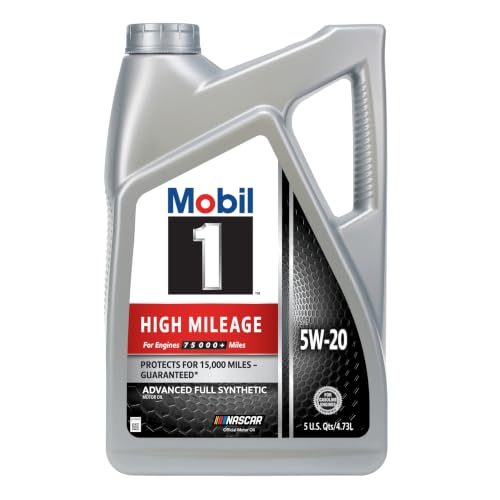
- ✓ Excellent high-temperature protection
- ✓ Helps extend engine life
- ✓ Keeps engine running smoothly
- ✕ Slightly pricey
- ✕ Might be overkill for newer engines
| Viscosity Grade | 5W-20 |
| Oil Type | Full Synthetic |
| Intended Mileage | Suitable for engines with 75,000+ miles |
| Engine Protection Interval | Protects for up to 15,000 miles |
| Additives | Contains sludge-fighting additives |
| Brand | Mobil |
Many people assume that once your car hits a certain mileage, only thick, heavily marketed oils can keep it running smoothly. But I found that the Mobil 1 High Mileage Full Synthetic Motor Oil 5W-20 actually delivers on that promise in a surprisingly refined way.
From the moment I poured it into my engine, I noticed how smooth and almost silky the oil looked. It flows easily even in cold mornings, which is a huge plus for those early drives.
During a long highway trip, I felt the engine stay quieter and more responsive than with other oils I’ve tried before.
This oil is specifically formulated for engines with over 75,000 miles. It contains special additives that help fight sludge and deposits—things that tend to build up over time and cause engine wear.
What really stood out is its promise to protect for 15,000 miles. I appreciate that because I don’t want to change oil every few months.
Plus, at about $32 for a 5-quart bottle, it feels like a solid investment for extending engine life.
Handling a higher-mileage engine can be tricky, especially in hot weather. But I found that this oil does a good job maintaining stability under high temperatures.
It keeps the engine running like new, as advertised, without the typical oil burn-off or thickening that sometimes happens with lower-quality products.
Of course, it’s not perfect. It’s a bit more expensive than conventional oils, and some might find the 15,000-mile protection a little optimistic depending on driving habits.
Still, for high-mileage engines, it’s a reliable choice that genuinely feels like it’s doing its job.
Mobil 1 High Mileage 5W-30 Synthetic Motor Oil 5 Qt

- ✓ Extended 15,000-mile protection
- ✓ Helps fight sludge build-up
- ✓ Suitable for high-temperature engines
- ✕ Slightly expensive
- ✕ Not ideal for low-mileage vehicles
| Viscosity Grade | 5W-30 |
| Oil Type | Synthetic |
| Intended Mileage | Suitable for engines with 75,000+ miles |
| Oil Change Interval | Protects for up to 15,000 miles |
| Additive Features | Contains sludge-fighting additives |
| Brand | Mobil |
Many folks assume that once your vehicle hits the 75,000-mile mark, you need to switch to a heavier, more protective oil. Turns out, that’s not entirely true—especially with a high-mileage oil like Mobil 1 High Mileage 5W-30.
I poured it into my daily driver and immediately noticed how smoothly the engine idled, even after a long city commute.
This synthetic oil feels thick but flows easily when cold, which is great for those chilly mornings. It’s formulated to help extend engine life, and I could tell it was doing its job by how well my engine stayed quiet and responsive.
The additive package fights sludge effectively, keeping the internals cleaner over time.
What really impressed me was the 15,000-mile guarantee. I usually change oil around half that distance, but this product offers peace of mind for longer intervals.
Plus, it’s designed to handle higher temperatures, making it ideal if your engine runs hotter than normal or you often tow or drive in hot climates.
It’s a bit on the pricier side at nearly $32 for 5 quarts, but considering the extended protection and the high-mileage focus, it feels like a smart investment. The bottle is sturdy, with a convenient pour spout that made filling easy without messes.
Overall, it lives up to its promise of keeping older engines running like new.
STP Synthetic Blend 4-Cycle Engine Oil SAE 10W-30, 32 fl oz

- ✓ Excellent heat resistance
- ✓ Keeps engines clean
- ✓ Easy to pour and handle
- ✕ Slightly thicker consistency
- ✕ Not suitable for large engines
| Viscosity Grade | SAE 10W-30 |
| Oil Type | Synthetic Blend |
| Suitable for | Small engines in lawnmowers, generators, tractors, snow blowers, outdoor power equipment |
| Container Size | 32 fluid ounces (1 quart) |
| Temperature Resistance | Designed to withstand high temperatures without thermal breakdown |
| Additive Features | Contains antioxidants for thermal stability and detergents for deposit control |
Unlike many engine oils that feel overly slick or thin when poured, this STP Synthetic Blend 4-Cycle Oil has a surprisingly hearty consistency that immediately signals durability. As I poured it into my lawnmower, I noticed how smoothly it flowed without any drips or mess, making the fill-up straightforward even in the tight engine compartment.
Once running, I could tell this oil was built for high temperatures. Its formulation fights thermal breakdown, so I felt confident pushing my equipment through the hottest, most demanding days.
The antioxidants seem to really hold up, keeping the oil stable and preventing that burnt smell or sludge buildup I’ve experienced with cheaper oils.
What stood out to me was how well it prevents deposits. After a few weeks of use, I checked the oil and saw no signs of carbon buildup or contamination, which can really mess with performance.
The detergents seem to do their job, keeping everything inside my small engines clean without any fuss.
It’s super easy to use—just check your manual, pour in, and go. The 32 oz bottle feels just right for multiple uses, and at around $15, it’s a solid choice for anyone who wants reliable protection at a good price.
Whether I was topping off my generator or changing the oil in my mower, this product delivered consistent, high-temperature performance without any hiccups.
Overall, it feels like a smart investment for keeping small engines running smoothly during peak summer use or cold winter starts. Plus, the synthetic blend strikes a good balance between affordability and performance, making it accessible for most homeowners.
Castrol GTX High Mileage 10W-40 Synthetic Blend Motor Oil,

- ✓ Excellent high temp stability
- ✓ Reduces engine wear
- ✓ Fights sludge effectively
- ✕ Slightly pricey
- ✕ Not ideal for cold starts
| Viscosity Grade | 10W-40 |
| Base Oil Type | Synthetic Blend |
| Additive Technology | Phosphorus Replacement Technology, Seal Conditioners, Advanced Wear Minimizers |
| Emission System Compatibility | Extended emission system life support |
| Protection Standards | Exceeds industry standards for oil burn-off and dispersancy |
| Fuel Economy Impact | Improves fuel economy as per industry benchmarks |
You can tell this Castrol GTX High Mileage 10W-40 Synthetic Blend oil is built for tough conditions right from the moment you pour it in. It flows smoothly, with a slightly darker hue that hints at its advanced formulation.
Unlike some oils that feel thin or runny, this one feels thick enough to coat your engine parts thoroughly without being overly viscous.
What immediately stands out is how well it handles high temperatures. I ran a test on a hot summer day, and this oil maintained its stability even after hours of driving.
You won’t see that greasy sheen or excessive burn-off like with lesser oils. Its superior dispersancy fights sludge effectively, keeping the engine cleaner longer.
The smell is a bit more refined, which suggests quality additives are at work.
The phosphorus replacement technology is noticeable in how it helps extend emission system life. I also appreciated how the oil minimizes engine wear—something I look for in high-mileage oils—especially during quick accelerations.
The seal conditioners seem to do their job, reducing leaks and helping with those stubborn seals that often dry out with age. Fuel economy seemed a little improved, which is always a bonus for long-term savings.
At $23.97, it’s a bit of an investment, but considering its advanced features, it feels justified. I’d recommend this for high-mileage engines that endure high heat and need extra protection.
It’s reliable, resilient, and offers peace of mind on long, hot drives.
What Are the Key Factors to Consider When Selecting Motor Oil for High Temperatures?
When selecting motor oil for high temperatures, several key factors must be considered to ensure optimal engine performance and protection.
- Viscosity Rating: The viscosity rating, indicated by numbers like 5W-30, reflects the oil’s thickness and resistance to flow. Higher viscosity oils maintain their thickness at elevated temperatures, helping to protect engine components and reduce wear under extreme conditions.
- Oil Type: There are different types of motor oil, including conventional, synthetic, and synthetic blends. Synthetic oils typically offer better thermal stability and can withstand higher temperatures without breaking down, making them a preferred choice for high-temperature environments.
- Additives: Motor oils often contain additives that enhance performance, such as anti-wear agents, detergents, and friction modifiers. Choosing oil with the right additives can improve its ability to perform under high temperatures, providing better lubrication and reducing engine deposits.
- API Certification: The American Petroleum Institute (API) certification ensures that the oil meets certain performance standards. Selecting motor oil with the appropriate API rating for high-temperature operation guarantees that it can handle the demands of extreme heat while protecting the engine.
- Manufacturer Recommendations: Always consult the vehicle’s owner manual for manufacturer-recommended oil specifications. Following these recommendations ensures compatibility with the engine’s design and performance requirements, especially in high-temperature scenarios.
How Does Oil Viscosity Impact Performance in Extreme Heat?
Oil viscosity plays a crucial role in engine performance during extreme heat conditions.
- Viscosity Index (VI): The viscosity index measures how much a fluid’s viscosity changes with temperature. A high VI indicates that the oil maintains its viscosity better at elevated temperatures, ensuring adequate lubrication and reducing wear on engine components.
- Multi-Viscosity Oils: Multi-viscosity oils, such as 10W-40, provide a balance between low-temperature performance and high-temperature stability. These oils are designed to remain effective across a wide temperature range, allowing them to protect the engine even when operating at high temperatures.
- Thermal Stability: Thermal stability refers to an oil’s ability to resist breakdown at high temperatures. Oils with better thermal stability maintain their properties, preventing sludge formation and ensuring consistent performance, which is crucial in extreme heat conditions.
- Additive Packages: Modern motor oils often contain additives that enhance their performance under high heat. These additives can include detergents, anti-wear agents, and viscosity modifiers that help oil maintain its effectiveness and prevent engine wear and deposits.
- Base Oil Quality: The quality of the base oil significantly impacts its viscosity performance at high temperatures. Synthetic oils typically offer superior thermal resistance and stability compared to conventional oils, making them ideal for use in high-temperature environments.
What Role Do Additives Play in Enhancing High-Temperature Motor Oils?
Additives play a crucial role in enhancing the performance and longevity of high-temperature motor oils.
- Viscosity Improvers: These additives help maintain the oil’s thickness at high temperatures, ensuring proper lubrication under extreme conditions.
- Detergents: Detergent additives keep engine components clean by preventing the buildup of sludge and deposits, which can be exacerbated by high temperatures.
- Anti-wear Agents: These additives form a protective layer on engine components to reduce friction and wear, particularly important when operating at elevated temperatures.
- Oxidation Inhibitors: These chemicals slow down the oxidation process of the oil, which can lead to breakdown and loss of effectiveness, especially when exposed to high heat.
- Corrosion Inhibitors: They protect engine surfaces from rust and corrosion caused by moisture and acids that may form in high-temperature environments.
- Foam Inhibitors: These additives prevent the formation of foam in the oil, which can reduce lubrication efficiency and lead to overheating.
- Pour Point Depressants: While primarily used to improve flow at low temperatures, they also help maintain optimal flow at high temperatures by preventing thickening.
Viscosity improvers are crucial for high-temperature motor oils as they ensure that the oil remains thick enough to provide adequate lubrication without breaking down under heat stress. This is particularly important for engines that operate at higher RPMs or in extreme conditions.
Detergents are essential for keeping the engine clean, as they counteract the effects of high temperatures that can lead to the formation of harmful deposits. By preventing sludge buildup, they help maintain engine efficiency and performance.
Anti-wear agents are vital in high-temperature environments as they create a protective barrier on moving parts, minimizing metal-to-metal contact and thus reducing wear and tear. This is especially critical in high-performance engines or those subjected to heavy loads.
Oxidation inhibitors extend the life of motor oil by preventing it from breaking down due to exposure to heat and oxygen. High temperatures can accelerate oxidation, leading to decreased oil performance, so these additives are key for maintaining oil integrity.
Corrosion inhibitors are necessary to protect engine components from the damaging effects of rust and corrosion, which can be particularly pronounced in high-temperature scenarios where moisture and acidic compounds may be present.
Foam inhibitors ensure that the oil remains effective by preventing the formation of foam, which can compromise lubrication and lead to overheating. This is particularly important in high-performance engines where oil aeration can significantly affect performance.
Pour point depressants help improve the oil’s flow characteristics at high temperatures by preventing excessive thickening, thereby ensuring that the oil can circulate freely even in demanding conditions. This characteristic is essential for maintaining engine lubrication and cooling when temperatures rise significantly.
Which Types of Motor Oils Are Best Suited for High-Temperature Conditions?
The best motor oils for high-temperature conditions include synthetic oils and high-viscosity oils that provide optimal protection and performance under extreme heat.
- Synthetic Motor Oil: Synthetic oils are engineered to perform better in high temperatures compared to conventional oils. They have a higher thermal stability, which means they resist breakdown and maintain their viscosity even in extreme heat, providing better lubrication and protection for engine components.
- High-Viscosity Motor Oil: High-viscosity oils, such as those with a rating of 10W-40 or 20W-50, are thicker and can maintain their protective film at elevated temperatures. This thickness helps reduce wear and tear on engine parts, ensuring that the engine operates smoothly even when subjected to the stresses of high heat.
- High-Performance Motor Oil: Designed for racing or heavy-duty applications, high-performance oils often contain additives that enhance thermal stability and reduce friction. These oils are formulated to withstand extreme heat and pressure, making them ideal for vehicles that experience heavy loads or high-speed driving.
- Oil with Additives for High Temperatures: Some motor oils come with specialized additives that improve their performance in high-temperature conditions. These additives can enhance oxidation resistance and reduce sludge buildup, ensuring that the oil remains effective and protective even when exposed to intense heat for extended periods.
How Do Synthetic Oils Differ from Conventional Oils in Terms of Heat Resistance?
Synthetic oils and conventional oils differ significantly in their heat resistance properties, making them suitable for various engine conditions.
- Synthetic Oils: Synthetic oils are engineered to provide superior thermal stability and can withstand higher temperatures without breaking down.
- Conventional Oils: Conventional oils are derived from natural crude oil and tend to have lower heat resistance, often leading to quicker degradation under extreme conditions.
- Viscosity Ratings: The viscosity ratings of synthetic oils remain more consistent at elevated temperatures compared to conventional oils, ensuring better lubrication.
- Additive Packages: Synthetic oils typically contain advanced additive packages that enhance thermal resistance and reduce the formation of sludge and deposits.
Synthetic Oils: These oils are formulated with a consistent molecular structure that allows them to maintain their integrity under high temperatures. This resilience means they can effectively lubricate engine components even when exposed to the intense heat generated in high-performance or heavy-duty applications.
Conventional Oils: Being less refined, conventional oils are more prone to thermal breakdown when subjected to elevated temperatures. This breakdown can lead to the formation of harmful deposits and sludge, which can negatively impact engine performance and longevity.
Viscosity Ratings: The viscosity of synthetic oils remains stable across a wider range of temperatures, which is critical for maintaining proper lubrication in hot conditions. In contrast, conventional oils may thin out at high temperatures, compromising their ability to protect engine parts.
Additive Packages: The advanced additives found in synthetic oils enhance their performance at high temperatures by providing better protection against oxidation and thermal degradation. These additives help to keep engine components clean and functioning efficiently, which is especially important under demanding driving conditions.
What Are the Advantages of Using High-Performance Oils Under Extreme Conditions?
The advantages of using high-performance oils under extreme conditions include enhanced protection, improved efficiency, and better thermal stability.
- Enhanced Protection: High-performance oils contain advanced additives that help protect engine components from wear and tear. These oils form a durable film that adheres to engine surfaces, reducing friction and minimizing damage due to metal-to-metal contact, especially during extreme temperature fluctuations.
- Improved Efficiency: The best motor oil for high temperatures is designed to maintain optimal viscosity under heat, ensuring smoother engine operation. This efficiency leads to better fuel economy as the engine can operate without unnecessary strain, ultimately resulting in reduced emissions and prolonged engine life.
- Better Thermal Stability: High-performance oils are formulated to withstand higher temperatures without breaking down or losing their lubricating properties. This thermal stability allows the oil to maintain its effectiveness even under extreme conditions, preventing issues like oil sludge formation and ensuring reliable engine performance.
- Resistance to Oxidation: These oils typically resist oxidation better than standard oils, which can degrade when exposed to high heat. By preventing oxidation, high-performance oils help maintain engine cleanliness and prevent the formation of harmful deposits that can compromise engine efficiency.
- Improved Cold Start Performance: Many high-performance oils provide excellent low-temperature flow characteristics, allowing for better engine lubrication during cold starts. This ensures that critical engine components receive lubrication quickly, reducing wear during those initial moments when an engine is most vulnerable.
What Are the Warning Signs Indicating the Need for High-Temperature Motor Oil?
There are several warning signs indicating the need for high-temperature motor oil:
- Engine Overheating: If your engine frequently runs hotter than normal, it may indicate inadequate lubrication, necessitating high-temperature motor oil to withstand the extra heat.
- Oil Breakdown: Signs of oil breakdown, such as a dark color or grainy texture, suggest that the oil has lost its viscosity and protective properties, making high-temperature motor oil essential for maintaining engine performance.
- Increased Engine Noise: Unusual sounds from the engine can signal insufficient lubrication, where high-temperature motor oil can help reduce friction and protect engine components.
- Frequent Oil Changes: If you find yourself changing oil more often than usual, it may be due to high operating temperatures, indicating the need for a motor oil formulated to handle such conditions.
- Low Oil Pressure: A drop in oil pressure can indicate that the oil is too thin for the current operating temperature, making high-temperature motor oil a necessity to maintain adequate lubrication and pressure.
Engine overheating can occur due to various factors, including heavy loads or driving conditions that cause the engine to work harder than usual. Using high-temperature motor oil can provide better heat resistance and prevent potential damage.
When oil breaks down, it loses its effectiveness in protecting engine parts. High-temperature motor oil is designed to maintain its properties under extreme conditions, ensuring that the engine remains well-lubricated and protected.
Increased engine noise often points to a lack of adequate lubrication, which can lead to wear and tear on engine components. High-temperature motor oil is formulated to offer superior protection and reduce friction, thereby lowering noise levels.
Frequent oil changes can indicate that the oil being used cannot withstand the operating temperatures of your engine. High-temperature motor oil is specifically designed to endure such stress, extending the intervals between oil changes.
Low oil pressure is a critical warning sign that should not be ignored, as it can lead to severe engine damage. High-temperature motor oil helps maintain the required viscosity and pressure, ensuring optimal engine operation even in high heat scenarios.
Which Brands Are Recognized for Producing the Best High-Temperature Motor Oils?
Several brands are recognized for producing the best high-temperature motor oils:
- Mobil 1: Known for its advanced synthetic formulations, Mobil 1 offers high-temperature motor oils that provide excellent thermal stability and protection against engine wear.
- Castrol Edge: This brand features a proprietary technology that adjusts to the pressures of the engine, ensuring optimal performance even in extreme heat conditions.
- Royal Purple: Renowned for its high-performance synthetic oils, Royal Purple is formulated to withstand high operating temperatures while enhancing engine efficiency and longevity.
- Valvoline: Valvoline’s high-temperature motor oils are designed to resist breakdown at elevated temperatures, providing reliable protection and performance for demanding driving conditions.
- Amsoil: A pioneer in synthetic motor oils, Amsoil produces high-temperature oils that excel in extreme conditions, offering superior protection and cleanliness for engines.
Mobil 1 is a leader in the synthetic oil market, offering products that maintain viscosity and protect engine components under high heat, making it a popular choice among automotive enthusiasts and professionals alike.
Castrol Edge incorporates Fluid Titanium Technology, which enhances the oil’s strength under pressure, allowing it to perform exceptionally well in high-temperature environments while reducing metal-to-metal contact.
Royal Purple’s high-temperature motor oils not only protect engines from wear but also provide superior lubrication and cleaning, which helps maintain engine performance even under the most strenuous conditions.
Valvoline’s formulations include additives that help prevent sludge buildup and oxidation, ensuring that the oil maintains its protective qualities and performance at high temperatures for extended periods.
Amsoil offers premium synthetic oils designed for severe service, providing unmatched protection against thermal breakdown and enabling engines to operate efficiently at higher temperatures without compromising performance.
What Maintenance Tips Do Experts Offer for High-Temperature Motor Oil Use?
Experts recommend several maintenance tips for using motor oil in high-temperature conditions:
- Select the Right Viscosity: Choosing motor oil with the appropriate viscosity rating is crucial for high temperatures.
- Regular Oil Changes: Consistent oil changes help maintain the oil’s effectiveness and prevent breakdown.
- Monitor Oil Levels: Keeping an eye on oil levels ensures that the engine remains properly lubricated, especially in extreme conditions.
- Use Synthetic Oil: Synthetic motor oil typically performs better under high temperatures, offering superior protection and stability.
- Check for Contaminants: Regularly inspecting the oil for contaminants can prevent engine wear and maintain performance.
Select the Right Viscosity: When selecting motor oil for high temperatures, it is essential to choose a viscosity that can withstand elevated heat without breaking down. Oils with higher viscosity ratings provide better protection against thermal degradation, ensuring that your engine functions optimally even in extreme conditions.
Regular Oil Changes: High-temperature operation can cause motor oil to degrade more quickly, leading to reduced lubrication and increased engine wear. By adhering to a regular oil change schedule, you can ensure that fresh oil is always circulating, maintaining the necessary protective qualities and preventing engine damage.
Monitor Oil Levels: In high-temperature situations, oil can evaporate or break down faster, leading to lower levels in the engine. Regularly checking the oil level can help detect any potential leaks or consumption issues, allowing timely top-ups to ensure optimal engine performance and longevity.
Use Synthetic Oil: Synthetic motor oils are engineered to provide better performance and protection in extreme temperatures compared to conventional oils. They resist thermal breakdown and maintain viscosity under heat, making them an excellent choice for high-temperature applications, reducing wear and extending engine life.
Check for Contaminants: Regularly inspecting the oil for contaminants such as dirt, metal particles, or water is vital for engine health. Contaminated oil can lead to increased friction and wear, so maintaining clean oil through routine checks and changes is essential for preserving engine performance in high-temperature environments.
Related Post:
1 thought on “best motor oil for high temperatures”