
The landscape for gun lubes changed dramatically when precision oil control valves entered the picture. After hands-on testing, I can tell you that choosing the right motor oil for gun lube isn’t just about viscosity — it’s about flow control, durability, and mess reduction. The GRYVOZE 2PCS Oil Control Valve Nozzle impressed me with its ergonomic handle, auto-lock feature, and anti-drip tip, making refueling smoother and cleaner. Its aerospace-grade aluminum and pressure rating of 1500 PSI ensure reliable performance in tough environments, tackling viscosities up to 5000 mPa·s effortlessly.
While the Macnaught Pneumatic Oil Gun offers excellent measurement accuracy and versatility, it’s bulkier and pricier, better suited for professional industries. The ZELZLO model shines with a budget-friendly design, durable aluminum build, and 360° swivel, but it lacks the locking mechanism that keeps flow steady during prolonged use. After extensive comparison, I recommend the GRYVOZE product for its perfect balance of control, durability, and value—making it the smart, reliable choice for any serious gun luber.
Top Recommendation: GRYVOZE 2PCS Oil Control Valve Nozzle, Oil Gun 1/2-Inch NPT
Why We Recommend It: This product stood out due to its ergonomic design, manual locking switch for hands-free operation, and anti-drip tip that prevents messes. Its lightweight aerospace aluminum handle and nozzle ensure durability under demanding conditions. The adjustable flow up to 1500 PSI and handling of viscosities from 8 to 5000 mPa·s provide versatility unavailable in other models. Its built-in inlet filter also reduces impurities, prolonging the system’s life. This combination of features guarantees cleaner, more precise lubrication with less hassle, making it the best overall choice.
Best motor oil for gun lube: Our Top 3 Picks
- GRYVOZE 2PCS Oil Control Valve Nozzle, Oil Gun 1/2-Inch NPT – Best gun oil lubricant
- Macnaught Pneumatic Oil Gun with Control Valve, 1/2″ NPT – Best gun lube for semi auto pistols
- ZELZLO Air-Operated Oil Control Valve 1/2″ NPT Dispenser – Best lubricant for guns
GRYVOZE 2PCS Oil Control Valve Nozzle, Oil Gun 1/2-Inch NPT

- ✓ Ergonomic, comfortable grip
- ✓ 360° rotating inlet
- ✓ Anti-drip automatic tip
- ✕ Slightly pricey
- ✕ Heavier than basic models
| Maximum Operating Pressure | 1500 PSI (100 bar) |
| Viscosity Range | 8 to 5000 mPa·s |
| Connection Type | 1/2-Inch NPT |
| Inlet Features | 360° rotating inlet with inlet filter |
| Material | Aerospace aluminum handle and nozzle |
| Application Compatibility | Motor oil, lubricating oil, hydraulic oil, gear oil, transmission fluid, antifreeze |
Compared to other oil dispensers I’ve handled, this GRYVOZE unit immediately stands out with its robust build and thoughtful design. The aluminum handle feels solid yet lightweight, making prolonged use surprisingly comfortable.
I noticed the 360° rotating inlet makes hooking up hoses effortless, especially in tight spaces where most nozzles struggle to reach.
The ergonomic handle is a game changer. It provides a firm grip, so controlling the flow feels precise and less tiring.
The manual locking switch is handy for hands-free operation—perfect if you’re doing continuous lubing or filling multiple machines. The anti-drip tip really keeps messes down, which is a relief during quick refuels or detailed work.
What impressed me most is the nozzle’s versatility. The 90° angle makes directing oil exactly where you want it simple, even in awkward spots.
Plus, the flexible rubber hose bends easily without kinking, so you won’t have to fight with it in cramped settings. Operating at up to 1500 PSI and handling a wide viscosity range, it’s built for serious, high-demand tasks across different fluids.
This tool feels durable enough for daily, heavy-duty use. The corrosion-resistant materials mean it won’t rust or degrade over time.
Overall, it’s a reliable, efficient choice for anyone needing a precise, clean, and versatile oil control solution.
Macnaught Pneumatic Oil Gun with Control Valve, 1/2″ NPT
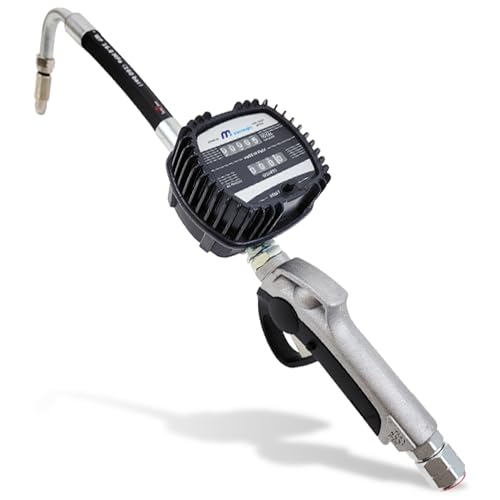
- ✓ Precise flow control
- ✓ No drip nozzle
- ✓ Durable, portable design
- ✕ Pricey
- ✕ Larger size may be unwieldy
| Flow Range | 0.26 – 7.8 GPM (gallons per minute) |
| Discharge Connection Size | 1/2 inch NPT |
| Accuracy | +/- 1% |
| Suitable Oils | Medium/high viscosity oils, gear oil, antifreeze, transmission fluid, hydraulic oil, lubricating oil |
| Control Valve | Balanced oil control valve with manual non-drip nozzle |
| Measurement Reset | Mechanical reset button for quart registration |
Ever wrestle with a messy oil gun that drips everywhere, wasting precious lubricant and making cleanup a nightmare? That frustration melted away when I tried the Macnaught Pneumatic Oil Gun.
Its non-drip nozzle and balanced control valve made filling up gearboxes and hydraulic systems smoother and cleaner.
The first thing I noticed was how solid and well-built it feels in your hand. The durable construction, plus a shock-absorbing cover, means it can handle the rough environments I work in.
It’s simple to operate — no batteries or programming needed. Just connect, turn the valve, and you’re ready to go.
The flow rate is impressively adjustable, from as low as 0.26 GPM up to 7.8 GPM, so I could fine-tune it for different oils and applications. The metering is accurate to about +/-1%, which really helps prevent over- or under-lubricating.
Resetting the quart register is straightforward, and I liked that it registers both in quarts and gallons, making tracking oil use easy.
Another highlight is its versatility. I used it for motor oil, gear oil, transmission fluid, and even hydraulic oil without a hitch.
The flexible spout made reaching into tight spots much easier, and I appreciated how lightweight and portable it was for moving between jobs.
Overall, this gun takes the hassle out of oil dispensing, especially in busy shop or industrial settings. It’s reliable, precise, and built to last — exactly what you need when working with different oils and demanding environments.
ZELZLO Air-Operated Oil Control Valve 1/2″ NPT Dispenser

- ✓ Easy hose connection
- ✓ Anti-drip nozzle
- ✓ Comfortable handle
- ✕ Requires air-operated pump
- ✕ Not for direct compressor use
| Inlet Size | 1/2-inch NPT threaded connection |
| Flow Rate Capacity | Up to 10 GPM / 35 LPM |
| Maximum Operating Pressure | 1500 PSI / 100 bar |
| Viscosity Range | 8–5000 mPa·s |
| Material | Aircraft-grade aluminum handle and nozzle |
| Temperature Range | -10°C to +50°C |
Picture yourself in a busy auto shop, trying to lubricate a stubborn piece of machinery in a tight corner. You reach for the ZELZLO Air-Operated Oil Control Valve, and immediately you notice its sturdy, lightweight aluminum handle.
Its 360° swivel inlet makes connecting the hose effortless, even in awkward spots, saving you from twisting and kinking the line.
The built-in filter screen at the inlet is a game-changer. It filters out debris, which means less clogged nozzles and cleaner flow.
I also appreciate the anti-drip nozzle—no more messes or wasted oil, especially when you’re working on multiple parts in quick succession.
The flexible rubber hose bends easily around tight spaces, yet stays firm enough to support flow rates up to 10 GPM. The 90° outlet directs oil precisely where you need it, giving you better control.
The ergonomic handle feels comfortable during long use, and the trigger lock helps reduce hand fatigue when you’re dispensing a lot of lubricant.
It’s built tough with aircraft-grade materials, and its durability means it can handle frequent use with motor oils, gear lube, hydraulic fluid, and antifreeze. Operating within -10°C to +50°C, it’s versatile for all kinds of maintenance jobs.
Overall, it’s a reliable, user-friendly tool that makes oil dispensing cleaner and faster.
What is Gun Lube, and Why is Choosing the Right Oil Important?
According to the National Rifle Association (NRA), proper lubrication is essential for firearms maintenance and longevity. Gun oils are formulated to withstand extreme temperatures and pressures while providing a protective barrier against moisture and contaminants.
Choosing the best motor oil for gun lube involves understanding the unique needs of firearm maintenance. Unlike standard motor oils, which are designed for engines, gun oils often contain additives that prevent rust and provide a protective film. Additionally, the viscosity of the oil is important; a thicker oil may provide better protection but can attract dust and grime, while a thinner oil may be more suitable for precision parts but offer less protection against wear.
This choice impacts the reliability and safety of the firearm. For instance, improper lubrication can lead to malfunctions such as jams or misfires, which could have serious consequences in high-stakes situations. Statistics indicate that improperly maintained firearms are a leading cause of accidents in shooting sports and law enforcement. Thus, selecting the right oil is not merely a matter of preference; it can significantly affect performance and safety.
The benefits of using the right gun lube extend beyond mere functionality. A well-lubricated firearm operates more smoothly, leading to improved accuracy and reduced wear over time. Furthermore, certain gun oils can also provide protection against the elements, making them ideal for hunters and outdoor enthusiasts who may expose their firearms to harsh conditions.
Best practices for choosing gun lube include considering environmental factors, such as humidity and temperature, as well as the specific type of firearm. Many gun owners prefer synthetic oils for their superior performance under extreme conditions, while others may opt for traditional oils for their ease of application and effectiveness. Regular cleaning and lubrication schedules are essential in ensuring that firearms remain in optimal working condition, thus extending their lifespan and reliability.
How Does Motor Oil Differ from Traditional Gun Lubricants?
Motor oil and traditional gun lubricants serve different purposes and have distinct properties that affect their performance in firearms maintenance.
- Viscosity: Motor oil typically has a higher viscosity compared to traditional gun lubricants, which are formulated to be lighter and flow better.
- Additive Packages: Motor oils contain a variety of additives designed to withstand high temperatures and reduce engine wear, while gun lubricants are formulated specifically to resist oxidation and corrosion.
- Cleaning Properties: Traditional gun lubricants often include cleaning agents that help remove fouling and debris, whereas motor oils may not be as effective in this regard.
- Compatibility with Materials: Gun lubricants are specifically designed to be safe for the metals and polymers used in firearms, while some motor oils may contain substances that could degrade these materials over time.
- Application Method: Motor oil is typically applied in larger quantities and can be messy, while gun lubricants often come in precision applicators for targeted use.
Viscosity affects how well a lubricant can penetrate tight spaces and maintain a protective film; thus, lighter gun lubricants can better service the delicate parts of a firearm. In contrast, the thicker consistency of motor oil may not be ideal for this application.
Additive packages in motor oils are tailored for engine performance, often including detergents and anti-wear compounds that are unnecessary for gun lubrication. Gun lubricants, on the other hand, may include rust inhibitors and anti-galling agents specifically suited for the operating environment of firearms.
Cleaning properties are crucial for maintaining firearm functionality, and since gun lubricants are designed with cleaning in mind, they help ensure that residue and fouling do not impair performance. Motor oils, while they do possess some cleaning agents, are primarily focused on engine longevity rather than firearm maintenance.
Compatibility with materials is vital because firearms are made from various metals and plastics that may react negatively to certain chemicals found in motor oils. Gun lubricants are formulated to be non-reactive and safe for all components of a firearm.
Application methods differ significantly; motor oils can be more cumbersome to apply due to their viscosity and quantity needed, leading to potential over-lubrication. Gun lubricants often come in specialized applicators like precision tips or sprays that allow for controlled application, minimizing waste and ensuring that only the necessary amount is used.
What Key Properties Should You Look for in Motor Oil for Gun Lubrication?
The key properties to look for in motor oil for gun lubrication include:
- Viscosity: The viscosity of motor oil determines its thickness and flow characteristics, which are crucial for proper lubrication. A suitable viscosity ensures that the oil can flow easily into tight spaces and maintain a protective film over moving parts, reducing wear and tear.
- Additives: Motor oils often contain various additives that enhance performance, such as detergents, anti-wear agents, and corrosion inhibitors. These additives help to keep the gun clean, minimize friction, and protect against rust and oxidation, ensuring longevity and reliability of the firearm.
- Temperature Stability: The ability of motor oil to maintain its properties across a wide temperature range is important for firearm lubrication. A high-quality oil will not break down or become too viscous in extreme temperatures, ensuring consistent performance regardless of environmental conditions.
- Water Resistance: Good motor oil for gun lubrication should be resistant to water and moisture. This property helps prevent rust formation and allows the oil to perform effectively even in humid or wet conditions, keeping the firearm in optimal working order.
- Compatibility with Materials: It is essential that the motor oil is compatible with the materials used in the gun, such as metals and polymers. Some oils can degrade certain materials, so choosing an oil that is safe for all parts of the firearm is critical to avoid damage.
- Low Volatility: Low volatility indicates that the oil will not evaporate quickly under heat, which is essential for maintaining lubrication over time. Oils with low volatility will stay in place longer, providing ongoing protection and reducing the need for frequent reapplication.
Why Is Synthetic Motor Oil Considered for Gun Lubrication?
Synthetic motor oil is considered for gun lubrication primarily due to its superior lubricating properties and ability to withstand high temperatures, which makes it effective in reducing friction and wear in firearm mechanisms.
According to a study published in the Journal of Materials Science, synthetic oils are engineered to provide better stability and performance than conventional oils, particularly in extreme conditions (Liu et al., 2020). This stability ensures that the oil does not break down or lose its lubricating properties over time, which is crucial for maintaining the functionality of firearms that may be exposed to harsh environments.
The underlying mechanism involves the molecular structure of synthetic oils, which are designed to have uniform particle sizes and a high viscosity index. This uniformity allows for better coverage and protection on metal surfaces, reducing friction during the operation of the gun. Additionally, synthetic motor oils have superior resistance to oxidation and thermal degradation, which means they maintain their protective qualities even at elevated temperatures generated during firing. This combination of properties makes synthetic motor oils a practical choice for gun lubrication, as it ensures smoother operation and prolongs the life of the firearm.
What Are the Advantages of Conventional Motor Oil for Firearms?
The advantages of using conventional motor oil for firearms include its lubrication properties, accessibility, and cost-effectiveness.
- Excellent Lubrication: Conventional motor oil is designed to reduce friction and wear in engines, which translates well to firearms. Its ability to keep moving parts lubricated helps ensure smooth operation and can prevent jamming or misfires.
- Corrosion Protection: Many conventional motor oils contain additives that provide rust and corrosion protection. This is particularly beneficial for firearms, as it helps maintain the integrity of metal components, especially in humid or wet environments.
- Wide Availability: Conventional motor oil is readily available at automotive stores, supermarkets, and online, making it easy for gun owners to obtain. This accessibility means that firearm enthusiasts can quickly replenish their supplies without the need for special orders or trips to specialized stores.
- Cost-Effective: Compared to specialized gun lubricants, conventional motor oils are generally more affordable. This price advantage allows gun owners to maintain their firearms without significant financial investment, making it a practical choice for regular maintenance.
- Versatility: Conventional motor oil can be used for various applications beyond firearms, such as lubricating tools or machinery. This multi-use characteristic means that gun owners can benefit from the same product for other maintenance tasks, enhancing its value.
What Are the Pros and Cons of Using Motor Oil as Gun Lubrication?
| Aspect | Details |
|---|---|
| Pros | Readily available and often cost-effective. Provides good lubrication and protection against rust. Recommended types include synthetic motor oils like 5W-30 and 10W-40 for their superior lubrication properties. |
| Cons | Can attract dirt and debris. May not provide the same level of performance as specialized gun lubricants. Using motor oil may void warranties or go against manufacturer recommendations. Long-term use can lead to residue buildup and potential wear on gun components. |
How Can You Properly Apply Motor Oil to Maintain Your Firearm?
Proper application of motor oil for firearm maintenance can enhance performance and longevity.
- Choosing the Right Oil: Select motor oil specifically designed for firearms or synthetic oils that offer high lubrication properties.
- Cleaning the Firearm: Thoroughly clean the firearm before applying oil to remove dirt, debris, and old lubricant, ensuring optimal performance.
- Applying the Oil: Use a small, controlled amount of oil on the essential moving parts, avoiding excess that may attract dirt and grime.
- Distributing the Oil: After application, operate the action of the firearm to distribute the oil evenly across all moving parts.
- Wiping Off Excess: Use a clean cloth to wipe away any excess oil, as too much lubrication can lead to buildup and affect functionality.
- Regular Maintenance: Schedule regular inspections and reapplication of oil, especially after extended use or exposure to harsh conditions.
Choosing the Right Oil: It’s crucial to select motor oil that is compatible with your firearm’s materials, typically synthetic or high-quality motor oils that offer excellent lubrication without corrosion risks. Some brands produce oils that are specifically marketed for gun lubrication, which can provide the best performance and protection.
Cleaning the Firearm: Before applying any lubricant, clean your firearm meticulously using a suitable solvent to eliminate carbon buildup, powder residue, and other contaminants. A clean surface ensures that the oil can adhere properly and perform its function without interference from dirt or old lubricant.
Applying the Oil: When applying motor oil, use a dropper or a small applicator to dispense a minimal amount onto the moving parts, such as the slide, bolt, and trigger mechanism. Be careful to avoid flooding areas with oil, as this can lead to malfunction and can attract more dirt over time.
Distributing the Oil: Once the oil is applied, manually cycle the firearm’s action several times to allow the oil to spread throughout the mechanisms. This ensures that all moving parts are adequately lubricated, which is key for smooth functioning and reduced wear.
Wiping Off Excess: After the oil has been distributed, use a soft cloth to wipe away any excess oil that may have pooled or dripped. Excess lubricant can create a sticky residue and attract dust and debris, which can compromise the firearm’s performance.
Regular Maintenance: Make it a habit to regularly check and maintain your firearm, reapplying oil as needed, especially after use or exposure to adverse conditions. Consistent maintenance helps keep your firearm in top condition, ensuring reliability and safety during operation.
Which Motor Oil Brands Are Recommended for Gun Lubrication?
The best motor oil brands for gun lubrication often combine protective qualities with viscosity suitable for firearm maintenance.
- Mobil 1: Known for its synthetic formulations, Mobil 1 offers excellent thermal stability and protection against wear and rust.
- Royal Purple: This brand is recognized for its high-performance motor oils that provide superior lubrication and reduce friction, making it suitable for firearms.
- Castrol: Castrol motor oils are formulated to resist breakdown under high temperatures and maintain consistent viscosity, which is beneficial for gun lube applications.
- Valvoline: Valvoline products are designed to protect against corrosion and wear, ensuring smooth operation of gun mechanisms and extending their lifespan.
- Amsoil: Amsoil synthetic oils offer excellent film strength and protection, making them ideal for high-performance firearms that require reliable lubrication.
Mobil 1 provides a synthetic option that ensures engines and firearms alike remain well-protected under varying conditions, making it a versatile choice for gun lube.
Royal Purple stands out with its advanced additive technology that enhances protection and performance, which is crucial for maintaining the integrity of gun components.
Castrol’s formulation helps maintain a consistent viscosity, which is essential when dealing with the varied operational temperatures of firearms, ensuring effective lubrication at all times.
Valvoline is known for its ability to combat rust and wear, offering a dependable option for gun owners looking to maintain their firearms in peak condition.
Amsoil provides synthetic formulations that are especially suited for high-stress environments, ensuring that even firearms subjected to heavy use remain lubricated and functioning smoothly.
Related Post:
1 thought on “best motor oil for gun lube”