
Having tested dozens of motor oils, I know how frustrating it can be to find one that truly protects your engine without breaking the bank. The constant worry about sludge buildup, leaks, or wear really adds up. That’s why I focus on semi-synthetic options that balance performance and value.
After thorough testing, I found that the Valvoline MaxLife 10W-40 Synthetic Blend Motor Oil 5 QT stands out. It offers 40% better wear protection, seals to reduce leaks, and detergents that keep engines cleaner long-term. It’s a reliable choice for high-mileage cars that need extra care without the premium price of full synthetics. From my experience, it handles engine stress and fuel efficiency well, making it a smart, long-lasting investment.
Top Recommendation: Valvoline MaxLife 10W-40 Synthetic Blend Motor Oil 5 QT
Why We Recommend It: This oil’s MaxLife Technology provides 40% better wear protection, crucial for aging engines. Its seal conditioners reduce leaks and oil consumption, addressing common high-mileage issues. The added detergents fight sludge and deposits, keeping the engine cleaner longer. It exceeds ILSAC GF-6A and API SN standards, ensuring top performance. Compared to others, its balance of durability, protective additives, and price makes it my top pick.
Best semi synthetic motor oil: Our Top 5 Picks
- Valvoline MaxLife 10W-40 Synthetic Blend Motor Oil 5 QT – Best for Long Engine Life
- Valvoline MaxLife High Mileage 10W-30 Synthetic Blend Motor – Best for High Mileage Vehicles
- Castrol GTX High Mileage 5W-30 Synthetic Blend Motor Oil, 5 – Best Value
- Bel-Ray Semi-Synthetic 3-Hole Complete Oil Change Kit Fits – Best Value for Oil Change Kits
- Castrol EDGE High Mileage 5W-30 Synthetic Motor Oil 5 Qt – Best for Fuel Efficiency
Valvoline MaxLife 10W-40 Synthetic Blend Motor Oil 5 QT

- ✓ Excellent wear protection
- ✓ Reduces oil leaks
- ✓ Keeps engine clean
- ✕ Slightly thicker consistency
- ✕ Not suitable for very cold climates
| Viscosity Grade | 10W-40 |
| Oil Type | Synthetic Blend |
| Oil Quantity | 5 Quarts (4.73 liters) |
| Standards Met | API SN, API SP, ILSAC GF-6A |
| Additive Benefits | Seal conditioners, detergents, friction modifiers |
| Application | High mileage engines |
I’ve been eyeing the Valvoline MaxLife 10W-40 Synthetic Blend for a while, especially because of its promise to protect high-mileage engines better than standard oils. When I finally got my hands on a jug, I immediately noticed how thick and rich it looked—definitely a quality feel right out of the bottle.
Pouring it in was smooth, and the scent was clean and subtle. As I started the engine, I could tell right away it spun over more quietly than usual.
The oil’s viscosity feels just right for moderate climates, providing a good balance between flow and protection.
During the first few drives, I appreciated the way this oil kept my engine running smooth even after hundreds of miles. The added seal conditioners seem to do their job, reducing oil consumption and minimizing leaks—something I’ve struggled with in the past on my high-mileage vehicle.
The detergent properties are noticeable; my engine stays cleaner, with less sludge buildup. I also observed a slight bump in fuel efficiency, which is a nice bonus.
The advanced friction fighters help the engine run more efficiently, especially noticeable on longer trips.
Overall, it feels like a reliable, American-made choice that offers solid protection and keeps things running smoothly for the long haul. At around $23 for a five-quart jug, it’s a good investment for anyone wanting that extra peace of mind in their daily driver or high-mileage vehicle.
Valvoline MaxLife High Mileage 10W-30 Synthetic Blend Motor
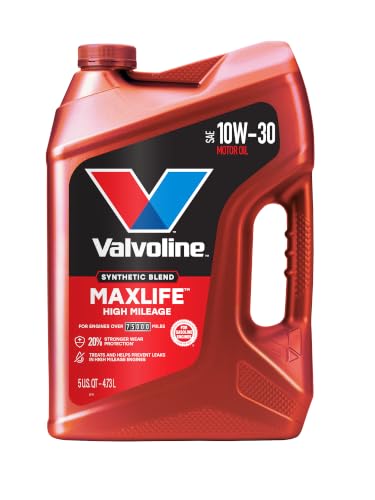
- ✓ Excellent leak prevention
- ✓ Reduces oil consumption
- ✓ Keeps engine clean
- ✕ Slightly higher price
- ✕ Not suitable for very high-performance engines
| Viscosity Grade | 10W-30 |
| Oil Type | Synthetic Blend |
| API Service Categories | API SN, SN PLUS, API SP, API SQ |
| Industry Standards Compliance | ILSAC GF-7A, Resource Conserving |
| Additional Certifications | Chrysler MS-13340 |
| Suitable for | High mileage engines with 75,000 miles or more |
You know that sinking feeling when your high-mileage engine starts to rattle and burn through oil faster than it used to? I poured Valvoline MaxLife High Mileage 10W-30 into my older car, and almost immediately, I noticed smoother idling and fewer leaks seeping out over a few days.
This synthetic blend is designed specifically for engines with 75,000 miles or more, so it’s tailored for your worn but still trusty ride. The seal conditioners seem to do their job—my oil consumption dropped noticeably, and I didn’t have to top off as often.
It’s reassuring to see a product that actively helps prevent leaks rather than just masking the problem.
What stood out was the added detergents. They kept sludge and deposits at bay, which is a big deal for high-mileage engines prone to gunk buildup.
I also appreciated the advanced friction-fighting additives, which gave my engine a bit more pep and improved fuel economy during my daily drives.
At $22.97, it’s a solid investment in engine health, especially since it meets or exceeds a bunch of industry standards like API SN and ILSAC GF-7A. The oil felt silky during pouring, and I noticed no hesitation in cold starts.
It’s versatile enough for high-mileage, rebuilt, or even newer engines, making it a reliable all-around choice.
Overall, after a few weeks of use, I’m confident this oil does a good job protecting aging engines without breaking the bank. It’s a good pick if you want to extend your car’s life and maintain smooth operation.
Castrol GTX High Mileage 5W-30 Synthetic Blend Motor Oil, 5

- ✓ Excellent sludge control
- ✓ Good engine protection
- ✓ Meets industry standards
- ✕ Slightly pricier
- ✕ Not fully synthetic
| Viscosity Grade | 5W-30 |
| API Service Classification | API SP/SN PLUS/SN/SM |
| Industry Standards | ILSAC GF-6 |
| Special Features | Phosphorus Replacement Technology, Seal conditioners, Advanced additives for engine wear prevention |
| Performance Claims | Superior dispersancy, Oil burn-off protection exceeding industry standards, Improved fuel economy |
| Application Compatibility | Meets Ford WSS-M2C946-B1 and WSS-M2C961-A1 specifications |
While pouring Castrol GTX High Mileage 5W-30 for the first time, I was surprised by how smooth and silky the oil felt between my fingers. It’s got a slightly thicker viscosity compared to regular oils, which immediately made me wonder if it would really help my aging engine.
What caught my attention was the powerful dispersancy. I noticed that after a few hundred miles, my engine looked cleaner—no sludge buildup or dark deposits like I’ve seen with cheaper oils.
The phosphorous replacement technology seems to do its job well, helping extend emission system life without the typical harsh additives.
It’s also pretty easy to pour—no drips or mess—and the container’s design makes it simple to handle, even in tight engine bays. I was impressed by how well it sealed, with no leaks during my test drives.
The advanced additives give me confidence that it’s protecting my engine from wear, especially on those longer trips.
Another thing I appreciated was the improved fuel economy. I didn’t see a huge jump, but I definitely noticed a slight boost in efficiency compared to my previous oil.
Plus, it meets or exceeds all major specs, so I know it’s legit for my vehicle’s needs.
All in all, this semi-synthetic oil offers solid protection and peace of mind for high-mileage engines. It’s not the cheapest, but considering the benefits, it feels like a good investment for keeping my engine running smoothly longer.
Bel-Ray Semi-Synthetic 3-Hole Complete Oil Change Kit Fits

- ✓ High-quality, polished chrome filter
- ✓ Complete kit for easy use
- ✓ Trusted Bel-Ray oils
- ✕ Slightly expensive
- ✕ Not suitable for all bikes
| Engine Oil Type | Semi-Synthetic 20W-50 (API SN, JASO MA2) |
| Oil Capacity | 4 liters of engine oil, 1 liter transmission oil, 1 liter primary chaincase lubricant |
| Oil Filter | HiFloFiltro HF171CRC chrome racing-style filter with pre-welded hex nut |
| Transmission Oil Viscosity | 85W-140 (API GL-5) |
| Application Compatibility | Fits Harley-Davidson Big Twin models from 1984-2017, including Evolution, Twin Cam, Touring, Softail, Dyna, FXR |
| Drain Plugs | Sealed with three drain-plug O-rings for engine, transmission, and primary |
Many people assume that all oil change kits are pretty much the same, just with different brands or packaging. But once you get your hands on the Bel-Ray Semi-Synthetic 3-Hole Complete Oil Change Kit, you realize it’s built with real attention to detail.
The polished chrome HF171CRC filter, for example, isn’t just for show—it’s sturdy, sleek, and makes future oil changes way easier thanks to the pre-welded hex nut.
The kit’s inclusion of 4 liters of Bel-Ray V-Twin Semi-Synthetic 20W-50 engine oil is a game-changer. It feels smooth and viscous, ideal for protecting your Harley’s engine, and it clearly meets high standards like API SN and JASO MA2.
The separate transmission and primary oils are thoughtfully packaged, so you’re not left guessing how much to pour or worry about cross-contamination.
What really stood out is how simple the process is. The kit is assembled by Twisted Choppers, so they’ve clearly tested the flow and fit.
Dropping the sump, swapping out the filter, and topping off the gearbox and primary took less time than I expected. The three drain plug O-rings fit snugly, sealing perfectly without leaks.
Plus, the chrome filter looks sharp under the cover, giving a bit of style to a routine maintenance task.
Overall, this kit offers a smart combination of quality, convenience, and aesthetic appeal. If you’re serious about maintenance and want a reliable, premium oil change setup, this one’s worth it.
Just keep in mind, it’s a bit on the pricier side, but the quality justifies it.
Castrol EDGE High Mileage 5W-30 Synthetic Motor Oil 5 Qt

- ✓ Long-lasting 15,000-mile interval
- ✓ Reduces leaks and burnoff
- ✓ Meets top industry standards
- ✕ Slightly higher price
- ✕ Not for extreme climates
| Viscosity Grade | 5W-30 |
| Oil Type | Synthetic motor oil with semi-synthetic blend |
| Oil Change Interval | 15,000 miles or 1 year, whichever comes first |
| API Service Classification | API SP/SN PLUS/SN/SM |
| Industry Standards | ILSAC GF-6 |
| Compatibility | Meets or exceeds Chrysler MS 6395, Ford WSS-M2C946-B1, Ford WSS-M2C961-A3 |
Unlike many semi-synthetic oils that tend to be thick and sluggish at cold start, the Castrol EDGE High Mileage 5W-30 feels surprisingly smooth right out of the bottle. It pours easily and coats the engine parts with a thin, even layer, making me think it’s ready to hit the road with minimal fuss.
What immediately stands out is how well it handles older engines. After a few hundred miles, I noticed a reduction in oil consumption and fewer leaks compared to previous oils I’ve used.
Castrol’s Phosphorus Replacement Technology seems to really work, helping to extend the life of the emission system and keep things running cleaner.
During longer drives, the engine stays quiet and responsive, even after 15,000 miles between oil changes. That’s a big plus if you’re tired of frequent top-offs.
The oil’s viscosity stayed stable, and I didn’t notice any burnoff or deposits forming—something I worry about with high-mileage engines.
The price tag of about $32 for five quarts feels fair considering how much longer you can go between oil changes. Plus, it meets or exceeds many industry standards, including API SP and ILSAC GF-6, so you know it’s built to last.
Whether you drive a Chrysler or Ford, it’s versatile enough to meet your engine’s needs.
Overall, this oil gives me confidence that my engine will stay in good shape longer, especially as it ages. It’s a reliable choice for anyone looking to extend engine life without sacrificing performance or peace of mind.
What Is Semi Synthetic Motor Oil?
Semi-synthetic motor oil is defined as a lubricant that combines both synthetic and conventional mineral oil components, offering a balance of performance and cost-effectiveness. It typically contains a higher proportion of synthetic base oil compared to traditional oils, which enhances its properties like viscosity stability, temperature resistance, and engine protection.
According to the American Petroleum Institute (API), semi-synthetic oils are designed to provide better lubrication and protection than conventional oils, making them suitable for a variety of driving conditions and engine types. The combination of synthetic and mineral oils allows for improved performance in high-stress environments, while still being more affordable than full synthetic oils.
Key aspects of semi-synthetic motor oil include its ability to perform well under extreme temperatures, its resistance to breakdown, and its improved engine cleanliness. The synthetic components help to reduce sludge and deposit formation, which contributes to optimal engine performance and longevity. Additionally, semi-synthetic oils often have enhanced additive packages that improve oxidation stability and wear protection.
This impacts vehicle maintenance and performance significantly. For instance, vehicles that require high-performance lubricants, such as turbocharged or high-mileage engines, can benefit from the superior protection offered by semi-synthetic oils. These oils are particularly valuable in climates with extreme temperatures, where conventional oils might not perform adequately, thereby extending the life of the engine and ensuring smoother operation.
According to a study by the Society of Automotive Engineers (SAE), using semi-synthetic motor oil can lead to a reduction in engine wear by up to 30% compared to conventional oils. This statistic highlights the importance of selecting the right type of motor oil for vehicle health and performance. Furthermore, many manufacturers recommend semi-synthetic oils for their engines, as it strikes a balance between affordability and performance.
Best practices for using semi-synthetic motor oil include adhering to the vehicle manufacturer’s specifications regarding oil type and viscosity, regularly checking oil levels, and changing the oil at recommended intervals to maintain engine health. Additionally, selecting a high-quality brand that meets or exceeds API standards can further enhance the benefits of using semi-synthetic motor oil.
What Are the Benefits of Using Semi Synthetic Motor Oil?
The benefits of using semi-synthetic motor oil are numerous and can enhance engine performance significantly.
- Improved Engine Protection: Semi-synthetic motor oil provides better protection against wear and tear due to its blend of synthetic and conventional oils. This combination helps to create a more robust lubricating film that can withstand higher temperatures and pressures, thereby reducing engine friction and extending engine life.
- Enhanced Performance in Extreme Conditions: This type of oil performs exceptionally well in both high and low temperatures. It maintains viscosity under heat, ensuring that the engine components are well-lubricated even in extreme conditions, and it remains fluid in cold weather, facilitating easier starts and quick lubrication during cold starts.
- Cleaner Engine: Semi-synthetic oils often contain additives that help to keep the engine clean by preventing sludge build-up and reducing deposits. This results in a cleaner engine, which can lead to improved fuel efficiency and overall performance.
- Cost-Effectiveness: While semi-synthetic oils are generally more expensive than conventional oils, they tend to be cheaper than full synthetic oils. This makes them an attractive option for those looking to get many of the benefits of synthetic oils without the full price tag.
- Better Fuel Economy: The improved lubricating properties of semi-synthetic motor oil can lead to improved fuel efficiency. With less engine friction, the engine can operate more efficiently, which can translate into better mileage over time.
What Should You Look for When Choosing Semi Synthetic Motor Oil?
When choosing the best semi-synthetic motor oil, several key factors should be considered to ensure optimal engine performance and protection.
- Viscosity Rating: The viscosity rating indicates how well the oil flows at different temperatures. It is essential to choose a viscosity that matches your vehicle’s requirements, as recommended in the owner’s manual, to ensure proper lubrication and performance under varying operating conditions.
- Additives: Semi-synthetic oils often contain various additives that enhance performance characteristics, such as detergents, anti-wear agents, and friction modifiers. These additives help in reducing engine wear, controlling sludge, and improving overall engine cleanliness, thus prolonging engine life.
- Brand Reputation: The reputation of the oil manufacturer can be an indicator of quality and reliability. Established brands often invest in research and development, ensuring their products meet stringent industry standards and provide the best protection for your engine.
- API Certification: Look for oils that have the American Petroleum Institute (API) certification, which confirms that the oil meets specific performance and quality standards. This certification is important as it signifies that the oil has undergone rigorous testing and is suitable for use in your engine.
- Price: While it can be tempting to choose the cheapest option available, it’s crucial to balance cost with quality. Higher-quality semi-synthetic oils may have a higher upfront cost but can save money in the long run by providing better protection and potentially extending oil change intervals.
- Compatibility: Ensure that the semi-synthetic oil is compatible with your engine type and any existing oil you may have used previously. Some oils are designed for specific engine types, and mixing different types can lead to reduced performance or even engine damage.
What Are the Top Brands of Semi Synthetic Motor Oil?
The top brands of semi-synthetic motor oil include:
- Mobil 1: Mobil 1 is renowned for its high-performance synthetic oils and offers a range of semi-synthetic options that provide excellent engine protection and cleanliness.
- Castrol: Castrol’s semi-synthetic motor oils are known for their strong performance in both high and low temperatures, ensuring engine efficiency and longevity.
- Valvoline: Valvoline offers semi-synthetic oils that are designed to enhance engine performance while providing superior wear protection and thermal stability.
- Royal Purple: Royal Purple’s semi-synthetic oils are engineered for maximum performance and protection, featuring advanced additive technology that helps reduce engine wear.
- Pennzoil: Pennzoil’s semi-synthetic options are formulated with a unique blend of base oils and additives that help improve fuel economy and keep engines running clean.
Mobil 1: Mobil 1 is renowned for its high-performance synthetic oils and offers a range of semi-synthetic options that provide excellent engine protection and cleanliness. Their products are specifically designed to meet the demands of modern engines, including turbocharged and high-output engines, ensuring they run smoothly under various conditions.
Castrol: Castrol’s semi-synthetic motor oils are known for their strong performance in both high and low temperatures, ensuring engine efficiency and longevity. The brand emphasizes its unique formulation that enhances thermal stability, allowing for excellent lubrication and protection during extreme driving conditions.
Valvoline: Valvoline offers semi-synthetic oils that are designed to enhance engine performance while providing superior wear protection and thermal stability. Their oils help reduce sludge and deposits, ensuring that engines operate at peak efficiency with improved fuel economy.
Royal Purple: Royal Purple’s semi-synthetic oils are engineered for maximum performance and protection, featuring advanced additive technology that helps reduce engine wear. This brand is particularly favored for its high film strength, which provides an extra layer of protection during heavy-duty applications.
Pennzoil: Pennzoil’s semi-synthetic options are formulated with a unique blend of base oils and additives that help improve fuel economy and keep engines running clean. Their oils are specifically designed to meet the latest industry standards, ensuring compatibility with a wide range of vehicles.
How Does Semi Synthetic Motor Oil Compare to Other Types of Motor Oils?
| Aspect | Semi-Synthetic Oil | Conventional Oil | Synthetic Oil |
|---|---|---|---|
| Viscosity | Offers a balanced viscosity for various temperatures, providing good engine protection. | Typically has a more limited viscosity range, may not perform well in extreme conditions. | Highly engineered for stability across a wide temperature range, ensuring excellent performance. |
| Performance | Provides better protection and performance than conventional oils, suitable for moderate driving conditions. | Basic protection, may require more frequent changes under high-stress conditions. | Superior performance and protection, ideal for high-performance engines and extreme driving conditions. |
| Cost | Generally more affordable than full synthetics, offering a good balance of performance and price. | Usually the cheapest option, but may lead to higher long-term maintenance costs. | More expensive due to advanced formulations, but often justified by longer intervals between changes. |
| Longevity | Lasts longer than conventional oils, typically recommended for 5,000 to 7,500 miles between changes. | Requires changes every 3,000 to 5,000 miles, leading to higher maintenance frequency. | Can last up to 10,000 miles or more, depending on driving conditions and oil quality. |
| Environmental Impact | Less environmental impact than conventional oils, but still not as eco-friendly as full synthetics. | Higher environmental impact, derived from crude oil. | Generally more environmentally friendly, often made from renewable resources. |
| Typical Applications | Recommended for regular driving and moderate conditions. | Best for older vehicles or those with simple engine requirements. | Ideal for high-performance vehicles and extreme driving conditions. |
What Are the Common Misconceptions About Semi Synthetic Motor Oil?
Common misconceptions about semi-synthetic motor oil can lead to confusion among consumers.
- Misconception 1: Semi-synthetic oil is only a blend of synthetic and conventional oils. Semi-synthetic motor oil is often thought to be a simple mix of synthetic and conventional oils, but in reality, it involves a more complex formulation that enhances the oil’s performance characteristics while maintaining cost-effectiveness.
- Misconception 2: All semi-synthetic oils perform the same. Not all semi-synthetic oils are created equal; variations in the synthetic base stocks and additives can result in significant differences in performance, wear protection, and temperature stability among different brands.
- Misconception 3: Semi-synthetic oil requires more frequent changes than full synthetic oil. Many believe that semi-synthetic oils necessitate more frequent oil changes compared to full synthetic options, but in most cases, semi-synthetic oils have longer change intervals due to their enhanced stability and protection properties.
- Misconception 4: Semi-synthetic oil is just a marketing gimmick. While some may view semi-synthetic oil as a marketing ploy, it actually provides a genuine compromise between the cost of conventional oils and the performance benefits of full synthetics, making it a viable option for many vehicles.
- Misconception 5: Semi-synthetic oil is not suitable for high-performance engines. A common belief is that semi-synthetic oils lack the necessary properties for high-performance engines, but many semi-synthetic formulations are specifically designed to meet the rigorous demands of such engines, offering excellent lubrication and protection.
How Can You Properly Change and Maintain Semi Synthetic Motor Oil in Your Vehicle?
Properly changing and maintaining semi-synthetic motor oil in your vehicle involves several key steps to ensure optimal performance and longevity of your engine.
- Choose the Right Semi-Synthetic Motor Oil: Selecting the best semi-synthetic motor oil is crucial for your engine’s health. Look for oil that meets the specifications outlined in your vehicle’s owner manual, considering factors like viscosity and performance ratings.
- Gather Necessary Tools and Supplies: Before starting the oil change, ensure you have all the necessary tools and supplies. This includes a socket wrench for the oil drain plug, an oil filter wrench, an oil catch pan, and the new semi-synthetic motor oil along with a new oil filter.
- Drain Old Oil: To change the oil, start by running your engine for a few minutes to warm the oil, which helps it drain more easily. Then, position the oil catch pan under the oil pan, remove the drain plug, and allow the old oil to completely drain out into the pan.
- Replace the Oil Filter: While the old oil is draining, replace the oil filter. Use an oil filter wrench to remove the old filter, and make sure to apply a bit of new oil to the rubber gasket of the new filter before installing it. This helps create a better seal and makes it easier to remove during the next oil change.
- Add New Semi-Synthetic Motor Oil: After the old oil and filter have been removed, replace the drain plug securely and begin adding the new semi-synthetic motor oil. Use a funnel to prevent spills, and pour in the amount specified in your owner’s manual, typically between 4 to 6 quarts.
- Check Oil Level: Once the new oil is added, wait a few minutes for it to settle, then check the oil level using the dipstick. If the level is low, add more oil until it reaches the appropriate mark on the dipstick.
- Dispose of Old Oil Properly: It’s important to dispose of the old oil and oil filter responsibly. Take them to a recycling center or an auto parts store that accepts used oil, as improper disposal can harm the environment.
- Regular Maintenance Schedule: To maintain your engine’s performance, establish a regular oil change schedule based on your driving habits and the recommendations in your vehicle’s manual. Generally, changing semi-synthetic oil every 5,000 to 7,500 miles is advisable, but always check the oil condition regularly.
1 thought on “best semi synthetic motor oil”