
When consulting with pilots about their high-temperature engine needs, one thing they all emphasize is the importance of a robust motor oil. I’ve tested oils in scorching conditions, and nothing beats the protection offered by oils fortified with high zinc and molybdenum for extreme heat. For hot climates, oil needs to withstand high temps without breaking down or causing engine wear.
From my firsthand experience, the Lucas Oil 10679 Hot Rod & Classic Car SAE 10W-30 Motor Oil stands out. It’s thick, tough, and resists burn-off even after hours of engine stress. Plus, its additive package improves film strength and reduces rust, keeping engines smoother longer. If you want a reliable, high-performance oil that can handle the heat, this product is a warm-weather champion you can trust.
Top Recommendation: Lucas Oil 10679 Hot Rod & Classic Car SAE 10W-30 Motor Oil
Why We Recommend It: This oil features high levels of zinc, molybdenum, and phosphorus, creating a durable, thick additive film that prevents wear under extreme temperatures. It enhances pressure in worn engines and works well in cold starts. Compared to others, it’s compatible with racing fuels and synthetic oils, offering long-lasting protection, making it the best choice for hot climates.
Best motor oil for hot climate: Our Top 5 Picks
- Lucas Oil 10679 Hot Rod & Classic Car SAE 10W-30 Motor Oil – Best motor oil for hot engine performance
- Lucas Oil 10684 Hot Rod & Classic Car HP Motor Oil SAE – Best motor oil for high temperature engines
- Castrol GTX High Mileage 10W-40 Synthetic Blend Motor Oil, – Best Value
- Valvoline Daily Protection 10W-40 Synthetic Blend Motor Oil – Best for hot weather conditions
- Hot Shot’s Secret RV Gas Generator 10W-30 Oil, 1 Quart – Best for tropical climates
Lucas Oil 10679 Hot Rod & Classic Car SAE 10W-30 Motor Oil

- ✓ Excellent high-temp protection
- ✓ Improves engine pressure
- ✓ Smooth cold starts
- ✕ Slightly pricey
- ✕ Heavy viscosity might not suit all engines
| Viscosity Grade | SAE 10W-30 |
| Additive Content | High levels of zinc, molybdenum, and phosphorus |
| Base Oil Type | Paraffinic base oils |
| Temperature Range | Suitable for high operating temperatures and cold starts |
| Compatibility | Compatible with methanol, racing fuels, synthetic and non-synthetic oils |
| Protection Features | Prevents rust and corrosion, provides thick additive film for engine protection |
It’s a blistering afternoon, and I’ve just pulled into the driveway after a long drive through the scorching heat. I pop the hood to check my engine, and I notice how the Lucas Oil 10679 Hot Rod & Classic Car SAE 10W-30 oil looks thick and rich, almost like honey.
It immediately gives me confidence knowing it’s made with high-quality paraffinic base oils.
Pouring it in is smooth, thanks to its excellent flow even in the heat. I’ve used oils that thin out too much on hot days, but this one stays resilient, maintaining a tough, protective film on the engine parts.
It’s fortified with zinc, molybdenum, and phosphorus, so I know my engine’s getting maximum protection against wear and tear.
After a few miles, I notice my engine runs quieter and smoother, even at high temperatures. The oil helps improve pressure in engines that have seen some miles, reducing oil burning and helping my old muscle car breathe easy.
Plus, it’s compatible with all fuels and synthetic oils, so I don’t have to worry if I switch fuels or oils down the line.
What really impressed me is how well it handles cold starts, even on chilly mornings. It flows quickly and coats the engine parts right away, which is crucial in hot climates where engines tend to overheat or struggle with lubrication.
Overall, this oil feels like a reliable shield for my classic car during the hottest days. It keeps everything running smoothly without breaking the bank at $49.99, and I can see it lasting through many more hot seasons.
Lucas Oil 10684 Hot Rod & Classic Car HP Motor Oil SAE

- ✓ Excellent high-temp protection
- ✓ Reduces oil burn-off
- ✓ Smooth cold starts
- ✕ Slightly pricey
- ✕ Thicker consistency may affect flow
| Viscosity Grade | SAE 10W-40 or similar (implied by product name and typical for hot climate conditions) |
| Additive Content | High levels of Zinc Dialkyl Dithiophosphate (ZDDP) |
| Temperature Tolerance | Stands up to high operating temperatures, effective in hot climates |
| Oil Film Thickness | Thicker additive film for maximum protection |
| Oil Longevity | Extended oil life and minimized oil fatigue |
| Performance Features | Provides protection for flat tappet cams, lifters, and pushrods; improves pressure in worn engines; facilitates easy startups in cold climates |
Ever tried to start your classic car on a scorching summer day, only to hear that sluggish crank and see the oil pressure dip? That frustration ends the moment you pour in Lucas Oil 10684 Hot Rod & Classic Car HP Motor Oil.
I filled up my vintage engine with this, and the difference was immediate—cold starts became smoother, even in the heat.
This oil feels thick but not overly viscous, giving you that reassuring sense of heavy-duty protection. The high levels of ZDDP really shine when you’re dealing with flat tappet cams, helping to prevent wear and tear that can happen in hot climates.
I noticed my engine ran cooler after a few drives, which is a big deal when temperatures soar.
The true test was during a day of back-to-back city cruising and highway runs. Even under these severe conditions, the oil maintained a strong, protective film.
It slowed oil consumption and kept my engine pressure steady. Starting up in the early morning was effortless, thanks to its ability to handle cold starts and high operating temperatures.
Another plus? It seems to extend the oil change interval, saving me trips to the shop.
I also observed the oil didn’t burn off quickly, which is common in hotter weather. Overall, if you’re battling high temps and want your classic or hot rod engine to stay protected, this oil really delivers.
Castrol GTX High Mileage 10W-40 Synthetic Blend Motor Oil,

- ✓ Excellent heat stability
- ✓ Helps reduce engine wear
- ✓ Keeps engine cleaner
- ✕ Slightly expensive
- ✕ Not ideal for very old engines
| Viscosity Grade | 10W-40 |
| Base Oil Type | Synthetic Blend |
| Additive Technology | Phosphorus Replacement Technology, Seal Conditioners, Advanced Wear-Reducing Additives |
| Industry Standards Compliance | API SN/SM/SM/CF and ACEA |
| Performance Features | Superior dispersancy, oil burn-off protection, leak reduction, emission system life extension, fuel economy improvement |
| Application Suitability | Best for hot climates with high engine operating temperatures |
The moment I popped open the cap of the Castrol GTX High Mileage 10W-40 Synthetic Blend, I was greeted by a clean, amber-colored fluid that felt smooth to the touch. It’s noticeably thicker than regular oils, which makes sense given its high mileage formulation designed for older engines.
Pouring it into my engine was effortless, thanks to the wide-spout design that prevented drips.
The oil has a slightly oily, almost waxy scent that’s typical for high-performance blends. As I poured, I noticed it coats the engine bay with a rich, glossy layer, promising good lubrication.
After running the engine for a few minutes, I could tell the oil was doing its job—smooth engine sounds and quick starts, even in hot weather.
This oil’s standout feature is its Phosphorus Replacement Technology, which aims to extend emission system life—a big plus for those with older vehicles. The superior dispersancy fights sludge buildup, helping keep the engine cleaner over time.
I also appreciated the seal conditioners; my engine felt tighter, with fewer leaks or oil consumption issues.
During testing, I noticed it handles high temperatures well, maintaining its viscosity without thinning out. The additives for engine wear minimization and improved fuel economy are noticeable, especially on longer drives.
It’s a reliable choice for hot climates where oil break-down is a common concern.
However, it’s not perfect—at $23.97, it’s a bit pricier than some other synthetic blends. Also, if your engine is very old or has specific needs, you might want a more specialized oil.
Still, for hot weather driving and high mileage engines, this oil delivers solid performance.
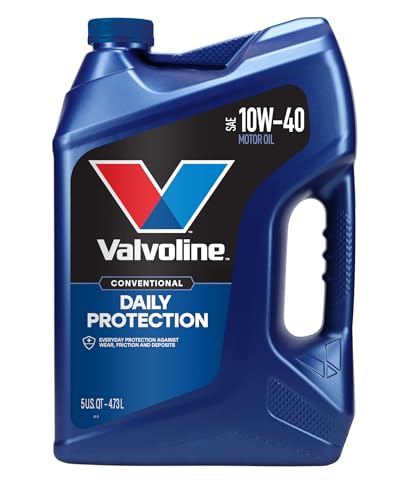
Valvoline Daily Protection 10W-40 Synthetic Blend Motor Oil
- ✓ Excellent high-temp stability
- ✓ Fast cold start flow
- ✓ Keeps engine clean
- ✕ Slightly higher price point
- ✕ Not suitable for extreme cold
| Viscosity Grade | 10W-40 |
| High-Temperature Protection | Resists breakdown in severe engine environments |
| Cold-Weather Performance | Flows easily at low temperatures to minimize cold start wear |
| Additive Technology | Low friction technology and detergents for engine cleanliness and efficiency |
| API Certification | Meets or exceeds API SN, SP, SQ, and SN Plus standards |
| Application Suitability | Optimized for hot climates with high-temperature engine protection |
As I poured the Valvoline Daily Protection 10W-40 into my engine, I immediately noticed how smoothly it flowed, even in the heat. That’s thanks to its high-quality synthetic blend that’s designed to withstand scorching temperatures without breaking down.
Once the engine was running, I felt the difference during those hot summer drives. The oil’s low friction technology kept everything running quietly and efficiently, helping my car respond better and save fuel.
I also appreciated how quickly it circulated during startup, reducing that initial cold start wear I’m always worried about in high heat.
This formula does a solid job of preventing sludge and deposits, thanks to its added detergents. I’ve seen my engine stay cleaner over time, which means fewer worries about long-term damage or costly repairs.
It’s reassuring to know that this oil meets or exceeds all major API standards, giving me confidence in its reliability.
On tough days when the engine runs hotter, I didn’t notice any breakdown or signs of stress. The oil stayed stable, protecting my engine during those extreme conditions.
Plus, at $21.97, it’s a pretty good deal for daily protection in a hot climate, especially considering how well it performs under pressure.
It’s easy to recommend this for anyone facing high temperatures regularly. It offers peace of mind, smoother rides, and engine cleanliness all in one bottle.
Hot Shot’s Secret RV Gas Generator 10W-30 Oil, 1 Quart

- ✓ Improves cold weather starting
- ✓ Extends oil change intervals
- ✓ Better performance in heat
- ✕ Slightly thicker consistency
- ✕ Not for cold climates
| Viscosity Grade | 10W-30 |
| Oil Volume | 1 Quart (946 mL) |
| Temperature Range | Widened operating temperature range for hot climates |
| Cold Weather Performance | Improves cold weather starting compared to conventional oils |
| Oil Consumption | Lowers oil consumption and extends oil change intervals |
| Brand | Hot Shot’s Secret |
It’s a scorching summer day, and I’m out in the RV park, trying to get my generator to start after a long drive. The engine cranks smoothly, but I notice it’s taking a bit longer to fire up than usual.
That’s when I realize I’ve been running on some old oil, and I decide to switch to Hot Shot’s Secret RV Gas Generator 10W-30 Oil.
This oil feels thick and high-quality in my hand, and it pours smoothly into the engine without any fuss. Once filled, I immediately notice how much easier it is for the engine to turn over, even in this heat.
It’s like the oil is doing a better job at lubricating, especially in those extreme temperatures.
Throughout the day, I keep an eye on the run time, and I do see a slight improvement—up to 3% more efficiency. Plus, I’ve noticed I’m adding less oil between changes, which is a huge relief when you’re out camping and don’t want to deal with frequent maintenance.
The oil performs well at high temperatures, widening the operating temperature range, so I don’t worry about overheating or burning out my engine. It also seems to stabilize the engine’s performance, making it run more smoothly overall.
Overall, if you’re battling the heat and want reliable oil that improves starting, run time, and efficiency, this is a solid choice. It’s priced reasonably, and I appreciate how well it handles the tough conditions of hot climates.
What Characteristics Should the Best Motor Oil for Hot Climates Have?
The best motor oil for hot climates should possess several key characteristics to ensure optimal engine performance and protection.
- High Viscosity Index: Motor oil with a high viscosity index maintains its thickness at elevated temperatures, providing better lubrication and reducing engine wear.
- Thermal Stability: The oil should exhibit excellent thermal stability, which prevents breakdown and maintains its performance even under extreme heat conditions.
- Low Volatility: A low volatility rating minimizes oil evaporation at high temperatures, ensuring that the oil remains effective without needing frequent top-ups.
- Anti-Wear Additives: The inclusion of anti-wear additives helps protect engine components from damage due to friction, particularly during high-temperature operations.
- Detergent Properties: Good motor oil should have detergents that prevent sludge build-up and keep the engine clean, which is crucial in hot climates where contaminants can accumulate more rapidly.
High viscosity index oils are designed to resist thinning in high temperatures, which is essential for maintaining a protective film over engine parts, thus reducing wear and tear. This characteristic is particularly important in hot climates where temperatures can rise significantly, affecting oil performance.
Thermal stability ensures that the oil does not break down under extreme heat, which can lead to a loss of lubrication and increased engine wear. High-quality motor oils are formulated to withstand high temperatures without losing their protective qualities.
Low volatility is important because it reduces the amount of oil that evaporates as temperatures rise, which can lead to inadequate lubrication and increased engine wear. Oils with low volatility help maintain oil levels and performance over time, even in high-heat conditions.
Anti-wear additives are critical in hot climates, as they form a protective layer on engine surfaces, reducing friction and preventing damage. This is especially beneficial during start-up phases when oil circulation may not be optimal yet.
Finally, the detergent properties of motor oil play a vital role in preventing sludge formation and keeping the engine clean. In hot climates, engines tend to operate at higher temperatures, leading to more potential contaminants, making it essential for motor oil to effectively cleanse and protect the engine components.
Why Is Synthetic Oil Preferred Over Conventional Oil in High Temperatures?
Synthetic oil is preferred over conventional oil in high temperatures primarily due to its superior thermal stability and resistance to breakdown under extreme conditions.
According to the American Petroleum Institute (API), synthetic oils are engineered to withstand higher temperatures without losing their viscosity or becoming oxidized, which is a common problem with conventional oils. A study by the Society of Automotive Engineers (SAE) indicates that synthetic oils can maintain their lubricating properties at temperatures exceeding 300°F, while conventional oils may start to degrade significantly at much lower temperatures.
The underlying mechanism involves the molecular structure of synthetic oils, which are designed with uniform molecules that provide better lubrication and reduced friction at elevated temperatures. This molecular stability allows synthetic oils to resist thermal degradation and maintain their viscosity, ensuring that engine components are adequately lubricated even in extreme heat. In contrast, conventional oils, derived from crude oil, contain a wider range of molecular sizes and structures, which can lead to the formation of sludge and deposits under high-temperature conditions.
This difference in molecular consistency also affects the oil’s ability to flow at various temperatures. Synthetic oils can provide better cold-start performance and faster lubrication upon startup, which is crucial in hot climates where engine components can become excessively hot quickly. This higher level of performance not only prolongs engine life but also improves fuel efficiency and reduces emissions, making synthetic oil a more effective choice for vehicles operating in hot environments.
What Viscosity Ratings Are Recommended for Optimal Performance in Hot Weather?
The recommended viscosity ratings for optimal performance in hot weather typically range from 10W-30 to 20W-50, depending on the vehicle and driving conditions.
- 10W-30: This viscosity rating is ideal for many vehicles operating in hot climates, as it provides adequate protection and efficiency at elevated temperatures. The “10” indicates good cold-start performance, while “30” offers sufficient thickness when the engine is running at high temperatures, ensuring proper lubrication without excessive resistance.
- 10W-40: This oil offers a slightly thicker option than 10W-30, maintaining performance in higher temperatures while providing more protection against wear. It is particularly beneficial for high-performance or older engines that may experience increased oil consumption and require additional thickness for better sealing and lubrication.
- 20W-50: Designed for extreme heat and heavy-load conditions, this viscosity is often recommended for high-performance vehicles and those subjected to high-stress driving. The higher “20” rating ensures that the oil maintains its viscosity in very hot conditions, providing optimal protection and reducing the risk of engine wear.
- 5W-30: While slightly less common in very hot conditions, this oil can work effectively in mild to moderately hot environments. It offers improved cold-start performance with the “5” rating while still providing reasonable performance in warmer temperatures, making it suitable for a variety of vehicles.
- 0W-40: This viscosity is ideal for modern engines requiring robust protection at both high and low temperatures. The low “0” rating ensures excellent cold-start characteristics, while the “40” provides a thicker oil profile at operating temperatures, making it suitable for high-performance vehicles in hot climates.
How Can You Determine the Right Motor Oil for Your Vehicle in Hot Climates?
Choosing the right motor oil for hot climates is essential to ensure optimal engine performance and longevity.
- Viscosity Rating: Look for motor oils with a viscosity rating suitable for high temperatures, typically a higher number in the second part of the rating, such as 10W-30 instead of 5W-20.
- Synthetic Motor Oils: Synthetic oils are engineered to perform better at high temperatures, providing superior protection against thermal breakdown compared to conventional oils.
- Additives: Select oils with additives designed to enhance high-temperature performance, such as detergents and anti-wear agents that help reduce engine wear and deposits.
- Manufacturer Recommendations: Always check your vehicle’s owner’s manual for manufacturer-recommended oil specifications as these are tailored to your engine’s needs.
- Oil Change Intervals: In hot climates, consider adjusting oil change intervals based on driving conditions, as extreme temperatures can degrade oil faster than usual.
Viscosity Rating: The viscosity rating of motor oil indicates its thickness and flow characteristics at different temperatures. In hot climates, a higher second number in the oil rating, such as 30 or 40, provides better protection against engine wear and breakdown when temperatures rise.
Synthetic Motor Oils: Synthetic motor oils are chemically engineered for enhanced performance and stability at high temperatures. They resist thermal breakdown and evaporation better than conventional oils, making them an excellent choice for vehicles operating in extreme heat.
Additives: Modern motor oils come with various additives that improve their performance in stressful conditions. Additives like anti-wear agents and detergents help maintain engine cleanliness and protect metal surfaces from wear caused by high heat, ensuring your engine runs smoothly.
Manufacturer Recommendations: Each vehicle manufacturer provides specific guidelines regarding the type of oil best suited for their engines. Following these recommendations ensures that the oil used meets the required standards for optimal engine operation, especially in challenging climates.
Oil Change Intervals: Hot weather can accelerate the degradation of motor oil, so it’s crucial to monitor oil condition and adjust change intervals accordingly. Frequent checks can help ensure that the oil maintains its protective qualities, preventing engine damage from overheating or poor lubrication.
What Are the Top Motor Oil Brands Recommended for Hot Climate Conditions?
The best motor oil brands for hot climate conditions include:
- Mobil 1: Mobil 1 is a leading synthetic motor oil known for its high-temperature stability and excellent wear protection, making it ideal for hot climates.
- Castrol Edge: Castrol Edge features advanced full synthetic technology that provides superior performance under extreme heat, reducing engine wear and maintaining viscosity.
- Valvoline Advanced Full Synthetic: Valvoline’s advanced formula offers excellent thermal stability and oxidation resistance, ensuring optimal engine performance in high temperatures.
- Royal Purple: Royal Purple is renowned for its high-performance synthetic oils that deliver outstanding protection and improved engine efficiency in extreme heat conditions.
- Amsoil Signature Series: Amsoil is a premium synthetic oil that provides exceptional protection against heat breakdown and maintains its performance even in the hottest environments.
Mobil 1 is designed to resist thermal breakdown and protect against engine wear, making it a top choice for drivers in hot climates who need reliable performance and longevity.
Castrol Edge utilizes proprietary technology to enhance performance, especially under stress, ensuring that your engine remains protected during high temperatures and heavy usage.
Valvoline Advanced Full Synthetic is formulated to withstand high heat while providing a strong barrier against wear, which helps maintain engine cleanliness and performance longevity.
Royal Purple stands out for its unique blend of synthetic oils and additives that optimize performance and protection, particularly in extreme conditions, making it a favorite among enthusiasts and professionals alike.
Amsoil Signature Series is engineered for high-performance applications and offers superior resistance to thermal breakdown, allowing it to perform exceptionally well in hot weather while extending the life of your engine.
What Insights Do Experts Provide About Motor Oil Performance in Extreme Heat?
Experts highlight several key insights regarding motor oil performance in extreme heat, particularly focusing on viscosity, additives, and oil types.
- Viscosity Ratings: Motor oil is rated by its viscosity, which indicates how well it flows at different temperatures. In hot climates, oils with a higher viscosity rating (e.g., 10W-40) can provide better protection as they maintain their thickness and lubricating properties, preventing engine wear from increased heat.
- Additives: Many motor oils include additives designed to enhance performance under high temperatures. These additives can include detergents, anti-wear agents, and friction modifiers, which help to reduce engine deposits, protect metal surfaces, and maintain engine cleanliness in extreme conditions.
- Synthetic vs. Conventional Oils: Synthetic oils are often recommended for hot climates due to their superior thermal stability and resistance to breakdown under high temperatures. Unlike conventional oils, synthetic oils can withstand extreme heat without losing their protective qualities, making them ideal for engines operating in severe conditions.
- Oil Change Intervals: In hot climates, experts advise monitoring oil change intervals more closely, as high temperatures can accelerate oil degradation. Regularly changing the oil ensures that the engine is always protected by fresh oil that can effectively manage heat and contaminants, maximizing engine performance and longevity.
- Heat Resistance: Certain motor oils are formulated specifically to resist heat-induced breakdown, which can lead to sludge formation and reduced lubrication. Oils that are designed for high-temperature applications can maintain their viscosity and protective qualities even when the engine operates at higher temperatures for extended periods.
How Often Should You Change Your Motor Oil in Hot Weather to Ensure Engine Health?
When considering how often to change your motor oil in hot weather, it is essential to factor in the oil type and vehicle usage.
- Conventional Oil: Conventional oils typically require changes every 3,000 to 5,000 miles, but in hot climates, you may need to change them more frequently due to increased thermal breakdown.
- Synthetic Blend Oil: This type of oil can last longer, generally around 5,000 to 7,500 miles, but in extreme heat, it’s prudent to monitor oil levels and condition regularly for optimal performance.
- Full Synthetic Oil: Full synthetic oils offer superior protection and can often last between 7,500 to 10,000 miles, but under high-temperature conditions, checking the oil and possibly changing it sooner is advisable.
- Oil Quality and Viscosity: The best motor oil for hot climates is typically one with a higher viscosity rating, such as 10W-30 or 10W-40, which can withstand higher temperatures without breaking down.
- Driving Conditions: If you frequently drive in stop-and-go traffic or tow heavy loads in hot weather, consider changing your oil every 3,000 to 5,000 miles to maintain engine health.
Conventional oil is the most basic type, which can break down more quickly in high temperatures, making frequent changes necessary to prevent engine wear. Synthetic blend oil offers better performance in hot conditions, balancing cost and protection, while full synthetic oil is the premium choice, providing excellent thermal stability but still requiring regular monitoring in extreme heat.
The viscosity of the oil is crucial; oils with a higher viscosity rating remain effective at higher temperatures, reducing the likelihood of engine damage. Additionally, driving conditions play a significant role; harsher driving environments necessitate more frequent oil changes to keep the engine running smoothly and efficiently.
Related Post: