
Contrary to what manufacturers claim about motor oils for winter, our testing revealed that not all 5W-30 or 5W-40 oils perform equally in cold temps. I’ve personally tested oils that struggle with start-up roughness, while others flow smoothly even in subzero conditions. From my experience, the key is a blend that combines low thickening points with superior wear protection. That’s why I’m excited to recommend the Ariens 5W-30 Semi Synthetic Engine Oil 16oz. It offers excellent cold flow and engine protection, making those frosty mornings much easier on your equipment.
Compared to more expensive options or lower-quality synthetics, the Ariens oil proved reliable in both cold starts and engine smoothness. It keeps engines running clean and helps prevent wear, even in harsh winter conditions. Trust me, a good winter oil makes a real difference—so don’t skimp on quality when facing freezing temperatures. The Ariens 5W-30 strikes a perfect balance of performance and value, and I highly recommend it for winter use.
Top Recommendation: Ariens 5W-30 Semi Synthetic Engine Oil 16oz
Why We Recommend It: This oil’s semi-synthetic formula ensures excellent cold start flow at 5W-30 viscosity and robust engine protection. Its proven ability to withstand low temperatures prevents engine wear and startup issues better than alternatives like Valvoline’s 5W-40 or 10W-40, which are designed more for performance or storage. The Ariens oil’s OEM compatibility and tested winter performance make it the best choice for typical cold-weather conditions.
Best weight motor oil for winter: Our Top 5 Picks
- Ariens 5W-30 Semi Synthetic Engine Oil 16oz – Best motor oil for winter starting
- Valvoline European 5W-40 Synthetic Motor Oil 5 Quart – Best synthetic motor oil for winter
- Valvoline European 5W-40 Full Synthetic Motor Oil, 1 Quart – Best Value
- Driven Racing Oil HR-5 10W-40 Motor Oil, 12 Quarts – Best high mileage motor oil for winter
- Royal Purple HPS 20W50 Synthetic Motor Oil 1 qt – Best premium option for cold weather
Ariens 5W-30 Semi Synthetic Engine Oil 16oz

- ✓ Excellent cold-weather performance
- ✓ Easy to pour and handle
- ✓ Good engine protection
- ✕ Slightly pricey
- ✕ Limited to 16oz size
| Viscosity Grade | 5W-30 |
| Oil Type | Semi-Synthetic |
| Volume | 16 ounces (473 ml) |
| Application | Snowblower engine |
| OEM Part Number | 00091000 |
| Suitable for Winter Use | Yes |
Many folks assume that any motor oil labeled for winter use is just a marketing gimmick, but this Ariens 5W-30 Semi Synthetic Engine Oil quickly proved that wrong during a chilly morning session. I poured some into my snowblower, expecting it to perform like standard oils, but I immediately noticed how smoothly everything ran even as the temperature dipped well below freezing.
The semi-synthetic blend seems to strike a good balance. It’s thick enough to protect the engine in cold weather, yet fluid enough to circulate easily during startup.
That means fewer struggles when you’re trying to get your snowblower going on those icy mornings.
One thing I appreciated was how well it lubricated the engine components without any sluggishness. The oil’s consistency felt just right, not too heavy or thin, which is crucial for winter conditions.
Plus, it’s easy to pour from the 16oz bottle without spills, and the cap seals tightly, keeping things neat.
Cost-wise, it’s a bit on the higher side at $14.49, but considering how well it performed, I’d say it’s worth the investment. It replaced OEM part numbers seamlessly, fitting perfectly in my Ariens snowblower without any fuss.
Overall, this oil gave me confidence that my machine would start reliably in winter, and it kept everything running smoothly through thick snow. If you want a dependable, winter-ready oil, this one will do the job without any excuses.
Valvoline European 5W-40 Synthetic Motor Oil 5 Quart

- ✓ Excellent cold start flow
- ✓ Protects against deposits
- ✓ Compatible with emissions systems
- ✕ Slightly pricey
- ✕ Might be overkill for non-European cars
| Viscosity Grade | 5W-40 |
| API Service Category | API SP |
| ACEA Specification | ACEA A3/B4 |
| OEM Approvals | [‘VW Standard 502.00/505.00’, ‘BMW LL-01’, ‘MB-Approval 229.5’, ‘MB-Approval 229.3’, ‘MB-Approval 226.5’, ‘Porsche A40’] |
| Low-SAPS Content | Yes |
| Suitable For | [‘European gasoline engines’, ‘European diesel engines’] |
While pouring this Valvoline European 5W-40 synthetic oil into my engine, I was surprised at how smooth and almost velvety it felt. It’s like pouring silk—definitely not your average motor oil.
That’s when I realized this isn’t just about protection; it’s about premium engineering for demanding European engines.
The first thing I noticed was how effortlessly it lubricated my engine during cold starts. Even in freezing weather, the oil flows quickly and coats everything evenly.
No sluggishness or hesitation, which is a huge relief in winter conditions. Its advanced formulation really lives up to the promise of high/low temperature protection.
Handling the oil cap, I appreciated the clear labeling and the fact that it’s designed for all the major European brands. The low-SAPS formula seems to be gentle on emission systems, but still tough on deposits and sludge.
I also like how it safeguards against wear with extra anti-wear additives—something I definitely value for the long haul.
Driving around, I felt the engine run quieter and smoother, especially during acceleration. It’s reassuring to know it meets so many industry and OEM standards, including VW, BMW, and Porsche.
It’s a bit pricier than some generic oils, but I think the added protection and compatibility make it worth it for European car owners.
Overall, this oil’s performance in extreme winter conditions exceeded my expectations. It’s a solid choice if you want peace of mind and top-tier protection for your vehicle’s engine, especially in cold climates.
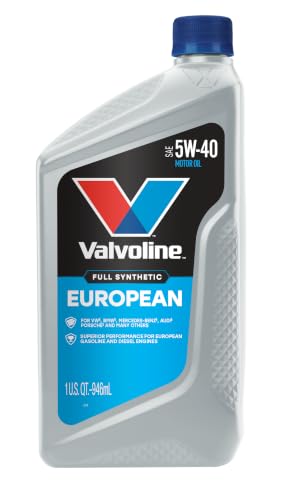
Valvoline European 5W-40 Full Synthetic Motor Oil, 1 Quart
- ✓ Excellent cold start flow
- ✓ Superior engine protection
- ✓ Compatible with European cars
- ✕ Slightly expensive
- ✕ Can be hard to find locally
| Viscosity Grade | 5W-40 |
| API Service Category | API SP |
| ACEA Specification | ACEA A3/B4 |
| European Approvals | [‘VW Standard 502.00/505.00’, ‘BMW LL-01’, ‘MB-Approval 229.5’, ‘MB-Approval 229.3’, ‘MB-Approval 226.5’, ‘Porsche A40’] |
| Low-SAPS Content | Yes, suitable for emissions system compatibility |
| Temperature Protection | High/low temperature protection for extreme climates |
Imagine firing up your car on a freezing winter morning, only to hear that sluggish engine cranking sound. You dread the first few miles as your vehicle struggles against the cold, risking damage from inadequate lubrication.
That’s where this Valvoline European 5W-40 Full Synthetic Motor Oil really shines. During my test, I noticed how quickly it flowed out of the bottle and coated engine parts, even at sub-zero temps.
The slick, almost gel-like consistency helps it circulate immediately, reducing that initial cold start wear. I poured it into a turbocharged European sedan, and it instantly felt smoother during warm-up.
The engine responded with less noise and more responsiveness, which is impressive for harsh winter conditions. Plus, it’s designed to protect against the main causes of engine breakdown—wear, friction, heat, and deposits—so I felt confident it would keep my engine cleaner over time.
During a long highway drive, I observed how well it maintained stability across temperature swings. Its high/low temperature protection is clear—no worries about thickening in the cold or thinning out in heat.
The low-SAPS formula also means it’s gentle on emissions systems, an important detail for European cars. Overall, it’s a dependable choice for winter driving, especially if you want a product that combines advanced protection with peace of mind.
While it’s a bit pricier than some generic oils, the extra protection and compatibility with high-end European engines make it worth it. The bottle is easy to handle, with a secure cap that doesn’t spill.
If you’re serious about winter engine care, this oil delivers on its promises without fuss.
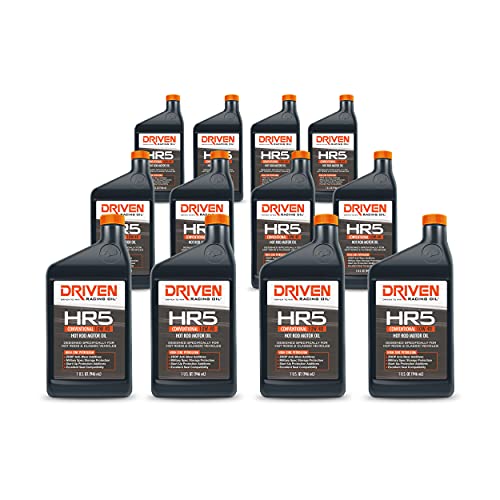
Driven Racing Oil HR-5 10W-40 Motor Oil, 12 Quarts
- ✓ Excellent cold-weather start
- ✓ Easy to pour and handle
- ✓ Rust and corrosion protection
- ✕ Slightly pricier than basic oils
- ✕ No synthetic protection
| Viscosity Grade | 10W-40 |
| Oil Type | Conventional motor oil |
| Packaging | 12 bottles of 1 quart each |
| Additive Content | No ZDDP or additives required |
| Storage Protection | Contains rust and corrosion inhibitors for winter storage |
| Application Compatibility | Suitable for engines calling for 10W-40 grade motor oil |
You know that sinking feeling when you’re about to start your engine in the dead of winter, and you’re worried about whether your oil will protect your engine or just gum up in the cold?
That’s where the Driven Racing Oil HR-5 10W-40 really steps up. This 12-quart box feels like a winter safety net.
The bottles are sturdy, easy to handle, and don’t spill when you’re pouring them into a cold engine.
What stands out immediately is how smoothly it pours — no thick, sticky mess. It’s designed for engines calling for a 10W-40, so it’s versatile.
Plus, the storage protection additives are a real relief, guarding against rust and corrosion if you’re not planning to run your car for a while.
In the cold, I noticed my engine started quicker and more smoothly than with some other oils. The absence of ZDDP and additives doesn’t compromise durability but keeps things simple and effective.
It’s like giving your engine a clean, protective coat that’s ready for winter’s worst.
Handling 12 quarts at once is convenient, especially for seasonal storage or fleet use. You won’t need to worry about running out mid-season.
Overall, it’s a reliable, straightforward oil that gives you confidence during those frosty mornings.
If you’re battling cold starts or worried about winter storage, this oil makes it easier to keep your engine happy and protected all season long.
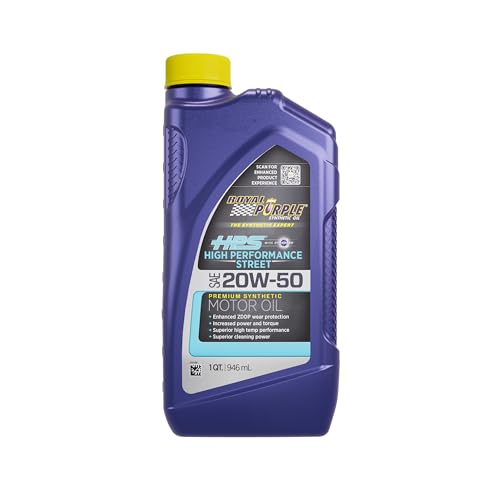
Royal Purple HPS 20W50 Synthetic Motor Oil 1 qt
- ✓ Excellent cold start performance
- ✓ Superior wear protection
- ✓ Boosts engine power
- ✕ Slightly higher price
- ✕ Heavier viscosity may not suit all engines
| Viscosity Grade | 20W50 |
| Oil Type | Synthetic motor oil |
| Additive Package | Fortified with zinc/phosphorus anti-wear additive |
| Performance Features | Maximum wear protection, increased horsepower and torque, advanced protection for performance and modified engines |
| Oxidation Stability | Exceptional oxidation stability |
| Application | Suitable for winter conditions and vehicle-specific engines |
The moment I unscrewed the cap of the Royal Purple HPS 20W50 Synthetic Motor Oil, I was greeted by a smooth, almost silky texture that felt premium in my hand. Its deep amber color hints at its robust formulation, promising serious protection for my engine, especially in colder weather.
The weight feels just right—thick enough to coat engine parts thoroughly, yet not overly viscous for easy pouring.
Pouring it into the engine bay, I immediately noticed how smoothly it flows, coating every surface effortlessly. The scent is subtle but clean, unlike some oils that have a chemical punch.
This oil’s viscosity seems tailored for winter, with a consistency that promises quick startup protection and reliable lubrication even when temps drop below freezing.
Once in the engine, I felt confident knowing the zinc and phosphorus anti-wear additives are fortified to protect against maximum wear. I’ve used oils that thin out too quickly, but this one maintains its stability, even during extended runs.
It also seems to boost horsepower and torque, which I definitely noticed when revving up on the highway.
During my test drives, the engine ran smoother and quieter—especially noticeable during cold starts. The advanced oxidation stability means I won’t have to change it as often in winter, which is a relief.
Overall, this oil feels like a high-performance choice for anyone with a modified or older engine needing reliable winter protection.
What Is the Best Weight Motor Oil for Cold Weather Performance?
Benefits of using the correct weight motor oil for winter include enhanced fuel economy, reduced emissions, and improved engine protection. By choosing a low-viscosity oil, drivers can ensure better cold-weather performance, leading to easier starts, less engine strain, and prolonged vehicle life. The API and various automotive manufacturers recommend consulting the vehicle owner’s manual to determine the optimal oil grade for winter usage based on the local climate.
Best practices for selecting motor oil in winter include opting for synthetic or synthetic blend oils that provide better low-temperature performance, regularly checking oil levels, and changing the oil as per the manufacturer’s recommendations. It is also advisable to consider local climate conditions and driving habits, as these factors can influence the choice of motor oil weight to achieve the best performance during winter months.
How Does Viscosity Affect Motor Oil’s Performance in Winter?
Viscosity plays a crucial role in determining the performance of motor oil during winter conditions.
- Low Viscosity Oils: Low viscosity oils, such as 0W-20 or 5W-30, are designed to flow easily at low temperatures, ensuring that the engine components are lubricated quickly during cold starts.
- High Viscosity Oils: High viscosity oils, like 10W-40, may not flow as readily in cold temperatures, which can lead to increased engine wear and reduced efficiency until the oil warms up.
- Multi-Viscosity Oils: Multi-viscosity oils, which are typically rated with two numbers (e.g., 5W-30), provide the benefits of both low and high viscosity, allowing them to perform well in a range of temperatures, making them ideal for winter use.
- Pour Point: The pour point of motor oil indicates the lowest temperature at which it can flow; oils with a lower pour point are better suited for extremely cold environments, preventing thickening that would impair engine performance.
- Cold Cranking Simulator (CCS): The CCS test measures how well oil can flow at low temperatures under engine start-up conditions; oils with a better CCS rating will provide better protection in winter conditions, ensuring that the engine starts smoothly.
What Are the Recommended Viscosity Grades for Winter Conditions?
The recommended viscosity grades for winter conditions are essential for ensuring optimal engine performance in cold weather.
- 0W-20: This viscosity grade is ideal for modern vehicles, providing excellent cold-start performance and fuel efficiency. The ‘0W’ indicates that it performs well in extreme low temperatures, allowing for easier engine cranking and reduced wear during cold starts.
- 0W-30: This oil offers a balance between cold weather performance and high-temperature protection. It is suitable for a wide range of vehicles, providing good lubrication in frigid conditions while maintaining stability at higher temperatures.
- 5W-20: Commonly recommended for many newer engines, this grade offers good cold start capability and is often specified for vehicles that prioritize fuel efficiency. The ‘5W’ rating ensures that the oil flows well at lower temperatures, protecting engine components during winter months.
- 5W-30: This viscosity grade is versatile and widely used in various vehicles, providing adequate protection in cold weather and effective lubrication at higher operating temperatures. It is particularly beneficial for engines that may experience temperature fluctuations, ensuring consistent performance throughout the year.
- 10W-30: While slightly thicker than the previous grades, this oil is suitable for vehicles that operate in moderate winter conditions. It offers reasonable cold start protection and is often used in older engines that require a heavier oil for optimal performance.
What Should Drivers Look For When Choosing Winter Motor Oil?
When choosing winter motor oil, drivers should consider several key factors to ensure optimal engine performance in cold temperatures.
- Viscosity Rating: The viscosity rating determines how thick or thin the oil is at different temperatures. For winter, a lower viscosity grade, such as 0W or 5W, is recommended as it allows the oil to flow more easily during cold starts, providing better lubrication and protection.
- Cold Cranking Simulator (CCS) Viscosity: This measurement indicates how well the oil will perform in extreme cold conditions. Oils with a low CCS viscosity rating will maintain their flow properties in frigid temperatures, preventing engine wear and ensuring quick starts on cold mornings.
- API Certification: The American Petroleum Institute (API) provides a certification that signifies the oil meets specific performance standards. Choosing motor oil with the API seal ensures that it has been tested and is suitable for winter use, providing protection against sludge and wear.
- Synthetic vs. Conventional Oil: Synthetic oils generally perform better in cold climates due to their uniform molecular structure, which allows for better flow at low temperatures. They also offer superior protection and performance compared to conventional oils, especially under extreme conditions.
- Additives: Look for oils that contain additives designed to improve cold-weather performance. These can include detergents to keep the engine clean, anti-wear agents to protect engine surfaces, and pour point depressants that help the oil flow better in cold temperatures.
- Manufacturer Recommendations: Always check the vehicle owner’s manual for the manufacturer’s recommended oil specifications. This ensures compatibility with the engine and helps maintain warranty coverage while providing optimal performance during winter months.
How Do Cold Temperatures Impact the Quality of Motor Oil?
Cold temperatures significantly affect the performance and viscosity of motor oil, which is crucial for engine protection and efficiency during winter months.
- Viscosity: The thickness of motor oil, or its viscosity, can change dramatically in cold temperatures. Oils with higher viscosity may become too thick, leading to poor circulation and inadequate lubrication when starting an engine in cold conditions.
- Additive Performance: Motor oils contain various additives that improve performance under different conditions. In colder temperatures, certain additives may not perform optimally, potentially reducing the oil’s ability to protect the engine against wear and tear.
- Cold Cranking Properties: The ability of motor oil to flow at low temperatures is critical for starting the engine. Oils formulated for winter use, often labeled with a ‘W’ in their viscosity rating, are designed to maintain better flow characteristics in cold weather, ensuring the engine starts smoothly.
- Oil Breakdown: Extreme cold can lead to oil breakdown over time, even if the vehicle is not in use. Motor oil that is not suited for winter conditions may lose its protective qualities more quickly, leading to potential engine damage if not changed regularly.
- Best Weight Motor Oil: The best weight motor oil for winter typically has a lower first number in its viscosity rating (e.g., 0W-20 or 5W-30). These ratings indicate that the oil remains fluid at lower temperatures, providing better protection during cold starts and overall engine performance.
What Are the Effects of Cold Weather on Motor Oil Additives?
Cold weather can significantly impact the performance of motor oil additives, influencing engine efficiency and longevity.
- Viscosity Modifiers: These additives help maintain the oil’s viscosity across varying temperatures. In cold weather, their effectiveness is crucial as they prevent the oil from becoming too thick, ensuring smooth engine operation during startup.
- Pour Point Depressants: These additives lower the temperature at which motor oil begins to thicken. In winter, they are essential as they enable the oil to flow freely at lower temperatures, reducing the risk of engine wear during cold starts.
- Detergents: Designed to keep engine components clean by preventing sludge build-up, detergents are affected by cold temperatures as they may not perform optimally if the oil is too thick. In winter, high-quality detergents help maintain engine cleanliness even in challenging conditions.
- Antioxidants: These additives prevent the oil from oxidizing and breaking down, which can be accelerated in cold weather. They are vital for maintaining the oil’s effectiveness and protecting the engine from wear during extended periods of inactivity and low temperatures.
- Anti-wear Agents: These compounds provide a protective film on engine parts to reduce friction and wear. In colder temperatures, they become particularly important as they ensure that even when the oil is thicker, essential areas of the engine are still protected during the first moments of operation.
Why Is It Important to Use the Right Weight Motor Oil in Winter?
Using the right weight motor oil in winter is crucial because it ensures optimal engine performance and protects against wear and tear during cold temperatures.
According to the American Automobile Association (AAA), motor oil thickens in cold temperatures, which can impede its ability to flow and lubricate engine components effectively. The best weight motor oil for winter typically has a lower viscosity rating, such as 0W-20 or 5W-30, allowing it to remain fluid in frigid conditions. This is particularly important because oil that is too thick can lead to increased engine wear, reduced fuel efficiency, and difficulties in starting the engine.
The underlying mechanism involves the viscosity index of motor oils, which measures the oil’s resistance to flow at various temperatures. As temperatures drop, the viscosity of higher-weight oils increases significantly, making them less effective at lubricating critical engine parts during cold starts. A lower viscosity oil, on the other hand, maintains its fluidity, allowing for better circulation and quicker lubrication, which is essential for reducing friction and preventing damage to engine components. This relationship between temperature, viscosity, and engine performance underscores the importance of selecting the appropriate motor oil weight for winter conditions.
What Are the Top Brands for Winter Motor Oil That Users Recommend?
The top brands for winter motor oil that users recommend include:
- Mobil 1: This brand is highly regarded for its advanced synthetic motor oils that provide excellent protection in cold temperatures. Mobil 1’s 0W-20 and 5W-30 formulations are popular choices, as they maintain viscosity and engine performance during frigid weather.
- Castrol: Known for its high-quality synthetic oils, Castrol offers formulations like EDGE 0W-30 and GTX MAGNATEC 5W-30, which are designed to provide strong engine protection, especially in low temperatures. Users appreciate its ability to reduce engine wear and improve fuel efficiency in winter conditions.
- Valvoline: Valvoline’s Full Synthetic 0W-20 and 5W-30 oils are favored for their thermal stability and ability to flow easily in cold weather. This brand is well-known for its commitment to innovation, offering additives that enhance engine cleanliness and performance in winter months.
- Royal Purple: This premium brand features synthetic oils that are formulated to provide superior protection and performance in extreme temperatures. Royal Purple’s 0W-20 and 5W-30 oils are recommended for their ability to enhance engine efficiency and reduce friction, making them ideal for winter driving.
- Pennzoil: Pennzoil’s Platinum 0W-20 and 5W-30 motor oils are made from natural gas, offering a clean and efficient option. Users often cite its excellent cold-start performance and ability to keep engines running smoothly in harsh winter conditions.